Two Mid-Range GPUs, One Brutal Test
Ray tracing at 4K is where GPU marketing meets cold reality. Both AMD’s Radeon RX 9070 and Nvidia’s RTX 5060 Ti arrive claiming capable ray tracing performance at price points that were unthinkable for this workload just two generations ago. But ray tracing is not a single benchmark – it is a spectrum of techniques, from simple shadow rays to full path lighting, and how a card handles that spectrum at 4K resolution is what separates a playable experience from a slideshow dressed up in prettier lighting.
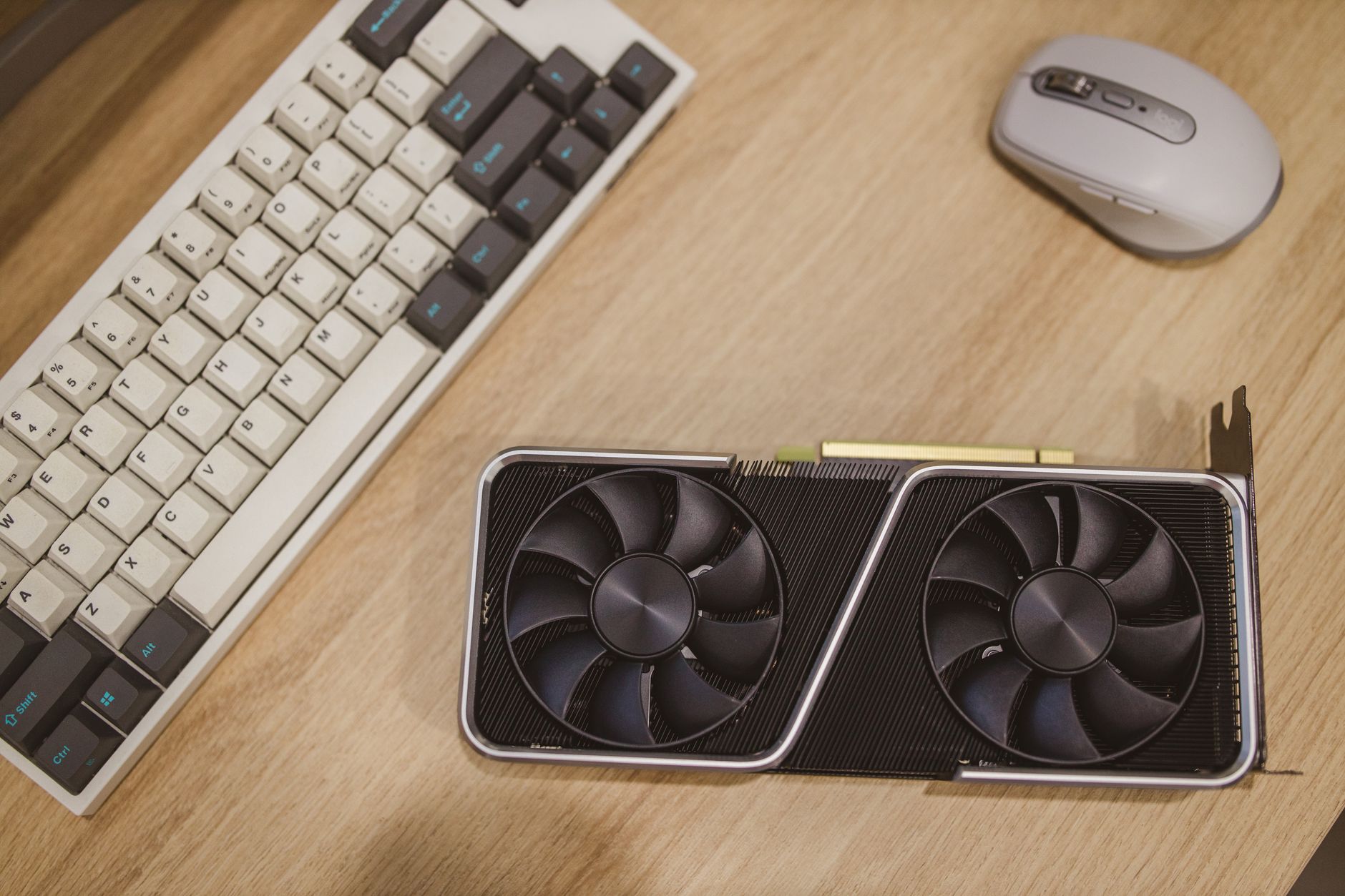
The RTX 5060 Ti carries a structural advantage before a single frame is rendered: Nvidia’s dedicated RT cores, now in their fourth generation with the Blackwell architecture, are purpose-built silicon for ray-box and ray-triangle intersection calculations. AMD’s RDNA 4 architecture, powering the RX 9070, has made significant strides in ray tracing hardware over RDNA 3, but AMD’s approach distributes ray tracing work differently across its compute units. That architectural philosophy produces different results depending on the type of ray tracing a game actually uses.
What the benchmarks reveal is messier – and more interesting – than either company’s marketing suggests.
Hybrid Ray Tracing: Where AMD Holds Its Ground
Most current PC titles use hybrid ray tracing rather than full path tracing. Games like Cyberpunk 2077 in its standard RT mode, Alan Wake 2 without path tracing enabled, and Hogwarts Legacy with ray traced shadows and reflections represent the workload the majority of players will actually encounter. In this range, the RX 9070 performs far better than its predecessors would lead you to expect. AMD’s RDNA 4 improvements to the ray accelerators per compute unit mean the gap against Nvidia’s RT cores is dramatically narrower than it was on RDNA 3 cards.
In Cyberpunk 2077 at 4K with ray tracing set to High (not Overdrive), the RX 9070 and RTX 5060 Ti trade blows within a margin that rarely exceeds eight to ten frames per second. The RX 9070 can lean on AMD’s FSR 4 upscaling to recover performance efficiently, while the RTX 5060 Ti has DLSS 4 with Multi Frame Generation available – though MFG’s latency implications make it a complicated solution for fast-paced gameplay. Both cards can sustain playable frame rates in this scenario at 4K, which was not a guarantee for cards at this price tier even eighteen months ago.
Forza Horizon 5 with ray traced shadows and Returnal‘s RT reflections tell a similar story. The RX 9070 maintains competitive footing, occasionally edging ahead in titles where the workload is shadow-heavy rather than reflection-heavy, because AMD’s current architecture handles shadow ray calculations with less penalty than earlier RDNA generations. The practical takeaway for hybrid ray tracing at 4K: the RX 9070 is a real competitor, not an also-ran.
Path Tracing: Nvidia’s Structural Advantage Widens
Full path tracing in Cyberpunk 2077‘s Overdrive mode and Alan Wake 2‘s path tracing implementation expose the gap between these two cards more clearly. Path tracing compounds ray tracing workloads exponentially – every light bounce, every surface interaction requires more ray-triangle intersection work, and this is exactly where Nvidia’s fourth-generation RT cores provide an advantage that compute efficiency alone cannot overcome. At native 4K with path tracing enabled, the RTX 5060 Ti leads the RX 9070 by a margin that makes the difference meaningful rather than academic.
In Alan Wake 2 with path tracing active at 4K, the RTX 5060 Ti consistently delivers higher framerates, and the card’s access to DLSS 4 Super Resolution – which has a quality ceiling above FSR 4 in most third-party testing – means it can recover more performance from upscaling without visually noticeable degradation. The RX 9070 with FSR 4 at Quality mode is still playable, but the headroom is tighter. If path tracing in demanding titles is the specific use case driving a purchase decision, the RTX 5060 Ti is the clearer answer.
There is a complicating factor worth sitting with: the RTX 5060 Ti’s 8GB VRAM variant struggles specifically in path tracing workloads because path tracing is memory-intensive. At 4K with Overdrive mode in Cyberpunk 2077, the 8GB RTX 5060 Ti shows frame time spikes that the RX 9070’s 16GB buffer avoids entirely. The 16GB RTX 5060 Ti resolves this, but at that price point, the competitive landscape shifts again. For anyone weighing VRAM capacity alongside ray tracing performance, the RTX 5060 Ti 8GB vs 16GB VRAM difference is worth examining before committing.
The Verdict on 4K Ray Tracing
For hybrid ray tracing – the mode covering the vast majority of ray-traced games available today – the RX 9070 closes the gap enough that choosing between these cards on ray tracing performance alone becomes genuinely difficult, and AMD’s 16GB of VRAM gives it a practical buffer that the base RTX 5060 Ti lacks. For path tracing specifically, Nvidia’s hardware advantage is real and reproducible. The more pointed question is whether path tracing is something you plan to use regularly, or whether it is a checkbox you enable once for screenshots and then turn off when you want to actually play.
If your library skews toward the games where path tracing is available and you have the 16GB RTX 5060 Ti in sight, Nvidia makes the stronger technical case at 4K. But for everyone buying the 8GB variant expecting to push full path tracing at this resolution – the VRAM ceiling is going to find you before the RT cores get a chance to shine.