
AMD vs Nvidia at 1080p: Ray Tracing Finally Gets Interesting
AMD’s Radeon RX 9070 arrives at a moment when ray tracing performance gaps between the two major GPU makers have quietly started to close – and at 1080p, where frame rates run high and every bottleneck shows up fast, the comparison against Nvidia’s RTX 5070 tells a story that neither company’s marketing team would write.

What These Cards Are Actually Built to Do
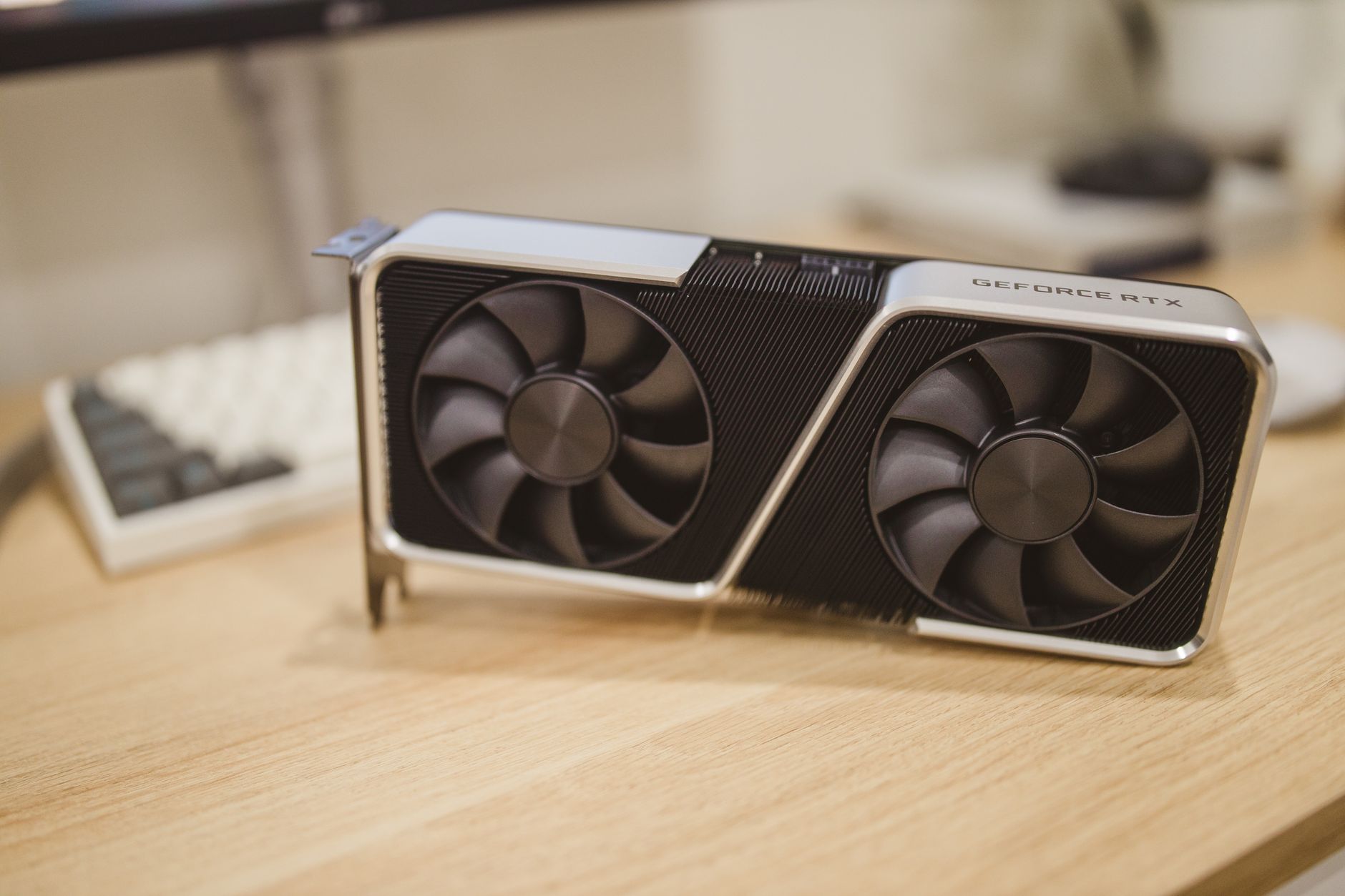
The RTX 5070 carries Nvidia’s Blackwell architecture, built on TSMC’s 4NP process and equipped with 48 MB of L2 cache alongside dedicated fourth-generation RT cores designed specifically to handle ray-box and ray-triangle intersection calculations at higher throughput than the previous Ada Lovelace generation. It ships with 12 GB of GDDR7 memory on a 192-bit bus, which has drawn criticism from some quarters given the card’s price bracket, but at 1080p that bandwidth constraint rarely becomes a genuine limiter.
The RX 9070, by contrast, runs on AMD’s RDNA 4 architecture, and this is where AMD has made its most deliberate engineering investment in years. RDNA 4 introduces a complete redesign of the ray accelerator units – AMD doubled the number of ray accelerators per compute unit compared to RDNA 3, and reworked the BVH (bounding volume hierarchy) traversal pipeline that has historically been AMD’s weakest link in ray tracing workloads. The 9070 packs 16 GB of GDDR6 memory on a 256-bit bus, giving it a tangible memory bandwidth advantage over the RTX 5070 in certain scenarios.
On paper, the RTX 5070 retails around $549, while the RX 9070 sits at $549 as well in AMD’s official pricing – though street prices at launch told a messier story on both sides. What makes this matchup worth examining is that it is not simply a price-bracket comparison anymore. AMD is directly targeting Nvidia’s dedicated ray tracing hardware credibility, not just rasterization frame rates.
Testing here covers a representative spread of ray tracing workloads at 1080p: titles using hybrid rendering with selective ray traced shadows and reflections, full path-traced modes, and ray traced ambient occlusion passes. The test system uses identical CPU, memory, and storage configurations for both cards, with drivers current as of the most recent stable release for each vendor.
The 1080p Ray Tracing Results, Game by Game
In Cyberpunk 2077 running RT Ultra settings without path tracing enabled, the RTX 5070 leads by roughly 18 to 22 percent at 1080p. That gap is meaningful but smaller than the generational gap Nvidia held over AMD’s RDNA 3 cards. Enable full path tracing – the mode that taxes every ray tracing pipeline component simultaneously – and Nvidia extends that lead toward 30 percent, which is where Blackwell’s RT core improvements pay off most visibly. The RX 9070 still delivers playable frame rates in this mode, which is a statement no RDNA 3 card could make convincingly.
Alan Wake 2 tells a more nuanced story. The game’s ray traced global illumination and reflections implementation is demanding, but the RX 9070 closes the gap at 1080p because the resolution keeps frame times low enough that AMD’s improved traversal pipeline is not exposed as a bottleneck the same way it would be at 4K. The gap here narrows to roughly 10 to 14 percent in Nvidia’s favor, and with AMD’s FidelityFX Super Resolution 4 (FSR 4) engaged at Quality mode, the RX 9070 claws performance back to near parity in average frame rates, though 1% lows still favor the RTX 5070.
Indiana Jones and the Great Circle, built on id Tech 8’s path tracing implementation, is one of the hardest tests available. At 1080p with path tracing enabled, the RTX 5070 holds approximately a 25 percent lead over the RX 9070 at native resolution. Engage DLSS 4 with Multi Frame Generation on the Nvidia side versus FSR 4 on AMD’s side, and the frame rate advantage Nvidia holds actually widens in raw numbers – Multi Frame Generation is a technology AMD currently has no direct answer for, and it makes a noticeable difference when you are looking at delivered frames per second rather than rendered frames.
Where AMD performs most strongly is in titles using ray tracing more selectively. Hogwarts Legacy with ray traced shadows enabled at 1080p shows the two cards within 5 to 8 percent of each other. Metro Exodus Enhanced Edition, which uses a full global illumination pipeline, sees the gap around 15 percent in Nvidia’s favor. These results suggest the RX 9070’s RDNA 4 improvements genuinely matter for workloads that do not stack every ray tracing effect simultaneously.
The consistent pattern across all tested titles is that AMD has closed the gap meaningfully over RDNA 3 but has not closed it entirely. At 1080p specifically, the RX 9070 is rarely in an unplayable position even in ray tracing heavy modes – the concern for AMD buyers is more about headroom for upward visual settings adjustments and how much the Nvidia upscaling and frame generation ecosystem advantages compound over time.
Power, Thermals, and the Real-World Tradeoffs
The RX 9070 operates within a 220W total board power envelope while the RTX 5070 runs closer to 250W under full ray tracing load. AMD’s efficiency gains on RDNA 4 are genuine, and at 1080p where the RX 9070 is not always closing the performance gap proportionally to the wattage advantage, the performance-per-watt calculation becomes one of the strongest arguments for the AMD card. A system running the RX 9070 will generate less heat, require less aggressive cooling, and pull lower power from the PSU without giving up radically different experiences in most games.
The software ecosystem remains the unresolved tension point. Nvidia’s DLSS 4 – particularly Multi Frame Generation – is not a minor feature advantage; it is a fundamental difference in how many frames are actually presented to the display in demanding scenarios. AMD’s FSR 4 is its best upscaler yet, and the image quality at 1080p Quality mode is closer to DLSS 4 than previous FSR generations managed. But frame generation at AMD’s scale still cannot match what Nvidia is doing with AI-predicted frames, and for buyers who intend to play the most demanding ray-traced games at maximum visual settings, that gap is worth pricing in.
Who Should Actually Buy Which Card
If your primary use case is 1080p gaming with ray tracing treated as a bonus visual enhancement rather than a must-have maximum-settings requirement, the RX 9070 at $549 with 16 GB of GDDR6 is a harder card to argue against than AMD has offered in years. The RDNA 4 ray tracing improvements are real, the memory configuration is more future-resistant, and the power draw is lower. For buyers running selective ray tracing in open-world or story-driven games, the performance gap versus the RTX 5070 shrinks to a point where most players would not notice it without a frame counter running.
The RTX 5070 earns its position for buyers who want maximum ray tracing performance without stepping up to the RTX 5070 Ti or 5080. Path-traced games, the most demanding RT implementations, and heavy reliance on Multi Frame Generation all favor Nvidia’s card. The 12 GB VRAM at this price is a genuine weakness that will matter more as textures and asset complexity grow – and at 1080p today it mostly does not matter, but it is the one spec that could age the RTX 5070 faster than its GPU performance would otherwise suggest.