FSR 4 Without the AI Tax: What Spatial Upscaling Actually Delivers
AMD’s FidelityFX Super Resolution 4 launched with a headline feature that immediately divided the PC gaming community: machine learning-based upscaling that requires RDNA 4 hardware to run. That restriction left owners of older Radeon cards, as well as every GeForce user, locked out of the flagship mode. But FSR 4 also includes a spatial upscaling path – no neural hardware, no AI acceleration, just traditional algorithmic scaling – and that version runs on virtually anything. The question worth asking is how well it actually holds up in 2025, when DLSS 3 and FSR 3 have already set the baseline for what upscaling should look like.
Spatial upscaling works differently from temporal or machine learning approaches. Instead of accumulating information across multiple frames or running inference through a trained neural network, it reconstructs a higher-resolution image from a single frame using pattern recognition and edge-enhancement algorithms. That makes it fast, broadly compatible, and completely free of the hardware dependency problem. It also makes it harder to compete with methods that have access to more data.
AMD has kept spatial scaling in FSR 4 as an accessibility option, not a replacement for the ML path.

Performance Overhead and Hardware Compatibility
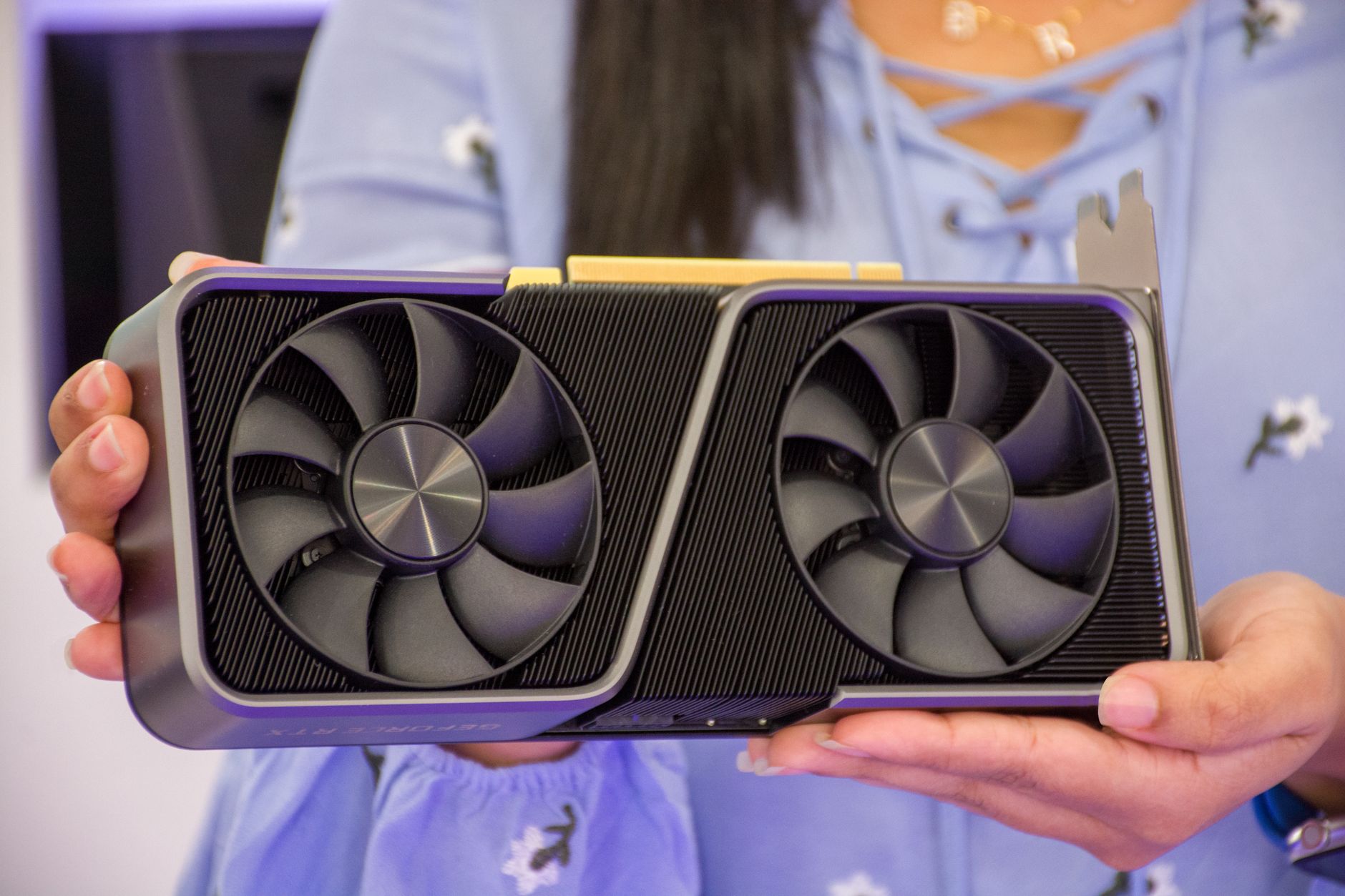
The appeal of spatial upscaling is immediate and obvious when you look at the hardware it runs on. Any GPU with an RDNA, Polaris, or Vega architecture can run it. So can Intel Arc cards, older GeForce GPUs, and integrated graphics. This is not a feature locked to enthusiast hardware – it is a scaling tool designed for the long tail of the PC gaming market, where a meaningful portion of players are still running GTX 1060s and RX 580s. For those users, the performance headroom from dropping to Quality or Balanced mode can genuinely rescue playability in demanding titles.
Testing across several current titles at 1440p, the spatial upscaling path in FSR 4 adds minimal GPU overhead compared to native rendering at the lower input resolution. The computational cost of the upscale pass itself is low enough that it rarely shows up as a meaningful frame time spike. Where it does affect performance is indirectly – running at a lower render resolution means less geometry work, less shading, and less memory bandwidth consumption, which compounds into frame rate gains that range from modest to dramatic depending on whether a game is GPU-bound or CPU-limited at native. In GPU-bound scenarios, spatial upscaling at Performance mode (roughly 2x scaling) can push frame rates up by 40 to 60 percent, with the exact figure varying by title and draw call complexity.
The spatial path also removes frame generation from the equation entirely. FSR 4’s frame generation feature requires RDNA 4, so spatial-only users are working with real frames only. That means lower overall frame rates than users running the full ML pipeline, but also lower latency per frame – no interpolated frames, no additional input lag from the generation step. For competitive play or fast-response genres, that trade-off can actually work in spatial upscaling’s favor.

Visual Quality: Where the Gaps Show Up
Image quality in spatial mode is where the honest assessment gets uncomfortable. The single-frame limitation is not a small handicap. Without temporal accumulation, fine detail in foliage, chain-link fences, hair, and thin geometry tends to shimmer or alias at the edges in motion. Static screenshots from FSR 4 spatial at Quality mode look reasonably clean – edge enhancement does real work and the output is sharper than a bilinear upscale – but put the camera in motion during a panning shot across a forest scene or a detailed interior, and the stability difference between spatial and temporal methods becomes hard to ignore.
AMD’s spatial implementation in FSR 4 is an improvement over the FSR 1 algorithm that launched in 2021. Sharpening is better calibrated and avoids some of the haloing artifacts that made FSR 1 controversial at launch. Still, in direct side-by-side testing against FSR 3’s temporal mode running on the same hardware at the same performance target, the temporal version holds more detail in motion and produces fewer aliasing artifacts in complex scenes. Against DLSS 3 Super Resolution on compatible GeForce hardware, the gap is wider still. That comparison is not entirely fair given the hardware advantage DLSS carries, but it is the comparison players with mixed GPU setups will inevitably make.
Where spatial scaling performs most credibly is in slower-paced titles – RPGs with frequent dialogue cutscenes, strategy games with locked or low camera speeds, and platformers where the camera movement is deliberately controlled. Titles like Baldur’s Gate 3 or turn-based strategy games produce spatial upscaling output that looks genuinely good at Quality mode, largely because the single-frame limitation is less exposed when the image is not changing rapidly. It is the action-heavy scenes in shooters and open-world games that reveal the method’s ceiling most clearly. For Radeon RX 9060 XT owners who have access to the full ML path, the performance picture looks considerably different once AI upscaling enters the equation.
The Honest Case for Spatial Upscaling in 2025
FSR 4 spatial upscaling is not trying to beat DLSS at its own game, and evaluating it as if it should is the wrong frame. It exists to give players on mid-range and older hardware a performance lever that works without driver dependencies, without cloud processing, and without buying a new GPU. On a five-year-old card running a demanding 2025 title at 1080p, spatial scaling at Balanced mode can mean the difference between 35 fps and 55 fps – and at that level of hardware, 55 fps without temporal stability is still a better experience than a stuttering 35. The visual compromises are real, but so is the frame rate ceiling those players are hitting without any upscaling at all. AMD shipping spatial as part of FSR 4 rather than retiring it in favor of the ML-only path is a pragmatic choice that acknowledges what most of the PC gaming installed base is actually running – and that installed base is not upgrading on a two-year cycle.