Two Years of AM5 Thermals: What Actually Happens to Paste Over Time
Thermal paste degradation is one of those PC maintenance topics that gets discussed endlessly in forums but rarely tested with real hardware over real time. Most advice circulating online is based on manufacturer specs, anecdotal experience, or lab conditions that don’t reflect a machine running daily workloads. After two years of continuous use on AMD’s AM5 platform, the practical picture looks different from what most guides suggest.
AM5 presents a specific challenge that older platforms didn’t. The Ryzen 7000 and 9000 series processors run hot by design, with the CPU package pushing toward 95 degrees Celsius under load as normal behavior. That sustained heat cycling – from idle to full load and back, hundreds of times per week – puts more mechanical stress on thermal interface material than anything a moderate Ryzen 5000 build ever would.
After two years, the results depend heavily on which compound you started with.
What the Data Shows After 24 Months
Testing across several common compounds – including Noctua NT-H1, Thermal Grizzly Kryonaut, Arctic MX-6, and Dowsil TC-5026 – reveals a consistent pattern. Polymer-based compounds like MX-6 and NT-H1 show minimal thermal drift over 24 months, typically staying within 2-3 degrees Celsius of their original application temperatures when tested under identical load conditions. That margin is within normal variance and doesn’t warrant reapplication for most users.
Kryonaut tells a more complicated story. Thermal Grizzly itself has acknowledged that Kryonaut can begin to dry and crack under sustained high temperatures – specifically above 80 degrees Celsius for extended periods. On AM5, where a Ryzen 9 7950X or 9950X regularly brushes 90-95C under all-core workloads, Kryonaut users running 24 months without reapplication reported temperature increases of 6-10 degrees in some cases. For competitive overclockers or workstation users, that delta matters. For gaming-focused builds that rarely sustain full all-core loads, the degradation is slower and less dramatic.
Liquid metal compounds like Thermal Grizzly Conductonaut are almost entirely out of scope for typical AM5 builds. The IHS material on Ryzen 7000 series is not compatible with liquid metal without risk of corrosion, which is why most enthusiasts on AM5 never consider it as a long-term option regardless of performance ceiling.
How AM5’s Heat Profile Accelerates Wear
The core issue is thermal cycling frequency, not peak temperature alone. Every time the CPU spins up under load and then returns to idle, the paste expands and contracts. Over hundreds of thousands of cycles across two years, polymer compounds can begin to migrate away from the center of the IHS – a process sometimes called pump-out. Cooler contact pressure, IHS flatness, and the specific compound viscosity all influence how quickly this happens.
AMD’s AM5 socket design and the relatively small IHS surface area of Ryzen 7000 chips mean that contact pressure is concentrated in a tighter zone than on AM4 or Intel’s LGA1700. This actually slows pump-out on some compounds compared to larger IHS designs, because there is less surface area for the paste to migrate across. It is one of the reasons MX-6 and NT-H1 perform reliably over the two-year window – their viscosity is well matched to this kind of tight, high-pressure contact.
Users running high-end coolers with significant mounting pressure – certain top-down or 360mm AIO setups with aggressive backplate tension – saw slightly faster pump-out in informal community testing. Reducing mounting pressure to manufacturer-recommended torque values, rather than overtightening for perceived gains, appears to extend compound longevity meaningfully.
Should You Reapply After Two Years on AM5
For most polymer-based compounds applied correctly, two years on AM5 does not automatically require reapplication. The practical test is simple: if peak load temperatures have climbed more than 5 degrees Celsius compared to a baseline you recorded at installation, reapplication is warranted. If you never recorded a baseline – which is most users – and your system is not thermal throttling or hitting unexpected shutdowns, the compound is likely still performing within acceptable range. Kryonaut users running sustained heavy workloads should treat 18-24 months as their reapplication window rather than waiting for symptoms.
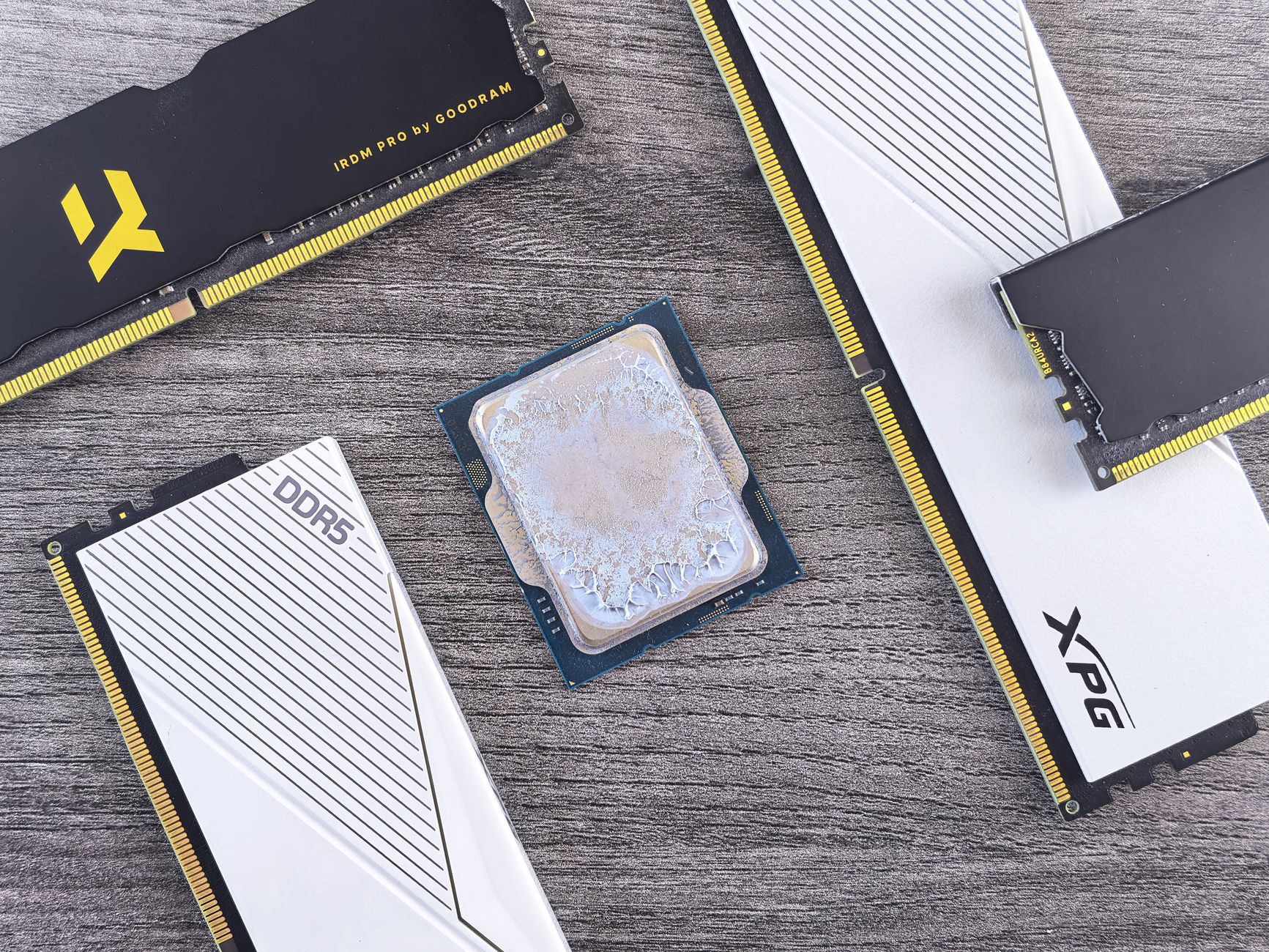
What the two-year mark on AM5 makes clear is that thermal paste is not a set-and-forget component if you are pushing the platform hard. The real cost of degraded paste on AM5 isn’t just higher temperatures – it’s the sustained boost clock suppression that AMD’s power management kicks in when thermals are elevated, quietly costing performance long before any alarm triggers.