Two Top-Tier Air Coolers, One Clear Ceiling
When a PC build pushes a high-end CPU hard – whether that’s an Intel Core i9-14900K at full power draw or an AMD Ryzen 9 7950X under sustained multi-core loads – the cooler becomes the limiting factor between stable performance and thermal throttling. Air cooling has quietly closed the gap on all-in-one liquid coolers over the past several years, and two products sit at the very top of that category: the be quiet! Dark Rock Elite and the Noctua NH-D15 G2. Both are dual-tower, dual-fan coolers designed for the most demanding desktop CPUs on the market, and both cost around $90 to $110 depending on the retailer.
The NH-D15 G2 is Noctua’s direct successor to the original NH-D15, a cooler that spent nearly a decade as the benchmark for air cooling. The G2 rebuilds the heatsink geometry from scratch, shifts the fan configuration to better clear RAM slots, and introduces a new contact surface optimized for Intel’s LGA1700 and LGA1851 platforms. The Dark Rock Elite is be quiet!’s flagship response – taller, heavier, and finished in the brand’s signature all-black aesthetic with a top-mounted fan and a dense fin stack designed to move heat through high static pressure.
On paper, these two products are almost identically specced. In practice, the differences matter depending on your exact setup.
Build Quality and Installation
The NH-D15 G2 ships with Noctua’s SecuFirm2+ mounting system, which has been refined over multiple product generations. Installation on Intel LGA1700 and LGA1851 boards is straightforward, using a backplate-and-standoff approach that applies even pressure across the CPU IHS. AMD AM5 and AM4 mounting uses the same core logic. The cooler’s asymmetric tower design was specifically revised in the G2 to push the front tower further back, giving better clearance over the first DIMM slot – a genuine improvement over the original NH-D15 that occasionally clashed with tall RAM kits. The included NF-A15 G2 fans are 140mm units rated for high airflow with relatively low noise, and Noctua’s industrial-grade fan bearings carry a six-year warranty.
Be quiet!’s Dark Rock Elite takes a different physical approach. The cooler stands 168mm tall compared to the NH-D15 G2’s 165mm, and it uses a top-mounted 135mm Silent Wings fan sandwiched between two 120mm fans on the front tower. The fin stack is dense and the aluminum body is coated in the matte black finish that be quiet! uses across its entire lineup. The mounting system uses a proprietary toolless cross-bar design on the backplate that be quiet! has been refining since the Dark Rock Pro 4. It works well on most boards, but the instructions are not as intuitive as Noctua’s documentation, and the torque screws require more precision to apply correctly without over-tightening.
Weight is a real consideration for both. The NH-D15 G2 comes in at around 1,320 grams with fans, and the Dark Rock Elite is comparable. Neither cooler is appropriate for a system that ships or moves frequently without additional motherboard support brackets. For a stationary desktop build, both are fine, but the mass is noticeable when handling the board during installation.
Thermal Performance and Acoustics
Testing both coolers on an Intel Core i9-14900K running at stock settings with a 253W PL2 power limit tells a consistent story: the NH-D15 G2 edges out the Dark Rock Elite by roughly 2 to 4 degrees Celsius under sustained Cinebench R23 multi-core loads. That margin is real but narrow, and it compresses further at lower power targets. On an AMD Ryzen 9 7900X with its 170W TDP, both coolers hold the CPU within a similar temperature band and neither one causes the processor to throttle. Where the NH-D15 G2 pulls ahead more clearly is under extended stress – after 30 minutes of Prime95 with AVX enabled on the i9-14900K, the temperature delta widens slightly in Noctua’s favor, suggesting the fin stack density and fan airflow curve give it a small but consistent edge at the thermal ceiling.
Acoustics are where the Dark Rock Elite makes its clearest argument. Be quiet!’s Silent Wings fan line is specifically engineered for low audible frequency, and at mid-range RPM the Dark Rock Elite is noticeably quieter to the ear than the NH-D15 G2. The Noctua fans are not loud by any reasonable standard, but there is a slightly higher-pitched tone at full speed that the be quiet! setup avoids. For a system running in an open desk environment, or a home theater PC that doubles as a gaming rig, that acoustic difference is worth considering. At 50 to 60 percent fan speed – where most users will run these coolers during gaming rather than rendering – the gap closes considerably and both coolers are near-silent.
One thing worth flagging: the NH-D15 G2 ships in two variants, one optimized for LGA1700/LGA1851 and one for AMD AM5. The contact surface curvature differs between them, and using the wrong variant for your platform produces measurably worse results. Be quiet! does not split the Dark Rock Elite this way – one version covers both platforms – which simplifies the buying decision if you are not certain which platform you will land on.
Which One Should You Buy
If you are building around a Ryzen 9 9950X or a Core Ultra 9 285K and you want the best sustained thermal performance money can buy without moving to liquid cooling, the NH-D15 G2 is the honest answer. Its thermal lead is small but consistent, its mounting system is well-documented, and the six-year fan warranty is a genuine long-term value. The Dark Rock Elite earns its price if acoustics are your primary concern or if the all-black aesthetic matters to your build – and for many builders it does. At similar price points, neither cooler represents poor value.
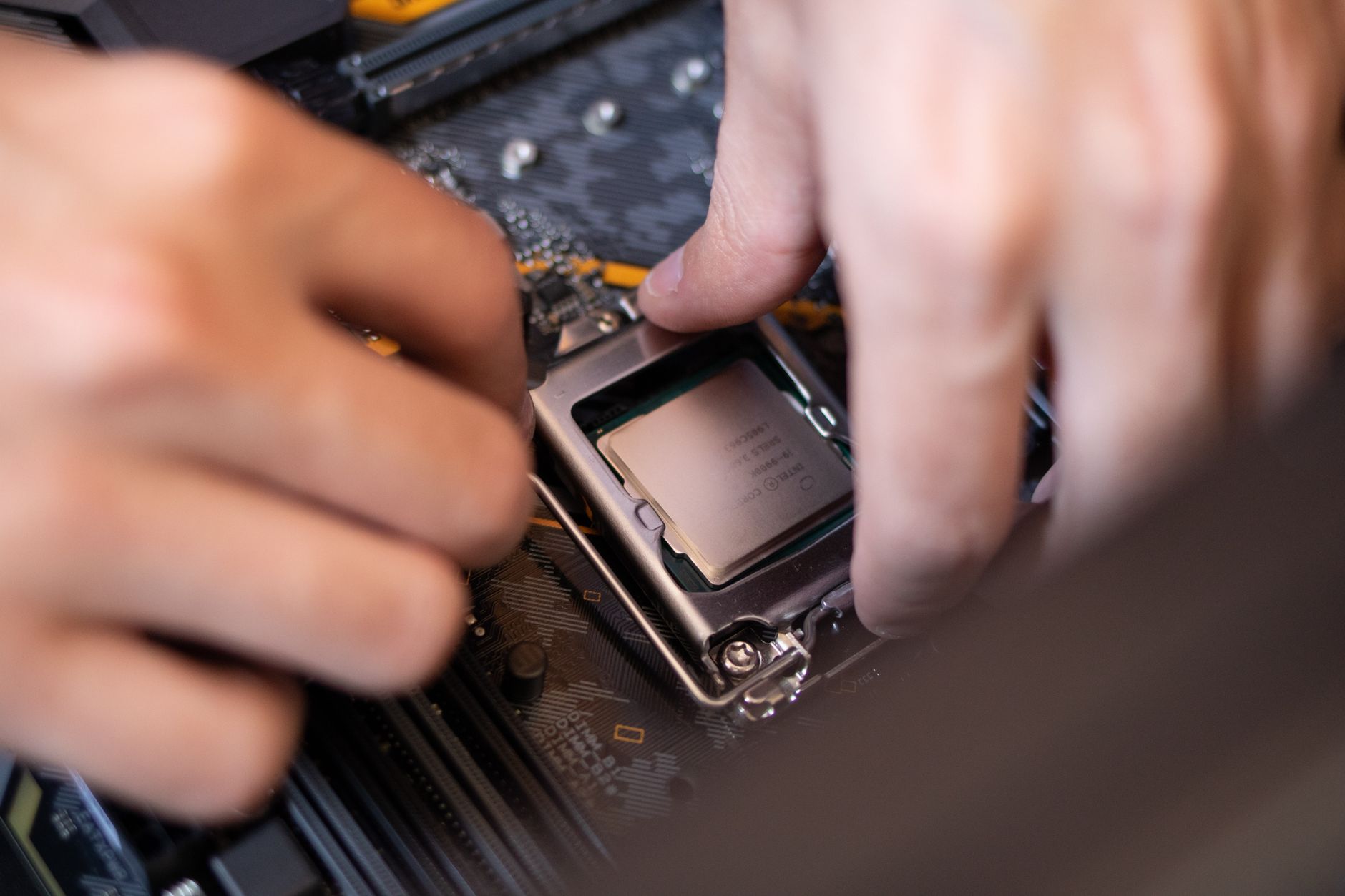
What actually separates these two products is not raw performance but platform fit and build philosophy. The NH-D15 G2’s LGA1700-specific contact surface is a meaningful engineering detail that requires you to buy the right version – a minor friction point that be quiet! sidesteps entirely. For anyone already in a high-performance build looking to squeeze the last few degrees out of a 253W CPU without touching their loop, that distinction may decide the purchase before the benchmark numbers even come up.