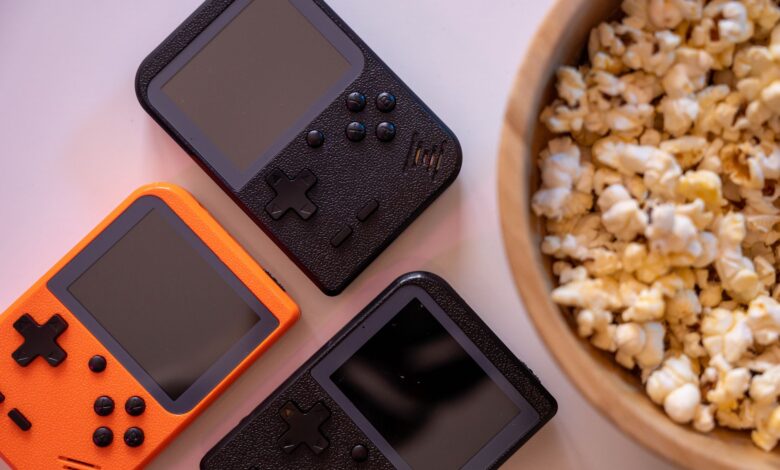
Backward compatibility is supposed to be the easy promise in a console launch. Keep the old library running, and nobody has to choose between their past purchases and new hardware. Nintendo made that promise with the Switch 2, which arrived in June 2025 and plays a large portion of the original Switch catalog, both physical cartridges and digital downloads.
The word doing the heavy lifting in that sentence is “large.” Plenty of owners have discovered that a console can be compatible with most of a library and still feel inconsistent in daily use. The complaints rarely involve a game refusing to boot. They involve accessories that stop working, upgrades that cost extra, and a new physical format that does not behave like a cartridge.
Most Games Run, But “Most” Is Not a Guarantee
Nintendo has been open that the Switch 2 does not offer a perfect, universal pass for every Switch 1 title. The company maintains a compatibility page, and it has acknowledged that a small number of games may not run correctly or may lose certain features on the new hardware. For a platform holder with a library this large, a short list of exceptions is statistically unsurprising. For the person whose favorite game is on that list, it is the only thing that matters.
The frustration comes from how uneven the exceptions feel. A game can boot, load a save, and play fine in handheld mode, yet lose a single feature that defined how people used it. Owners who moved from a Switch 1 to a Switch 2 expecting a drop-in replacement often find that they keep the old console around anyway, which undercuts the whole idea of an upgrade.
The Accessory Problem Nobody Advertised
Software compatibility gets the headlines, but hardware compatibility is where many owners feel the gaps most. The Switch 2 uses new Joy-Con controllers that attach magnetically rather than sliding onto rails. That means the original Joy-Con cannot snap onto the Switch 2 in handheld mode the way they did on the first console. They can still connect wirelessly, so they are not useless, but the handheld experience is no longer interchangeable.
Then there is the matter of features baked into the original controllers. The right Joy-Con on the original Switch contained an infrared motion camera, which a handful of games and accessories relied on. Games that used that camera for hand tracking or object detection depend on hardware the new Joy-Con do not replicate. Nintendo’s Labo kits are the best-known example of software built around those quirks, and anyone hoping to dust off a cardboard Toy-Con on the new console should check carefully before assuming it will work.
The Joy-Con story also touches the way families use the system. A household with four original Joy-Con and a couple of Pro Controllers can keep using them on the Switch 2 for many games, which is a real convenience. But the moment a game wants motion pointing, the mouse-style controls of the new Joy-Con, or a specific number of matching controllers, that older pile of plastic starts to feel like a mismatched set. Nobody was promised a seamless controller ecosystem, yet that is what plenty of buyers assumed they were getting.
None of this is a defect so much as a design trade-off. Magnetic attachment, a larger screen, and redesigned sensors required breaking from the old form factor. The complaint is not that Nintendo changed the hardware, but that the cost of the change landed on owners who already bought into the first generation’s accessory lineup.
Switch 2 Editions and the Price of a Smoother Frame Rate
The second layer of frustration involves enhancement. Many Switch 1 games run on the Switch 2, and some benefit from the extra horsepower without any patch at all. But the biggest improvements, such as higher resolutions and steadier frame rates in demanding games, often arrive through a separate Switch 2 Edition. Nintendo has released free updates for some of its games while selling paid upgrades or standalone editions for others, so owners cannot predict from title to title which path they will face.
That inconsistency is what stings. Paying again for something you already own feels different when your neighbor got the same improvement for free on a different game. Players who bought a flagship adventure at full price years ago are now asked to decide whether a smoother version is worth another purchase, and Nintendo’s pricing logic is not always easy to follow from the outside.
Game-Key Cards Change What a Physical Copy Means
The most contentious piece of the Switch 2 physical ecosystem is the Game-Key Card. These cards look like the cartridges players know, but in many cases they do not contain the full game. They act as a license that lets the console download the software, which means the box on the shelf is closer to a receipt than a disc or cartridge.
That distinction matters for backward compatibility because the Switch 1 library trained players to treat a cartridge as self-contained. Slot it in, play it, lend it to a friend, sell it later. Game-Key Cards break several of those habits, since they require a download, an internet connection at setup, and storage space on the console. Collectors who care about physical media for its independence from servers see the format as a step away from the thing they were buying in the first place.
Nintendo is hardly alone in blurring the line between physical and digital, but it is a company whose fans lean heavily on cartridges. The Wii U and 3DS eShops were shut down in 2023, and anyone who owned digital-only games on those systems already knows what it feels like when a storefront goes dark. A Game-Key Card with no game on it is only as durable as the servers that deliver the download.