The Mid-Range Ray Tracing Battle Nobody Expected
AMD’s Radeon RX 9060 XT and Nvidia’s RTX 5060 Ti are targeting the same buyer: someone who wants a capable 1440p card without spending flagship money. On paper, the gap between them looks manageable. In practice, the moment you turn on ray tracing, the comparison gets significantly more complicated – and more revealing about where each company has placed its engineering priorities.
Both cards launched in 2025 into a mid-range segment that now has to handle ray tracing demands that were unthinkable for sub-$400 hardware just two years ago. Games like Cyberpunk 2077, Alan Wake 2, and Indiana Jones and the Great Circle are no longer outliers – they are the benchmark standard. Testing these two cards at 1440p with ray tracing enabled tells you more about real-world value than any synthetic benchmark chart ever could.

Rasterization Baseline: Where Both Cards Actually Stand
Before examining ray tracing performance, you need a clean rasterization baseline. The RTX 5060 Ti, using Nvidia’s Blackwell architecture, delivers strong 1440p frame rates in titles like Spider-Man 2 and Baldur’s Gate 3 – consistently sitting above 80fps in the most demanding scenes with high settings. The RX 9060 XT, built on AMD’s RDNA 4 architecture, tracks closely in the same scenarios, sometimes pulling ahead in titles that historically run well on AMD hardware, like Starfield and Forza Horizon 5. The gap in rasterization alone is narrow enough that it should not be the deciding factor for most buyers.
Where RDNA 4 genuinely surprised reviewers is in how much AMD closed the efficiency gap with Blackwell. The RX 9060 XT draws less power than its predecessor and runs cooler under sustained load – a meaningful improvement given how long 1440p gaming sessions can run. The RTX 5060 Ti still edges ahead in raw throughput for CPU-limited scenarios, particularly in older DX11 titles, but for anything released in the last 18 months, both cards are firmly competitive without ray tracing in the equation.
Ray Tracing at 1440p: Where the Gap Opens Up
Nvidia’s ray tracing advantage is not a rumor or marketing spin – it is a measurable architectural reality. The RTX 5060 Ti carries dedicated RT cores that handle ray-triangle intersection calculations in hardware, and the Blackwell generation improved those cores substantially over Ada Lovelace. In Cyberpunk 2077 at 1440p with Overdrive ray tracing enabled and DLSS Quality active, the RTX 5060 Ti delivers playable performance around the 50-60fps range. The RX 9060 XT with FSR Quality in the same scenario lands noticeably lower, often sitting in the 35-45fps range depending on the scene.
Alan Wake 2 paints a similar picture. The game’s path tracing implementation is one of the most demanding in existence, and at 1440p with path tracing on, the RTX 5060 Ti handles it better than the RX 9060 XT can sustain. AMD’s RDNA 4 improved ray tracing performance significantly over RDNA 3, but the architectural foundation Nvidia built over multiple generations of dedicated RT hardware is not something one generation of catch-up can fully close.
That said, not every ray tracing implementation is path tracing. In titles using more modest ray tracing – shadow rays, ambient occlusion, single-bounce reflections – the RX 9060 XT holds up far better. In Indiana Jones and the Great Circle at 1440p with ray tracing set to High (not max), the performance difference between the two cards shrinks to single-digit frame rates in most scenes. This matters because the majority of games on the market use hybrid ray tracing rather than full path tracing.
The real-world takeaway is this: if your game library skews toward titles using ray tracing selectively, the RX 9060 XT remains a viable option. If you are specifically chasing the best experience in demanding path-traced titles and plan to play them regularly, the RTX 5060 Ti’s architectural advantage is real and cannot be upscaled around.
Upscaling: DLSS 4 vs FSR 4
Both cards bring their best upscaling generation to the table. DLSS 4 on the RTX 5060 Ti uses the Multi Frame Generation feature introduced with Blackwell, which can generate multiple frames between rendered frames rather than just one. In supported titles, this multiplies perceived frame rates dramatically – but it also introduces latency considerations that competitive players care about. For single-player cinematic experiences, DLSS 4 Multi Frame Generation is an effective way to push the RTX 5060 Ti well above 60fps in even the most demanding ray-traced scenes at 1440p.
AMD’s FSR 4 is a model-based upscaler that no longer relies on the more basic spatial algorithms of earlier FSR versions. Image quality at Quality mode is noticeably better than FSR 3, and it works across AMD and non-AMD hardware. However, FSR 4 does not have Multi Frame Generation parity with DLSS 4, and in back-to-back comparisons on a calibrated display, DLSS 4 still produces sharper results in motion-heavy scenes. The gap is smaller than it used to be – but it is still there in 2025.
Pricing, VRAM, and What You Actually Get
The RTX 5060 Ti ships in both 8GB and 16GB configurations, and the version you choose matters more than the GPU comparison itself suggests. At 1440p with ray tracing, several current titles are pushing past 8GB of VRAM in worst-case scenarios. The 16GB RTX 5060 Ti adds cost but removes that concern entirely. AMD ships the RX 9060 XT with 16GB as standard on most configurations, which means buyers are not forced into a premium tier to get a comfortable VRAM buffer. For a deeper look at how the VRAM split affects performance in practice, the RTX 5060 Ti 8GB vs 16GB breakdown covers those differences at length.
At comparable price points – specifically when comparing the 16GB RTX 5060 Ti against the RX 9060 XT at similar MSRP – the value calculation comes down to what you prioritize. The RTX 5060 Ti wins in maximum ray tracing performance, DLSS 4 quality, and software ecosystem features like NVIDIA Reflex. The RX 9060 XT wins on standard VRAM allocation, rasterization efficiency, and AMD’s open upscaling approach that extends to non-AMD hardware and televisions.
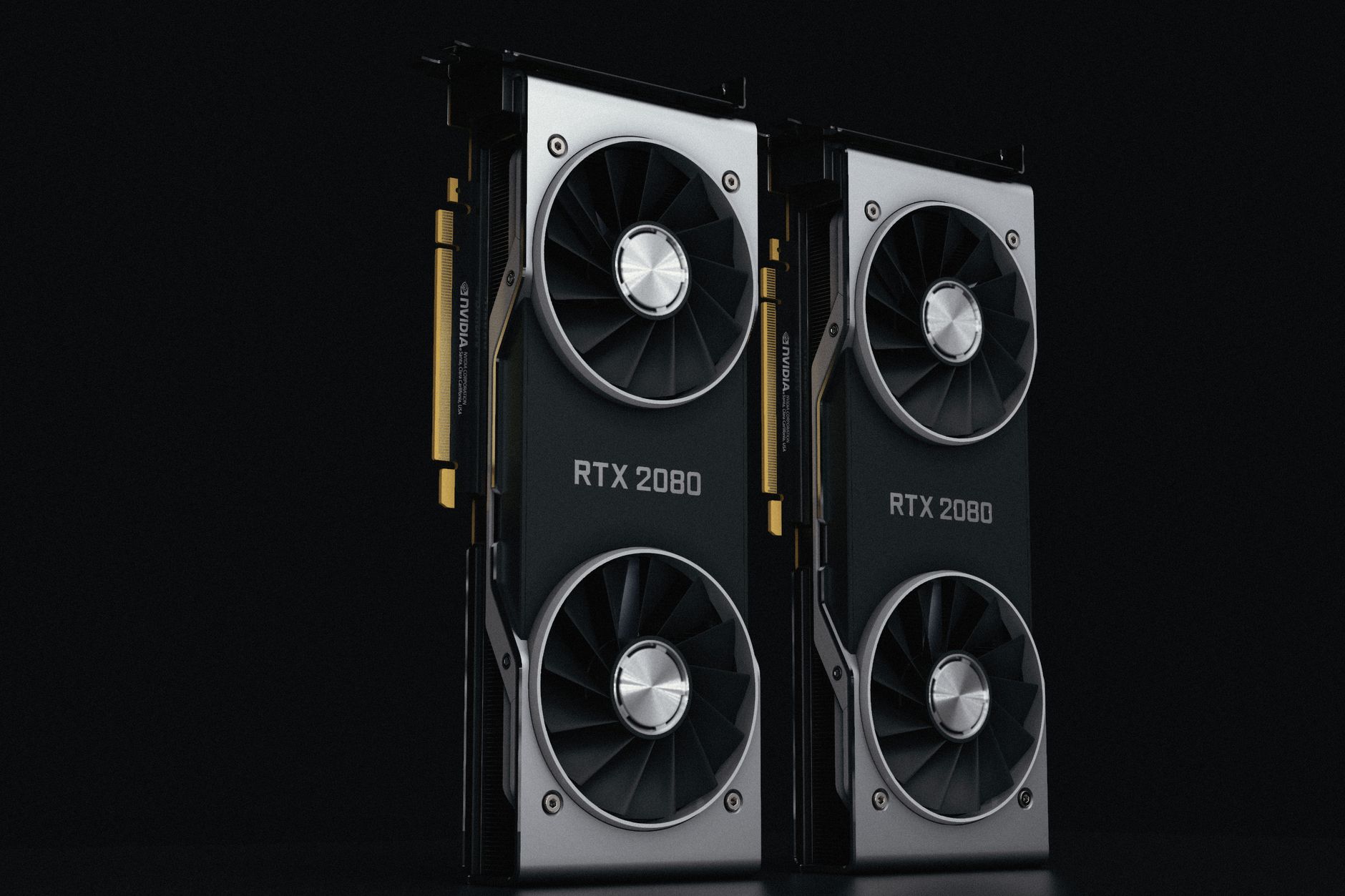
What makes this comparison genuinely difficult to call is that both cards represent real progress for their respective companies at this price tier. AMD’s RDNA 4 brought the RX 9060 XT much closer to competitive ray tracing than anyone expected based on RDNA 3’s trajectory. Nvidia’s Blackwell maintains a lead in the specific scenarios that demand the most from RT hardware. The card you should buy in 2025 depends almost entirely on how much of your gaming time will be spent in full path-traced titles – and whether the RTX 5060 Ti’s VRAM configuration at your local retailer is the 8GB or the 16GB version.