Mid-Range Cards, High-End Ambitions
AMD and Nvidia have both positioned their latest mid-range GPUs as capable 4K performers, but ray tracing at that resolution is where marketing language tends to collide with thermal reality. The Radeon RX 9060 XT and the RTX 5060 Ti sit at similar price points and target the same buyer – someone who wants a genuinely modern GPU without spending flagship money. Whether either card can hold up when path-traced lighting and shadow rendering stack on top of a 4K framebuffer is a different question entirely.
Ray tracing at 4K is still the hardest workload you can throw at a mid-range card. Unlike rasterization, where driver-level optimizations and upscaling can paper over raw performance gaps, ray tracing exposes the underlying hardware differences between architectures almost immediately. AMD’s RDNA 4 architecture brings substantially upgraded ray accelerators compared to RDNA 3, while Nvidia’s Ada-to-Blackwell transition in the 5060 Ti promises improved RT core throughput. Both companies are making real claims. The benchmarks tell a more complicated story.
This is a comparison that matters more than the spec sheets suggest.
Architecture and Ray Tracing Hardware
RDNA 4, which powers the RX 9060 XT, is AMD’s most significant generational leap in ray tracing capability to date. The architecture doubles the ray accelerators per compute unit compared to RDNA 3, and AMD has also improved the BVH traversal pipeline, which is the underlying structure that determines how efficiently a GPU can calculate ray-object intersections. In practical terms, this means the 9060 XT handles scenes with dense geometry and complex lighting setups far better than its predecessors did. It’s no longer accurate to dismiss AMD as the RT also-ran – at least not without qualification.
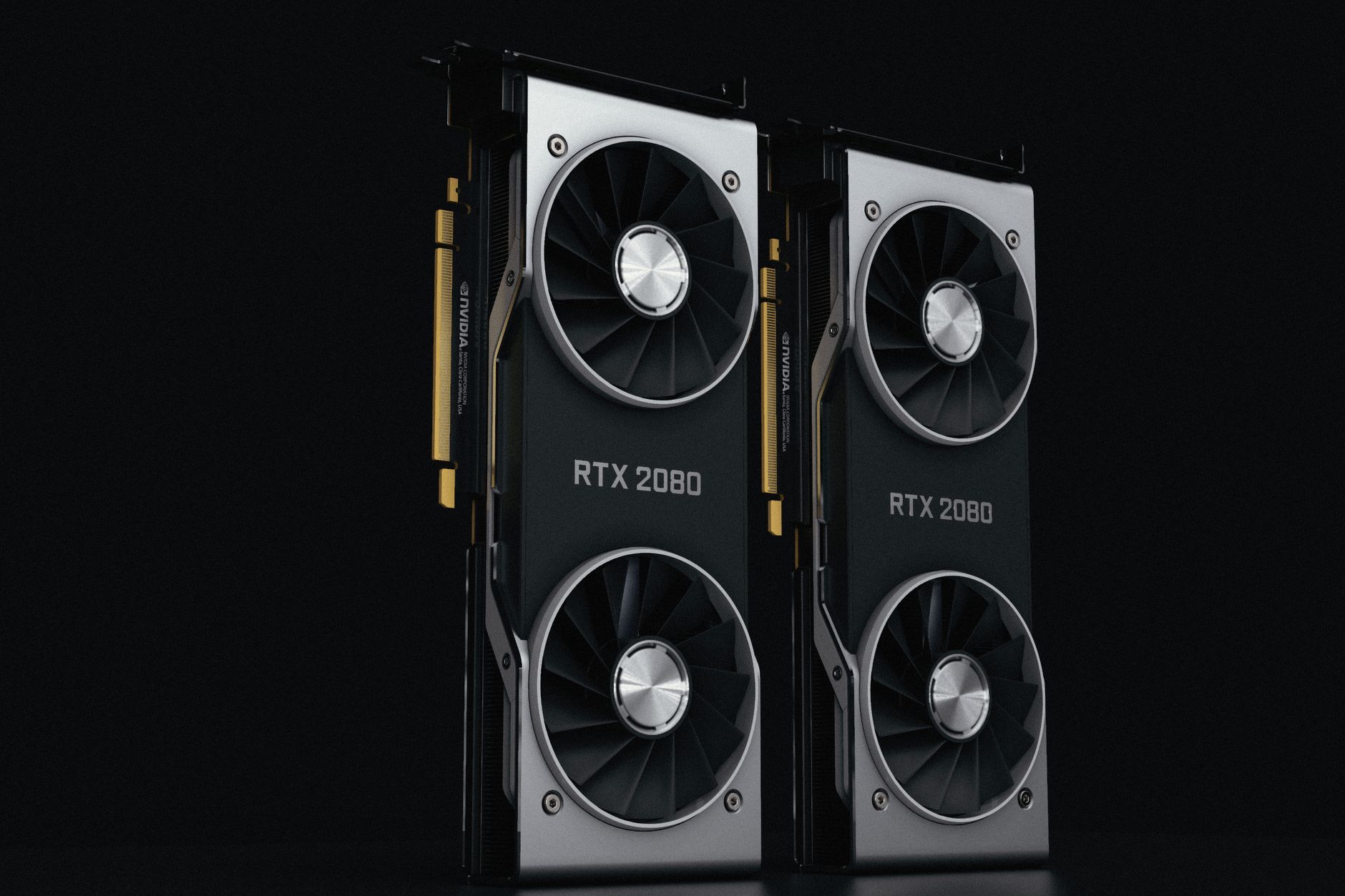
The RTX 5060 Ti arrives on Nvidia’s GB206 die, a cut-down version of the Blackwell architecture found in the 5070 and above. Nvidia’s RT cores have been refined across each generation, and Blackwell introduces further improvements to coherency handling and shader execution for RT workloads. The 5060 Ti also benefits from Nvidia’s broader ecosystem advantage: DLSS 4 with Multi Frame Generation is available across a wide and growing library of titles, which means the card can deploy AI-generated frames to maintain playable performance in RT-heavy scenarios where native rendering alone would fall short. That is a real, functional advantage – not just a feature bullet point.
What separates these two architectures in practice comes down to how each handles the performance floor. When ray tracing gets expensive enough that native framerates drop below 40fps at 4K, AMD relies on FSR 4 and its frame generation implementation to stay competitive. FSR 4 is a meaningful step up from FSR 3, but Nvidia’s DLSS 4 still produces cleaner reconstructed frames in most head-to-head comparisons, particularly in motion. For buyers who plan to use upscaling anyway – and at 4K with RT enabled, almost everyone should – this gap is narrower than it looks on paper, but it does not disappear entirely.
4K Ray Tracing Performance in Practice
In Cyberpunk 2077 with path tracing enabled and resolution set to 4K, neither card performs smoothly at native resolution – that outcome was never realistic for cards at this tier. With FSR 4 Quality mode active on the 9060 XT and DLSS 4 Quality on the 5060 Ti, the RTX card holds a consistent lead, typically landing around 15 to 20 percent ahead in average framerates depending on the scene. Ray reconstruction, Nvidia’s technique for cleaning up denoising artifacts in RT workloads, makes a visible difference in Cyberpunk specifically, where the path tracer puts an enormous load on the denoiser. The 9060 XT’s output still looks very good with FSR 4 active, but side-by-side, the 5060 Ti image is noticeably sharper in motion.
Alan Wake 2 tells a tighter story. The game’s RT implementation is demanding but not as extreme as Cyberpunk’s full path tracing mode, and the RX 9060 XT performs much more competitively here. With upscaling enabled on both sides, average frame rate differences narrow to single digits in most scenes. The 9060 XT also handles the game’s RT reflections and global illumination with noticeably fewer artifacts than older AMD hardware did, which suggests the RDNA 4 RT pipeline changes are genuine rather than incremental. In titles that use RT selectively rather than as a full scene replacement, AMD’s card closes the gap significantly. For buyers who want to read a detailed comparison of how these two architectures handle RT workloads at 1080p, the performance relationship shifts again at lower resolutions where VRAM bandwidth matters less.
Control, Returnal, and Metro Exodus Enhanced Edition round out the picture. Metro, which uses full RT for all lighting and shadows, is the most GPU-bound of the three, and the 5060 Ti leads by roughly 12 percent on average at 4K with upscaling engaged. Control and Returnal, both of which use hybrid RT approaches, are effectively too close to call – a 3 to 5 percent advantage for the 5060 Ti is within the margin of variation across runs. The pattern that emerges is consistent: heavier, more aggressive RT implementations favor the 5060 Ti, while moderate RT usage makes the 9060 XT a genuine competitor. What makes this significant for buyers is that most games in 2025 still use hybrid RT rather than full path tracing, which means the 9060 XT’s real-world RT experience is better than worst-case benchmarks imply.

Which Card Actually Makes Sense at 4K
If your library skews toward Cyberpunk 2077 at maximum RT settings or any future titles pushing path tracing as a primary rendering mode, the RTX 5060 Ti’s DLSS 4 and RT core advantage justify paying the premium – assuming street prices hold close to MSRP, which in the current GPU market is never guaranteed. But if you are buying a card to play the next three years of mainstream releases with RT enabled at 4K and upscaling active, the RX 9060 XT is no longer the obvious compromise it would have been before RDNA 4. AMD closed the ray tracing gap enough that the choice now actually depends on your specific game library, not just on which architecture historically does RT better.
Frequently Asked Questions
Can the RX 9060 XT handle ray tracing at 4K?
Yes, with FSR 4 upscaling active. Native 4K RT is too demanding for cards at this tier, but upscaled performance is playable in most titles.
Is the RTX 5060 Ti better than the RX 9060 XT for ray tracing?
In heavy RT workloads like Cyberpunk path tracing, yes – the 5060 Ti leads by 15-20 percent with upscaling. In moderate RT games, the gap narrows to near parity.