Two Cards, One Price Bracket, Very Different Philosophies
AMD and Nvidia are both targeting the 1440p gamer with their latest mid-range releases, but they are approaching that target from completely different angles. The Radeon RX 9070 leans on raw rasterization performance and a strong price-to-performance ratio, while the RTX 5060 Ti brings Nvidia’s DLSS 4 ecosystem, including Multi Frame Generation, into a lower price tier than ever before. On paper, the specs diverge sharply – 16GB of GDDR6 on the RX 9070 versus 16GB of GDDR7 on the 5060 Ti, RDNA 4 versus Blackwell architecture, and retail prices that have been anything but stable at launch.
The RTX 5060 Ti launched at $429 for the 16GB model, while the RX 9070 has been sitting closer to $479 to $499 depending on the AIB partner and availability. That gap is smaller than many expected, and it puts AMD in an uncomfortable spot where it needs to win on performance, not just price. For 1440p gaming specifically – the resolution where both cards are genuinely designed to live – the margins matter more than they do at 4K, where neither card can sustain high framerates without leaning heavily on upscaling.
This is where the honest testing conversation starts to get complicated.

Rasterization: Where AMD Holds Its Ground
In native 1440p rasterization, the RX 9070 performs well. Across titles like Cyberpunk 2077, Black Myth: Wukong, and Alan Wake 2 – all games that stress modern GPU architectures heavily – the RX 9070 consistently delivers framerates that match or exceed the RTX 5060 Ti when upscaling is disabled and settings are pushed to high or ultra. In Cyberpunk 2077 without ray tracing at 1440p ultra, the RX 9070 pushes into the 85 to 95 fps range, while the 5060 Ti tends to land 5 to 10 frames lower depending on the scene. That is a real advantage, not a rounding error.
The story shifts when ray tracing is involved. Nvidia’s architecture has historically handled ray tracing workloads more efficiently, and the Blackwell generation does not change that dynamic. In Alan Wake 2 with full ray tracing enabled at 1440p, the RTX 5060 Ti pulls ahead, and the gap widens if you enable path tracing. AMD has closed the ray tracing gap significantly with RDNA 4 compared to RDNA 3, but closing the gap is not the same as winning. If ray-traced visuals are a priority and you plan to use them regularly, the 5060 Ti has the better hardware foundation for those workloads. The Radeon RX 9070 XT vs RTX 5070 comparison at 1440p rasterization showed a similar pattern one tier up – AMD wins on rasterization throughput, Nvidia recovers with ray tracing and upscaling.
One area where the RX 9070 quietly impresses is in open-world titles with high draw call counts and large asset streaming. Games like Hogwarts Legacy and Starfield – titles that are not particularly ray-trace-heavy but demand consistent memory bandwidth – run noticeably smoother on the RX 9070, and the 16GB GDDR6 framebuffer holds up well even with texture packs enabled. Memory bandwidth is not the RX 9070’s strongest spec on paper, but RDNA 4’s improved cache hierarchy helps close that gap in practice.
The DLSS 4 Problem for AMD
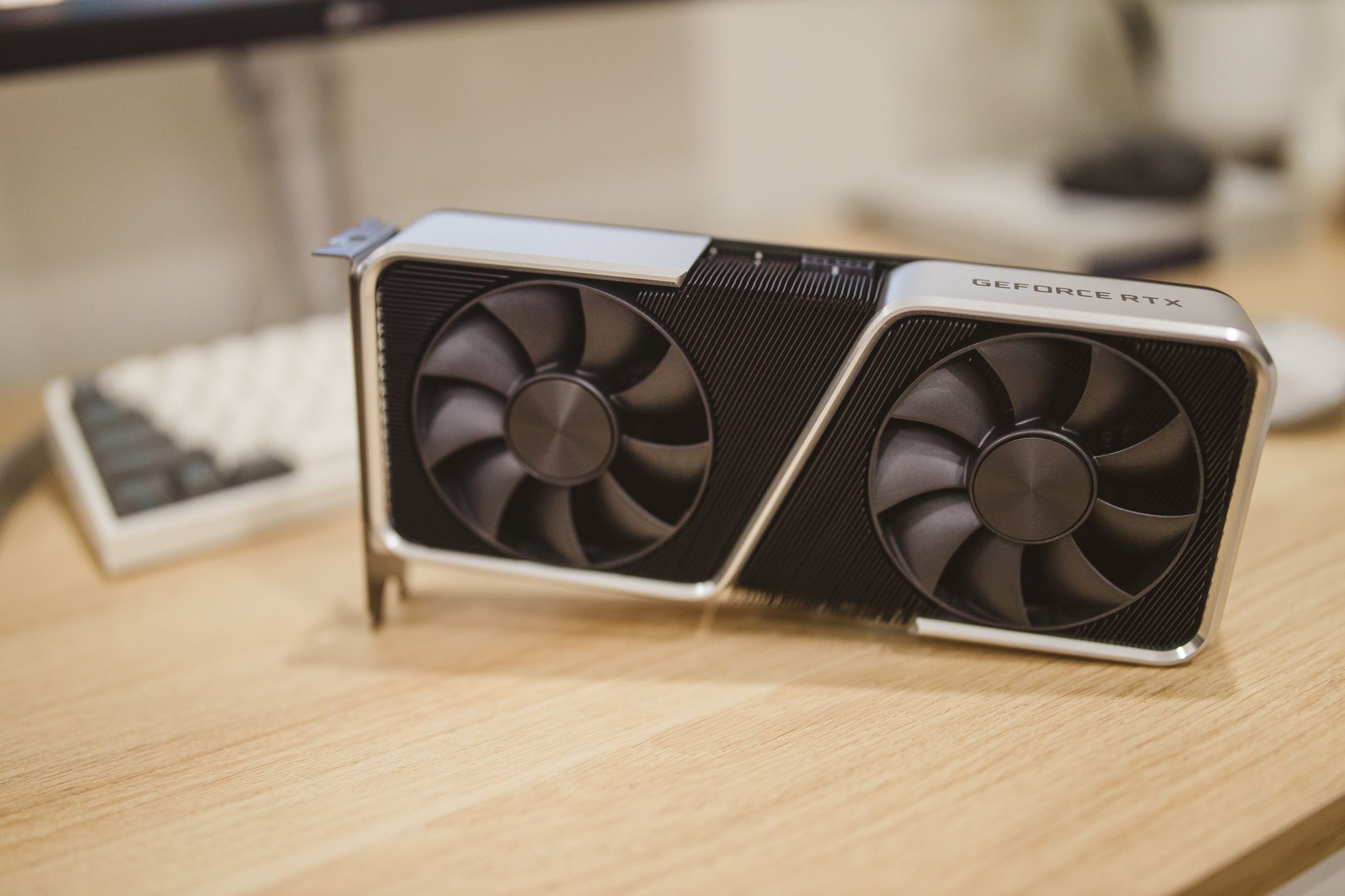
Frame generation changes the calculus entirely, and this is where the RTX 5060 Ti argument gets genuinely strong. With DLSS 4 Quality mode enabled and Multi Frame Generation active, the 5060 Ti can post framerates that the RX 9070 simply cannot match through any native rendering path. In Cyberpunk 2077 at 1440p with all features enabled, the 5060 Ti with DLSS 4 MFG can produce output frame rates well above 120 fps in scenarios where the RX 9070 is delivering 70 to 80 fps natively. That is the marketing headline Nvidia wants you to take home.
The honest caveat is that Multi Frame Generation introduces latency. Nvidia’s Reflex integration does a reasonable job of managing this, but generated frames are not the same as rendered frames in terms of input responsiveness. For competitive shooters like Valorant or Counter-Strike 2, most players will not be using MFG at all, which collapses the 5060 Ti’s advantage to near zero in those titles. For slower-paced single-player experiences – open world games, RPGs, cinematic action games – the smoother output from MFG is harder to dismiss, and the visual artifacts are subtle enough at 1440p that most players will not notice them under normal play conditions.
AMD’s FSR 4 is competitive with DLSS 4 Quality at 1440p in terms of image quality, which is a genuine achievement for AMD. FSR 4 runs on the RX 9070’s hardware ML accelerators and produces results that, in static comparisons, are nearly indistinguishable from DLSS 4 output. The gap between the two companies on upscaling quality has essentially closed. What FSR 4 does not have is Multi Frame Generation at the hardware level, which means AMD’s card is fighting with one hand tied behind its back in the high-framerate output battle.
Which Card Actually Makes Sense Right Now
If the price gap holds near $50 in AMD’s favor, the RX 9070 is the stronger value for 1440p gaming in titles that do not lean on ray tracing or frame generation – which still describes the majority of what most people actually play. The 5060 Ti wins on ecosystem depth, Multi Frame Generation headroom, and ray tracing efficiency, but those advantages cost money and require specific software conditions to materialize. For a buyer who plays a wide mix of games at 1440p, wants the framebuffer headroom of 16GB, and does not want to think about whether their game supports DLSS 4 MFG, the RX 9070 is a cleaner recommendation – assuming AMD’s driver stability at launch holds up, which has historically been the wildcard that undermines otherwise solid AMD hardware launches.