The VRAM Question That Actually Matters
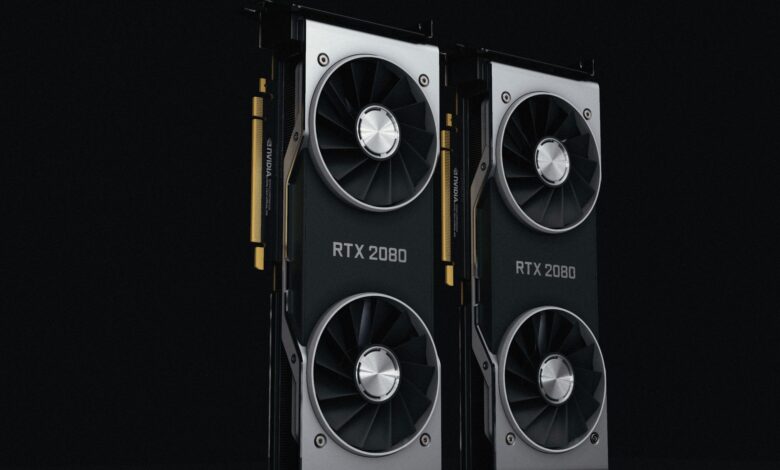
Nvidia’s RTX 5060 Ti launches in two configurations – 8GB and 16GB – and the gap between them is more than just a spec sheet line item. At 1440p, where texture budgets climb fast and modern titles push VRAM harder than ever, choosing the wrong version could mean stuttering through games you paid full price to enjoy. This is the card aimed squarely at the mainstream market, priced for players who want solid 1440p performance without breaking into flagship GPU territory.
The price difference between the two SKUs sits at roughly $50 to $70 depending on the board partner, which sounds manageable until you realize that most people keep a GPU for three to four years.
What makes this comparison genuinely complicated is that 8GB was considered comfortable at 1440p just two years ago. That window is closing faster than Nvidia’s pricing strategy accounts for.
Where 8GB Holds Up and Where It Breaks
At 1440p with standard rasterization, the 8GB model runs cleanly through most competitive titles. Games like Counter-Strike 2, Valorant, Apex Legends, and even Forza Horizon 5 at high settings sit well within the 8GB budget. These titles were built or optimized for a wide hardware range, and their VRAM usage at 1440p rarely pushes past 6GB even with quality textures enabled. In those scenarios, the 8GB card is not a compromise – it performs identically to the 16GB version because the extra VRAM simply goes unused.
The wall appears in specific, increasingly common scenarios. Alan Wake 2 at 1440p with high textures and path tracing can spike past 10GB. Hogwarts Legacy on ultra settings has been measured exceeding 8GB on several hardware test benches. The Last of Us Part I on PC – notoriously unoptimized at launch but now patched – still demands significant VRAM overhead at higher quality presets. When a game blows past the card’s memory ceiling, the GPU begins pulling data from system RAM over the PCIe bus, which introduces the kind of micro-stutter that frame counters don’t fully capture but players immediately feel.
Ray tracing and upscaling complicate this further. Nvidia’s DLSS 4 with Multi Frame Generation is a headline feature of the RTX 5000 series, and enabling it on top of already heavy texture loads pushes VRAM demand higher. The 8GB model can still run DLSS 4 – the feature itself does not require 16GB – but games that combine high-res textures, ray tracing, and frame generation simultaneously create a VRAM pressure scenario where the 8GB version visibly struggles while the 16GB card does not.

The 16GB Case Is About the Next Two Years, Not Today
The honest framing for the 16GB RTX 5060 Ti is forward compatibility. Right now, in mid-2025, only a subset of titles actually stress 8GB at 1440p. But the game pipeline tells a different story. Titles built on Unreal Engine 5 – which uses Nanite geometry and Lumen global illumination by default – carry substantially higher VRAM footprints than their predecessors. Black Myth: Wukong, released in 2024, already pushed 8GB cards to their limit at 1440p ultra settings. The games shipping in 2026 and 2027 will be built on the same architecture with even higher default texture pools.
There is also the question of texture mods. If you play games like Skyrim, Fallout 4, or any heavily modded title, 8GB at 1440p with high-resolution texture packs is not viable. The modding community has effectively made 12GB a soft floor for that use case, and it did so a couple of years ago.
The 16GB version also holds stronger resale value. When 1440p becomes the baseline for mid-range gaming – as 1080p did before it – cards with adequate VRAM age more gracefully. A GPU that stalls on a $70 difference at purchase can cost more in practice when it forces a replacement cycle 18 months earlier than necessary.
The Verdict Is in the Use Case, Not the Benchmark
Synthetic benchmarks and average frame rate numbers will show minimal differences between the 8GB and 16GB RTX 5060 Ti in most published reviews, because most review suites use titles that fit within 8GB. That is useful data, but it does not reflect how a card performs two years into its lifecycle when your game library has expanded to include titles that were not out when you bought the hardware. If your gaming is limited to esports titles and online multiplayer with stable, well-optimized engines, the 8GB model is a clean buy at a lower price. If you play AAA single-player games, use texture mods, or have any intention of running ray tracing at quality settings, the 16GB version is the one that actually covers the 1440p promise Nvidia is making with this launch.
What makes the choice frustrating is that Nvidia controls both configurations and sets the pricing – meaning the $50-$70 gap is not a market outcome but a deliberate segmentation decision. The company is betting that enough buyers will choose the lower price point to justify splitting the lineup. Anyone who has owned an 8GB card and hit its ceiling mid-generation knows exactly which version they would pick the second time.