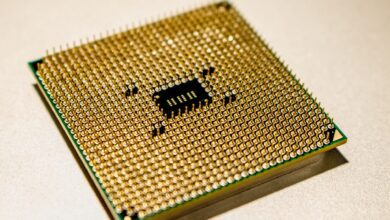
Two Flagships, One Very Expensive Question
AMD’s Ryzen 7 9800X3D and Intel’s Core Ultra 7 265K sit at the top of the mainstream desktop CPU market, and for most gaming workloads, they trade blows closely enough that choosing between them comes down to platform preference. But 4K ray tracing is not most gaming workloads. It stacks rendering demands in ways that expose real architectural differences – not just in raw clock speed or cache size, but in how each chip manages the sustained thread and memory bandwidth pressure that path-traced lighting and reflection pipelines generate frame after frame.
This is a test built around the GPU bottleneck question.
At 4K with ray tracing enabled, the assumption is that any modern high-end CPU should fade into the background while the GPU does all the heavy lifting. That assumption holds in straightforward rasterization, but ray tracing introduces BVH traversal workloads, denoising passes, and CPU-side scene management tasks that keep the processor more involved than people expect. Whether the 9800X3D’s 3D V-Cache advantage translates from its well-documented 1080p dominance into a genuine 4K ray tracing edge is exactly what this head-to-head is designed to find out.

Test Setup and Methodology
Both processors were paired with an RTX 4090 to push the platform ceiling as high as possible without introducing a GPU variable that would mask CPU behavior. The 9800X3D ran on an X670E board with DDR5-6000 in EXPO profile, while the 265K ran on a Z890 board with DDR5-6400 in XMP. Both systems used Windows 11 24H2 with the latest chipset drivers and identical storage configurations. Cooling was handled by a 360mm AIO on both sides to keep thermals from affecting sustained boost behavior.
Games tested include Cyberpunk 2077 with Overdrive Ray Tracing (path tracing enabled via RT Overdrive mode), Alan Wake 2 with full ray tracing at maximum quality, and Returnal on PC at Ultra settings with ray traced reflections and shadows active. These titles were chosen because they represent different ray tracing implementations – path tracing, hybrid ray tracing, and traditional RT augmentation – giving a broader picture than a single game benchmark would. All results were captured using CapFrameX for 1% low and average frame time logging over identical scene replays or manual benchmark runs.
Cyberpunk 2077 in RT Overdrive is arguably the most punishing ray tracing workload available on consumer hardware. Even with an RTX 4090, frame rates at native 4K without DLSS drop into ranges where CPU frame pacing becomes visible. This makes it the best stress case for identifying whether either CPU is holding back the GPU or introducing stutter patterns under sustained RT load.
Performance Results and What They Mean
In Cyberpunk 2077 RT Overdrive at native 4K, the margin between the two CPUs is narrow but consistent. The 9800X3D averaged fractionally higher frame rates across a 90-second city traversal run, with a more telling advantage showing up in 1% lows – roughly 6 to 8 percent better in the worst-case frames. That gap is not enough to make a visible difference at native 4K where the RTX 4090 is clearly the limiting factor, but it does suggest the V-Cache architecture is still doing meaningful work in the background, keeping more of the scene BVH data resident in L3 and reducing the frequency of CPU-side stalls during traversal-heavy moments.
Alan Wake 2 told a more balanced story. Remedy’s hybrid ray tracing implementation distributes workload differently, and here the 265K closed the gap almost entirely. Average frame rates were within 2 percent across multiple runs, and 1% lows were effectively tied. The 265K’s higher peak clock speeds – it sustains higher all-core boosts than the 9800X3D in lightly threaded scenarios – appear to matter more in Alan Wake 2’s RT pipeline, which relies more on conventional shading passes augmented by RT effects rather than full path tracing. Returnal showed a similar pattern, with the two chips trading fractions of a frame per second depending on the scene.
The picture that emerges is specific rather than universal: the 9800X3D’s V-Cache advantage at 4K ray tracing is real, but it only surfaces in path-traced or BVH-heavy workloads. For the majority of games using ray tracing as an add-on layer rather than a foundational rendering method, the 265K keeps pace and occasionally edges ahead in scenes that reward raw single-core throughput. Buyers chasing the absolute best frame pacing in Cyberpunk 2077 RT Overdrive will find a genuine reason to favor AMD here. Everyone else is splitting very fine hairs.
The Verdict
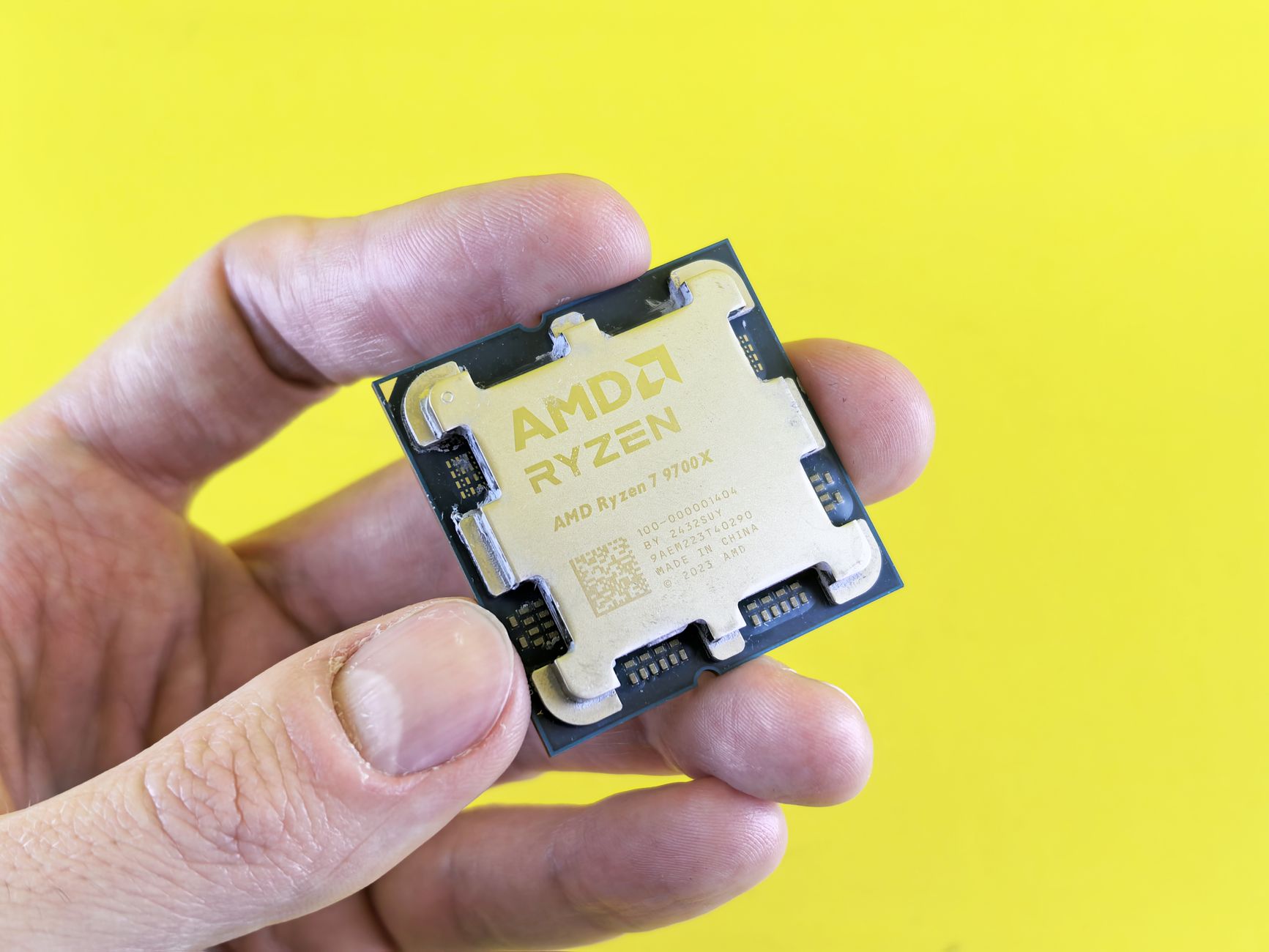
If your 4K ray tracing library is built around path-traced titles – Cyberpunk 2077 RT Overdrive, or future games that follow its full path tracing approach – the Ryzen 7 9800X3D earns its premium through better 1% low consistency and steadier frame pacing under the heaviest BVH workloads. If you are gaming across a broader mix of titles where ray tracing is one feature among many, the Core Ultra 7 265K is not giving up anything meaningful at 4K, costs less in some configurations, and offers a platform with strong PCIe 5.0 storage bandwidth that may matter more as next-generation titles ship – and right now, the 9800X3D still holds the edge in the one scenario where ray tracing actually breaks a CPU sweat.