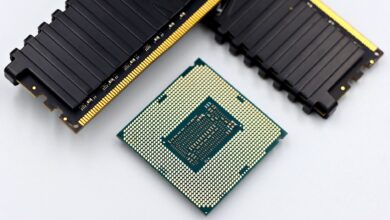
Two Flagship CPUs, One 1440p Gaming Benchmark
AMD’s Ryzen 9 9950X3D and Intel’s Core Ultra 9 285K sit at the top of their respective desktop lineups, but at 1440p gaming, the margin between them is narrower than their price tags and spec sheets suggest. Both chips are overkill for most gaming rigs – yet that is exactly why testing them head-to-head matters.

What Each Chip Brings to the Table
The Ryzen 9 9950X3D is AMD’s first 16-core processor to ship with 3D V-Cache technology. It combines a 16-core Zen 5 architecture with 128MB of stacked L3 cache, pushing the total cache pool to 144MB. That is a massive amount of accessible cache for a gaming workload, and it is the key differentiator AMD is banking on here. The chip runs on AM5 and supports DDR5 memory, which aligns with AMD’s recent high-end platform standard.
Intel’s Core Ultra 9 285K takes a different path. Built on the Lion Cove and Skymont hybrid architecture under the Arrow Lake platform, it uses 24 cores split across 8 Performance cores and 16 Efficient cores. Intel dropped Hyper-Threading on the P-cores with Arrow Lake, a deliberate choice that affected multi-threaded workloads more than gaming. For 1440p gaming specifically, the 285K relies on high single-core frequency and improved IPC rather than cache volume.
At stock settings, the 9950X3D has a base clock of 4.3GHz and a boost up to 5.7GHz. The 285K boosts its P-cores to 5.7GHz as well, making frequency alone a non-differentiator. What separates them in gaming scenarios is how each chip handles latency-sensitive workloads – and that is where AMD’s 3D V-Cache is designed to win. Cache-sensitive game engines repeatedly pull the same data sets, and having 144MB of low-latency L3 on-die removes a bottleneck that standard chips hit regularly.
Platform costs also factor into the real-world decision. The 9950X3D requires an AM5 motherboard, which is available at a range of price points but demands DDR5. The 285K works with Intel’s LGA1851 socket on Z890 boards, which launched alongside Arrow Lake. Neither platform is cheap at the flagship tier, and both require DDR5 for competitive performance.
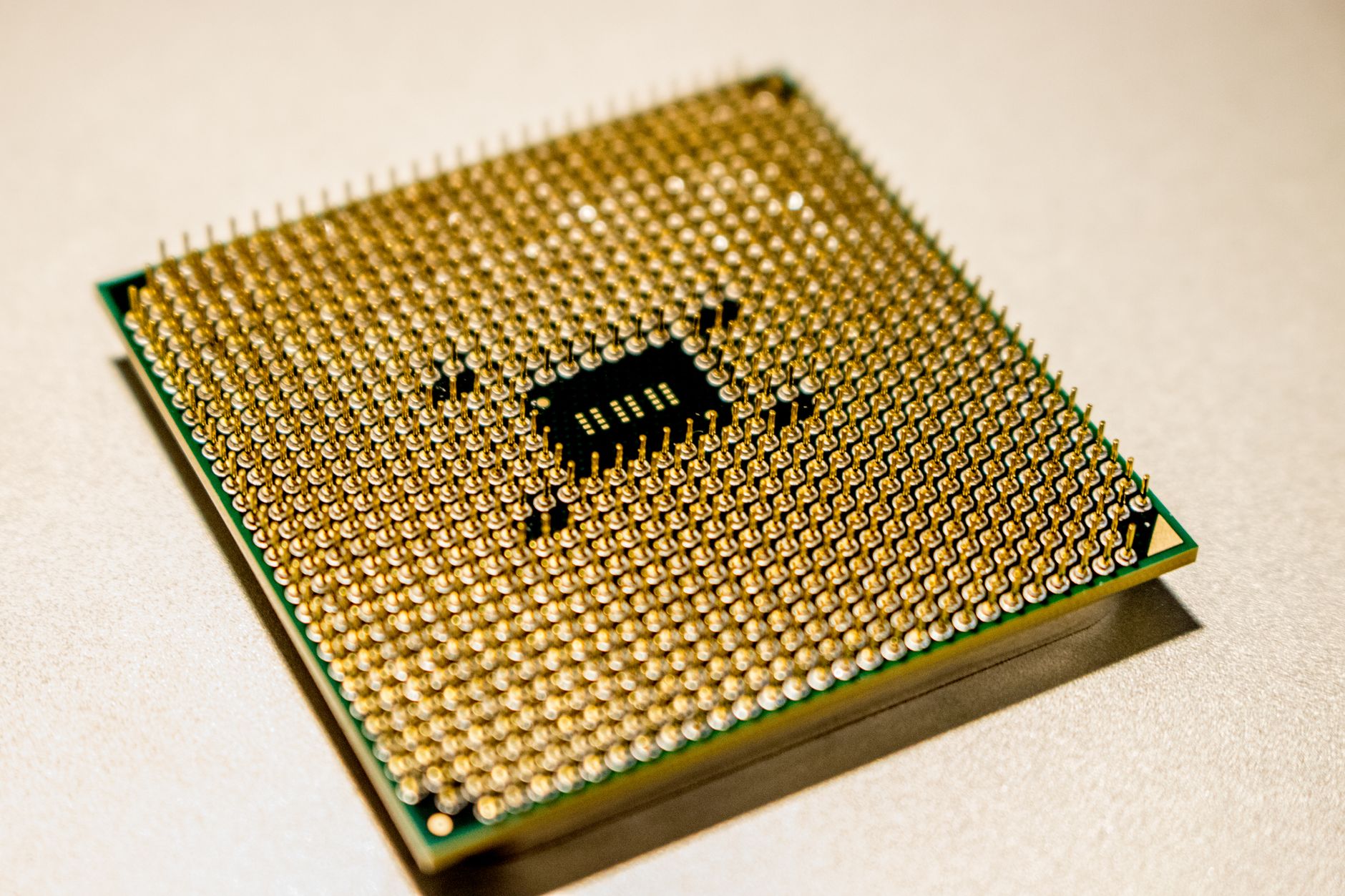
1440p Gaming Performance Across the Game Library
At 1440p with a high-end GPU like the RTX 4090 or RX 7900 XTX, CPU-bound scenarios become more visible than at 1080p or 4K. The 3D V-Cache advantage the Ryzen 9 9950X3D carries is most apparent in CPU-limited conditions – titles where frame generation and GPU overhead are not the bottleneck. In games like Cyberpunk 2077, Hogwarts Legacy, and Counter-Strike 2, the 9950X3D consistently posts higher average framerates and tighter 1% lows than the 285K. Those 1% low figures are the real story at high refresh rates, because they determine whether a 165Hz or 240Hz display actually feels smooth.
The 285K is not simply outclassed, though. In titles that respond better to raw thread availability and efficient core scheduling – certain strategy games, some open-world engines with heavy background simulation – Arrow Lake’s 24-core configuration holds competitive ground. Microsoft Flight Simulator and Total War: Warhammer III are both titles where the 285K’s core count architecture reduces stuttering during complex scene transitions. These are edge cases in the gaming context, but they exist.
For the majority of the mainstream gaming library – Call of Duty: Black Ops 6, Baldur’s Gate 3, Elden Ring, Starfield, Forza Horizon 5 – the 9950X3D leads by anywhere from a few frames to a notable margin depending on how cache-sensitive the engine is. The AMD chip also produces more consistent frametimes, which matters for competitive play at 1440p where players are typically targeting above 144fps. At that level, frametimes of 6ms or below become the benchmark, not just average FPS numbers.
Ray tracing at 1440p adds another dimension to the comparison. The 9950X3D’s cache advantage extends into ray-traced workloads because BVH traversal – the underlying process that makes real-time ray tracing work – is highly cache-sensitive. In titles like Alan Wake 2 and Indiana Jones and the Great Circle with path tracing or full ray tracing enabled, the 9950X3D produces more stable frametimes even when the GPU is the primary limiter. This is the same pattern covered in the Ryzen 7 9800X3D vs Core Ultra 7 265K ray tracing comparison, where lower-tier 3D V-Cache parts showed a consistent advantage in RT-heavy scenes.
Power consumption is one area where the 285K carries a real disadvantage. The Arrow Lake chip can spike significantly under gaming load depending on board power limits, while the 9950X3D’s default power profile is more restrained despite the extra cache layer. Over extended sessions, the 9950X3D runs cooler and draws less power during gaming workloads – which matters for users who prioritize long-term stability over raw peak performance.
Who Should Actually Buy Which Chip
For a dedicated 1440p gaming build where the processor budget is in the flagship range, the 9950X3D has the stronger overall case. The cache architecture directly benefits the game engines that dominate PC gaming in 2024 and into 2025, and the consistency advantage at high framerates is observable rather than theoretical. The 285K is a better fit for users who split their workload between gaming and creative applications – video editing, 3D rendering, and tasks that benefit from Arrow Lake’s hybrid core efficiency. Content creation workloads often favor the 285K’s architecture, making it the more versatile chip for mixed-use builds.

The honest tension here is that neither chip is the right answer for every buyer. The 9950X3D costs more at launch, the AM5 ecosystem requires upfront investment, and buyers who game at 4K with heavy GPU overhead will see the CPU gap shrink considerably. At 1440p with a premium GPU and a high-refresh display, the Ryzen 9 9950X3D earns its premium. At 4K, the conversation changes entirely.