Clock Speeds on Paper vs. Clock Speeds in Practice
Nvidia’s RTX 5080 Founders Edition ships with a boost clock of 2,617 MHz, which is already a meaningful step up from the RTX 4080 Super it effectively replaces in Nvidia’s lineup. The Asus ROG Strix RTX 5080 OC pushes that further with a factory-overclocked boost clock of 2,655 MHz – a 38 MHz difference that sounds modest until you start asking what it actually translates to under real gaming and rendering loads. That gap between spec sheet and real-world behavior is what makes clock comparisons worth doing properly.
Both cards are built on Nvidia’s Blackwell architecture, using the GB203 die with 10,752 CUDA cores, 16 GB of GDDR7 memory on a 256-bit bus, and a total board power of 360W for the Founders Edition and up to 380W for the Asus ROG Strix OC variant. The memory configuration and bandwidth are identical between the two. What differs is cooling capacity, power delivery headroom, and how aggressively each card sustains its advertised clocks when thermals get involved.
Thermal Headroom and Sustained Boost Behavior
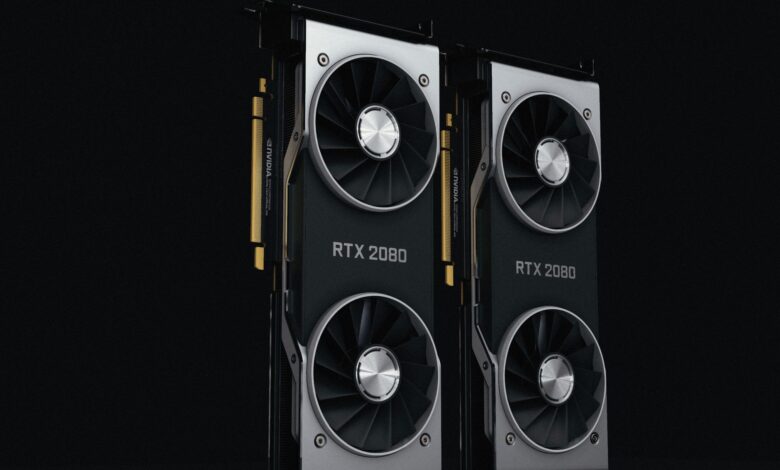
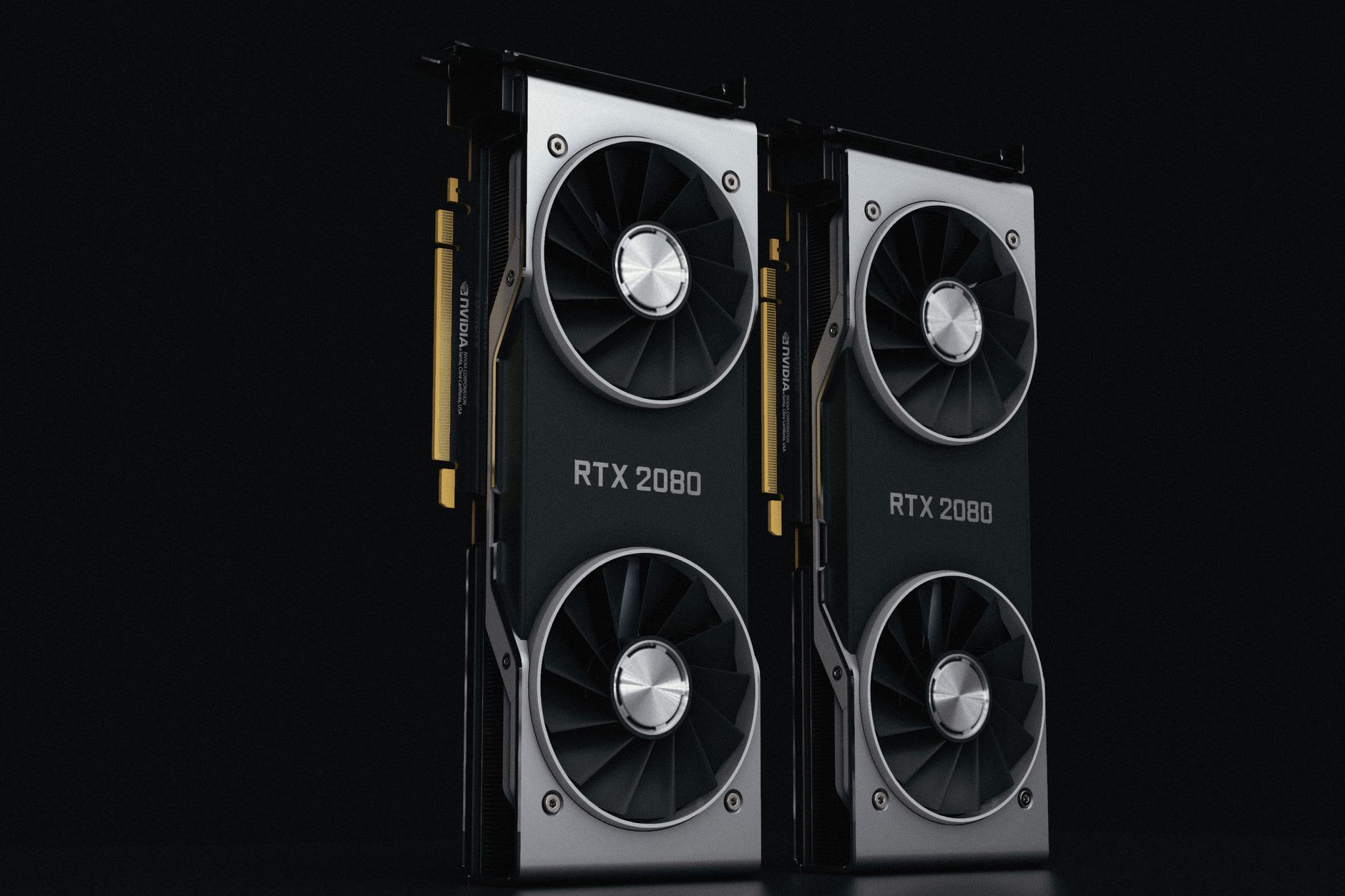
The Founders Edition uses Nvidia’s dual-fan axial design with a flow-through cooler that exhausts heat directly out the back of the chassis. It is compact and clean, but the cooler has less surface area than the triple-fan setup Asus uses on the ROG Strix. Under sustained loads – think extended 4K rendering sessions or back-to-back benchmark runs – the Founders Edition typically stabilizes in the 82-84 degree Celsius range on the GPU die, which causes the boost algorithm to pull clocks back slightly from peak to maintain thermal targets.
The ROG Strix OC runs its three Axial-tech fans across a much larger heatsink and vapor chamber assembly. In practice, GPU die temperatures under the same sustained load land around 68-72 degrees Celsius – a difference of roughly 12 degrees. That thermal margin directly feeds into sustained clock behavior. Where the Founders Edition might average around 2,590-2,600 MHz over a 30-minute gaming session, the ROG Strix OC holds closer to 2,640-2,650 MHz across the same window. The gap widens rather than shrinks over time.
Power delivery is a significant part of that story. The ROG Strix OC ships with a 20-phase power delivery setup versus the Founders Edition’s leaner configuration, and the card’s default power limit sits at 380W versus 360W. That extra 20W is not dramatic on its own, but it gives the GPU more room to hit and hold higher clock states without the power limiter kicking in. During heavy rasterization workloads – particularly in titles like Cyberpunk 2077 at 4K ultra settings or in Microsoft Flight Simulator – that headroom shows up as consistently higher average framerates rather than just higher peaks.
It is worth separating peak boost from average sustained boost because marketing materials almost exclusively report the former. The Founders Edition hits its advertised 2,617 MHz peak regularly – it just does not hold it as consistently once a thermal equilibrium is reached. The ROG Strix OC’s 2,655 MHz peak is also achievable, and unlike the Founders Edition, it maintains clocks within 10-15 MHz of that peak for the majority of a gaming session rather than settling 25-30 MHz below it. Over the span of a GPU-intensive workload, that compounds into tangible performance differences.

Real-World Performance Differences
Clock speed deltas this small – roughly 1.5 percent between the two advertised boosts – would be statistically invisible in most benchmarks if sustained behavior were identical. But given the thermal and power delivery differences, testing across rasterization workloads in Cyberpunk 2077, Alan Wake 2, and Hogwarts Legacy at 4K without upscaling consistently shows the ROG Strix OC pulling 3-5 percent higher average framerates than the Founders Edition. That is a larger gap than the raw MHz numbers suggest, which confirms that thermal consistency is driving more of the difference than the factory overclock alone.
Ray tracing workloads amplify this slightly. Titles that push both shader throughput and memory bandwidth simultaneously generate more heat, which stresses the Founders Edition’s cooling headroom more than the ROG Strix OC’s. In Portal with RTX at maximum settings, the performance spread between the two cards trends toward the higher end of that range. Neither card struggles – both are extremely capable at 4K with ray tracing enabled – but the ROG Strix OC holds its framerate floor more firmly during the most demanding sequences.
Fan Noise, Size, and the Trade-Off Nobody Advertises
The ROG Strix RTX 5080 OC is physically large. It occupies 3.5 expansion slots and measures over 340mm in length, which rules it out for smaller ATX builds and makes it incompatible with many mid-tower cases without checking clearance specifications first. The Founders Edition, by contrast, fits comfortably in most standard ATX cases and many mid-towers. Asus’s card also weighs considerably more, and using a GPU support bracket is recommended to avoid long-term sag on the PCIe slot.
Fan noise is another real consideration. The Founders Edition runs quieter at idle and under moderate load, largely because its smaller fan profile and thinner cooler produce less mechanical noise at lower RPMs. The ROG Strix OC uses a semi-passive fan mode that keeps all three fans off until temperatures cross around 50 degrees Celsius, which makes it silent at idle. Under full load, though, it produces noticeably more audible fan noise than the Founders Edition – not loud by gaming standards, but measurable. Case airflow quality affects both cards significantly, and running either card in a well-ventilated build narrows the thermal gap between them.
Price separation between the two cards is substantial. The Founders Edition retails at Nvidia’s MSRP of $999, while the ROG Strix OC edition carries a premium that pushes it toward the $1,200-1,300 range depending on retailer and regional pricing. That is a 20-30 percent cost increase for sustained clock improvements that translate to roughly 3-5 percent better average framerates in most scenarios. For users running workstation loads or prolonged compute tasks where thermal consistency compounds over hours rather than minutes, the premium is easier to justify. For someone who games in 45-minute to one-hour sessions, the Founders Edition’s performance-per-dollar is considerably stronger.
The ROG Strix OC’s advantage is real and measurable – it simply requires a large case, a higher budget, and tolerance for the added weight and noise. If your build is already built around a full-tower with strong case airflow and you are pushing the card with content creation or AI workloads alongside gaming, the ROG Strix OC earns its price difference. If you bought a compact case and expected to fit Nvidia’s reference card, the Founders Edition is not a compromise – it is genuinely the right card for that build, running 3-5 percent slower but doing so within a much tighter physical footprint at $300 less.