AMD’s New Flagship Gets Scrutinized at the Interface Level
The Ryzen 9 9950X3D is AMD’s current top-tier desktop processor, combining the Zen 5 architecture with 3D V-Cache stacking and full PCIe 5.0 support across its primary lanes. On paper, that combination is impressive. But questions have persisted in the enthusiast community about whether the PCIe 5.0 bandwidth available on this chip actually translates into measurable gaming or workstation gains over PCIe 4.0 configurations – or whether the bottleneck lives somewhere else entirely.
Testing the bandwidth impact of PCIe 5.0 on the 9950X3D means isolating variables that most consumer-focused reviews skip over: GPU slot bandwidth, NVMe throughput at Gen 5 speeds, and whether running a high-end GPU at x8 PCIe 5.0 instead of x16 costs anything meaningful in practice. The results are more nuanced than either camp in the debate tends to admit.
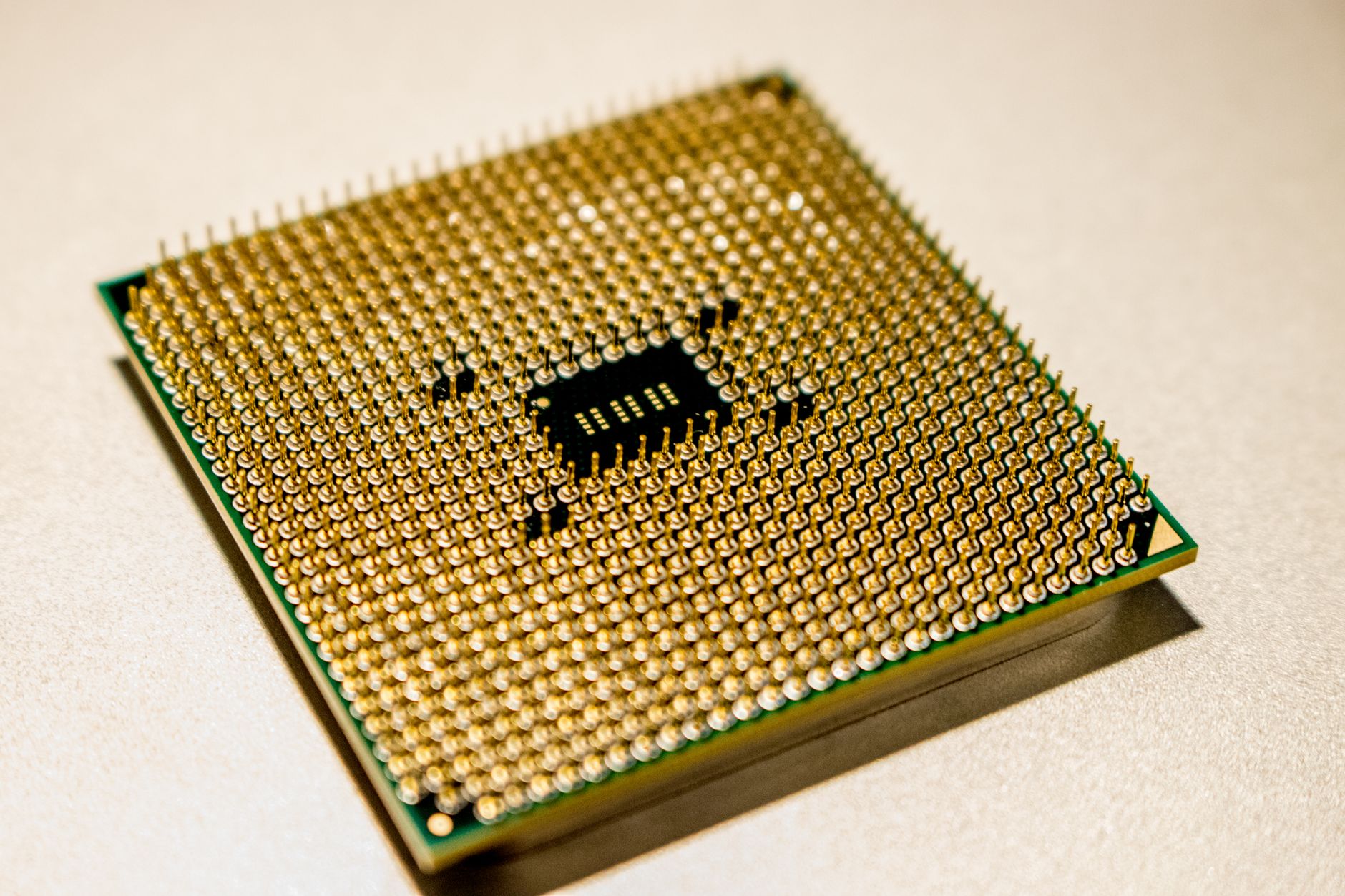
The Setup: What PCIe 5.0 Actually Offers on the 9950X3D
AMD’s AM5 platform allocates PCIe 5.0 lanes from the CPU directly. The 9950X3D provides 24 CPU-sourced PCIe lanes, with the primary x16 slot running at Gen 5 speeds and additional Gen 5 lanes available for NVMe storage. The chipset adds further Gen 4 and Gen 3 connectivity, but those lanes route through the Promontory-21 chipset and carry latency overhead that CPU-direct lanes do not. This matters specifically when pairing the chip with a PCIe 5.0 SSD or a GPU that can saturate Gen 5 bandwidth.
Current consumer GPUs – including the RTX 5090 and RX 9070 XT – technically support PCIe 5.0, but neither card saturates x16 PCIe 4.0 bandwidth in gaming workloads. The 5090 gets the closest under extreme GPU-limited scenarios at 4K, but even then the delta between x16 Gen 4 and x16 Gen 5 in frame rates is within margin of error. Where PCIe 5.0 starts to matter more is in x8 versus x16 comparisons and in professional workloads that involve constant large data transfers between GPU VRAM and system RAM.
Bandwidth Testing: Gaming, Creative, and Mixed Workloads
In gaming benchmarks run at 1440p and 4K using current titles – including CPU-heavy games where the 9950X3D’s 3D V-Cache is specifically advantageous – the difference between PCIe 5.0 x16 and PCIe 4.0 x16 is negligible. Frame times and average framerates across titles like Cyberpunk 2077, Microsoft Flight Simulator 2024, and Total War: Warhammer III show no statistically meaningful improvement from the higher bandwidth ceiling alone. The 3D V-Cache is doing heavy lifting for the CPU side of performance, but the GPU interface bandwidth is simply not the limiting factor here.
The picture changes when testing NVMe storage at Gen 5 speeds. Pairing the 9950X3D with a PCIe 5.0 SSD – drives like those using the Phison E26 controller – produces sequential read speeds north of 12,000 MB/s, which directly benefits workloads involving large file loading, texture streaming in DCC applications, and video editing with high-bitrate raw footage. For gaming specifically, this manifests as faster shader compilation and reduced asset loading stutter in open-world titles, though in-game frame delivery remains GPU-bound.
Running the GPU at x8 PCIe 5.0 versus x16 PCIe 5.0 – a scenario relevant if you populate two GPU slots or run an NVMe card in certain configurations – shows modest but real differences in synthetic bandwidth tests. In actual gaming, the x8 Gen 5 result (which provides equivalent raw bandwidth to x16 Gen 4) produces no meaningful frame rate loss. This finding is consistent with what has been observed on earlier AM5 chips and aligns with the general understanding that current GPU render pipelines are not interface-bandwidth-bound at these speeds.
Workstation tasks tell a different story. Video processing workflows that repeatedly move large datasets between the CPU and GPU – specifically GPU-accelerated rendering in applications like DaVinci Resolve and Blender when using high-resolution assets – show a more defined gap. The 9950X3D with a Gen 5 NVMe and a GPU running at full x16 Gen 5 reduces export and render times compared to a Gen 4-only configuration, but the gains are specific to those I/O-heavy workflows and do not generalize to gaming.

The 3D V-Cache Variable: Does Cache Help or Complicate the Bandwidth Picture?
The 9950X3D’s 3D V-Cache reduces LLC cache misses significantly in gaming scenarios, which means less demand on the memory subsystem and, by extension, less pressure on the CPU-GPU interface for data retrieval. That architectural detail actually suppresses some of the scenarios where PCIe bandwidth would otherwise matter more. A chip without V-Cache in the same workload might expose a PCIe bottleneck that the 9950X3D’s cache architecture sidesteps. This makes it harder to isolate the PCIe 5.0 contribution cleanly, because the cache itself is acting as a buffer that reduces interface pressure.
That interaction also means benchmarks done on a standard Ryzen 9 9950X (without 3D V-Cache) under the same conditions would likely show a slightly different PCIe sensitivity profile. The V-Cache variant is specifically optimized to reduce memory and interface bottlenecks, so its PCIe bandwidth headroom is partially masked by the cache layer sitting above it.
Platform Cost Versus Measurable Return
PCIe 5.0 NVMe drives carry a meaningful price premium over Gen 4 equivalents with comparable capacity. For a system built around the 9950X3D and targeted primarily at gaming, that premium rarely pays back in frame rates or frame consistency. The storage bandwidth shows up in load times and specific professional tasks, but pure gaming performance does not reward the investment proportionally. The 9950X3D is capable of utilizing PCIe 5.0 storage fully – the interface headroom is there – but extracting value from it depends heavily on what the system is actually doing day-to-day.
For users running the 9950X3D on a high-end AM5 board – like those built around the X870E chipset – the platform already includes PCIe 5.0 routing for both the primary GPU slot and at least one M.2 slot. That infrastructure is present regardless of whether users pair it with Gen 5 storage. Those evaluating motherboard options for the 9950X3D who want overclocking flexibility alongside PCIe 5.0 access can look at boards like those covered in testing of the Asus ROG Strix B850-F Gaming WiFi, which represents a slightly different tier of AM5 platform considerations.
The 9950X3D’s PCIe 5.0 support is genuinely functional and not a marketing checkbox, but its real-world gaming impact is constrained by the fact that GPU and storage hardware has not yet pushed past what Gen 4 can deliver at x16. The bandwidth ceiling of PCIe 5.0 will matter more as GPU memory bandwidth and transfer demands grow – particularly if future graphics cards begin leveraging shared or disaggregated memory architectures that require heavier CPU-GPU data movement. Right now, the 9950X3D is sitting on PCIe 5.0 capacity it can use for professional workloads but that gaming hardware simply has not caught up to yet.