Path Tracing in 2026: Still Not for Everyone
Cyberpunk 2077 was already a technically demanding game when it launched in 2020. After years of patches, the Phantom Liberty expansion, and successive rounds of ray tracing updates culminating in full path tracing support via the Overdrive Mode, CD Projekt Red’s Night City has become the definitive stress test for PC hardware. In 2026, that stress test remains brutally relevant – not just for flagship GPUs, but increasingly for midrange cards that are now reaching price points where buyers expect playable performance at high quality settings.
The question driving this piece is simple: how do midrange GPUs in 2026 actually handle Cyberpunk 2077 with path tracing enabled, and at what cost? Full path tracing is not traditional ray tracing. It replaces the entire lighting pipeline with a physically accurate simulation of light bouncing, scattering, and absorbing across every surface. The visual difference is real and immediately visible. So is the frame rate drop.
What Path Tracing Actually Does to Your GPU
Traditional rasterization renders lighting through a series of clever approximations – shadow maps, screen space reflections, ambient occlusion baked into textures. Path tracing throws those shortcuts out. Every light ray in the scene is traced individually, bouncing through the environment the way real photons behave. Night City, with its neon signs, rain-soaked streets, and layered interior lighting, is one of the most visually complex environments ever built for this workload. Running it in Overdrive Mode is not just demanding – it is close to the most demanding rendering task a consumer GPU can face in any game currently available.
This is why Nvidia’s DLSS 4 with Multi Frame Generation and AMD’s FSR 4 matter so much in this context. Without upscaling, path tracing at 1440p on anything below a top-tier GPU produces framerates that make the game unplayable. With DLSS 4’s Multi Frame Generation enabled on compatible Nvidia hardware, the GPU renders fewer base frames and uses AI to generate intermediate frames, multiplying output significantly. The visual quality of those generated frames has improved considerably since DLSS 3’s launch, and at moderate motion speeds in a dense urban environment, the artifacts are much less visible than they were in earlier implementations.
AMD’s position here is more complicated. FSR 4 introduced machine learning-based upscaling at the reconstruction stage, but frame generation on AMD cards still relies on FSR Frame Generation, which is less aggressive in how many frames it produces compared to Nvidia’s Multi Frame Generation pipeline. For midrange AMD GPUs, path tracing in Cyberpunk 2077 remains a harder sell unless you are willing to drop resolution or accept lower target framerates.
The Midrange Cards Under the Microscope
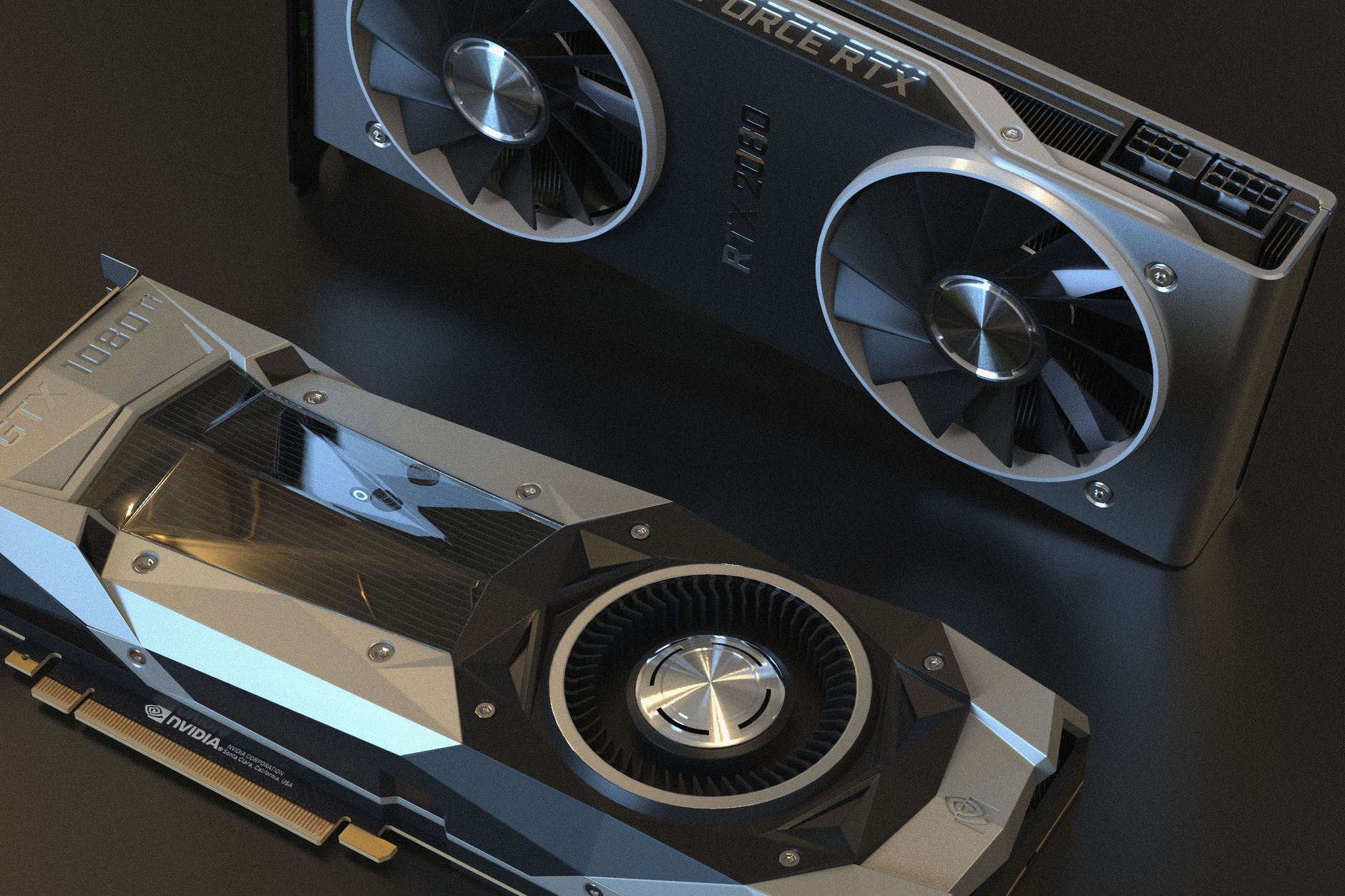
The GPUs that define the midrange in 2026 sit in a different tier than they did even two years ago. Cards like the RTX 5070 and RX 9070 XT occupy price points that would have put them squarely in the enthusiast bracket in 2022. That shift has raised buyer expectations significantly. People spending in the $500 to $650 range now want path tracing to work, not just technically run.
At 1080p with DLSS 4 Quality mode and Multi Frame Generation enabled, the RTX 5070 delivers path tracing performance in Cyberpunk 2077 that hovers around 60 to 70 fps in demanding urban areas. At 1440p with the same settings, the experience becomes more variable – dense rain sequences and complex interior-to-exterior transitions push frames closer to 50, while quieter districts hold steadier. That is a workable experience for many players, but it requires leaning hard on frame generation, and the latency trade-off is real even with Nvidia Reflex compensating for some of it.
Where Performance Actually Lands
The RX 9070 XT tells a different story at the same resolution. Without Multi Frame Generation’s aggressive frame multiplication, AMD’s midrange flagship struggles to sustain 60 fps in path tracing at 1440p even with FSR 4 Quality mode active. In rasterization, the RX 9070 XT competes directly with the RTX 5070 and occasionally edges ahead in non-ray-traced workloads. Path tracing specifically, however, exposes the gap in hardware ray tracing throughput that has persisted between AMD and Nvidia architectures for multiple generations. RDNA 4 closed that gap meaningfully compared to RDNA 3, but closing the gap is not the same as matching Nvidia’s current generation.
Intel’s Arc B580, which sits below both of these cards in price, handles path tracing in Cyberpunk 2077 about as well as you would expect a budget-tier card to handle the most demanding rendering workload in PC gaming – which is to say, not well enough for smooth gameplay without significant quality compromises. At 1080p with aggressive upscaling it becomes technically usable, but the experience feels like running a racing engine at redline constantly. It is better suited to traditional ray tracing presets, where Intel Xe Super Sampling (XeSS) combined with the B580’s solid rasterization performance produces genuinely good image quality at acceptable framerates.
One factor that gets underreported in path tracing discussions is VRAM. Cyberpunk 2077 in Overdrive Mode is hungry for memory bandwidth and capacity. Cards with 12GB of VRAM sit in a more comfortable position than those with 8GB when running at 1440p with path tracing, particularly if texture quality settings are also elevated. At 1080p the 8GB ceiling is less punishing, but at 1440p, VRAM pressure becomes a visible performance factor in crowded scenes. This matters for midrange buyers deciding between configurations – the VRAM number on the spec sheet is not just a marketing figure here.
For anyone considering the RTX 5070 Ti and wondering how it fits into this picture relative to older flagship hardware, the RTX 5070 Ti vs RTX 4090 comparison covers exactly that territory. The short version is that path tracing workloads are precisely where the newer architecture’s improvements are most visible, even against a card that was once considered untouchable. The midrange segment in 2026 is genuinely better than midrange has ever been – the catch is that path tracing’s demands have kept pace, and the finish line keeps moving.

What makes this particularly difficult to navigate as a buyer is that Cyberpunk 2077 remains the outlier, not the benchmark. Most other games with ray tracing support do not approach Overdrive Mode’s demands, and midrange GPUs handle those titles without nearly as much compromise. The decision to optimize your purchase around full path tracing performance in a single title – even the best-looking one available – means accepting real trade-offs everywhere the budget hits the hardware ceiling. Night City looks extraordinary in Overdrive Mode. Whether it looks extraordinary enough to define a GPU purchase is a question that depends entirely on how much that specific experience matters to you versus everything else you will play on the same card.