The first Ghost of Tsushima was built around a man who had to betray his own code to save his home. Its sequel gives its protagonist a different problem: she has no code to betray. Atsu doesn’t want to protect anyone. She wants six people dead. That shift in motive shapes everything in Ghost of Yōtei, and it is the best reason to play Sucker Punch’s follow-up.
Set in Ezo in 1603, the game follows Atsu, who was left for dead at the foot of Mount Yōtei when she was a child. Sixteen years later she returns, scarred and quiet, to hunt the Yōtei Six, the group responsible for the destruction of her family. Erika Ishii voices her with a flat, dry control that makes the rare moments of warmth land harder.
Overview
Ghost of Yōtei is a PS5 exclusive published by Sony Interactive Entertainment. It keeps the skeleton of Tsushima: a large open world, a wind that points you toward objectives, sword duels, and a camera that loves tall grass. The structure, though, is looser and more personal. You can chase the Yōtei Six in a loose order of your choosing, picking up leads from informants, rumors, and the people Atsu meets while crossing the land.
Story and Atsu
Jin Sakai was a samurai who spent the whole of Tsushima losing his sense of honor. Atsu begins where he ended up. She is already outside the rules of any clan, and the writing is smart enough not to hand her a speech about it. Her revenge is the engine, but the game keeps asking what the revenge is costing her and who it pulls into its orbit.
The supporting cast does a lot of work here. Atsu gathers allies and odd acquaintances across Ezo, and the better quest lines let them disagree with her instead of nodding along. A wolf that becomes her companion is the most obvious example of the game softening her edges without announcing it.
The Yōtei Six themselves are the uneven part. Some of them are written with real menace and a clear sense of how they fit into Atsu’s past. Others feel like bosses you chase because the structure demands one more name on the list.
Combat and Traversal
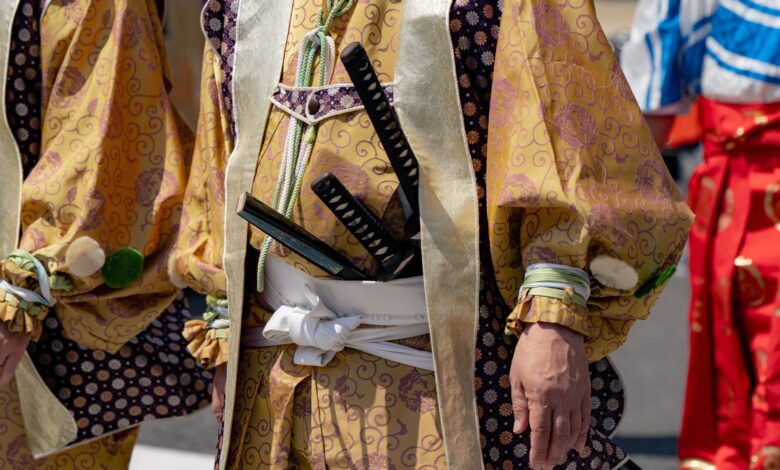
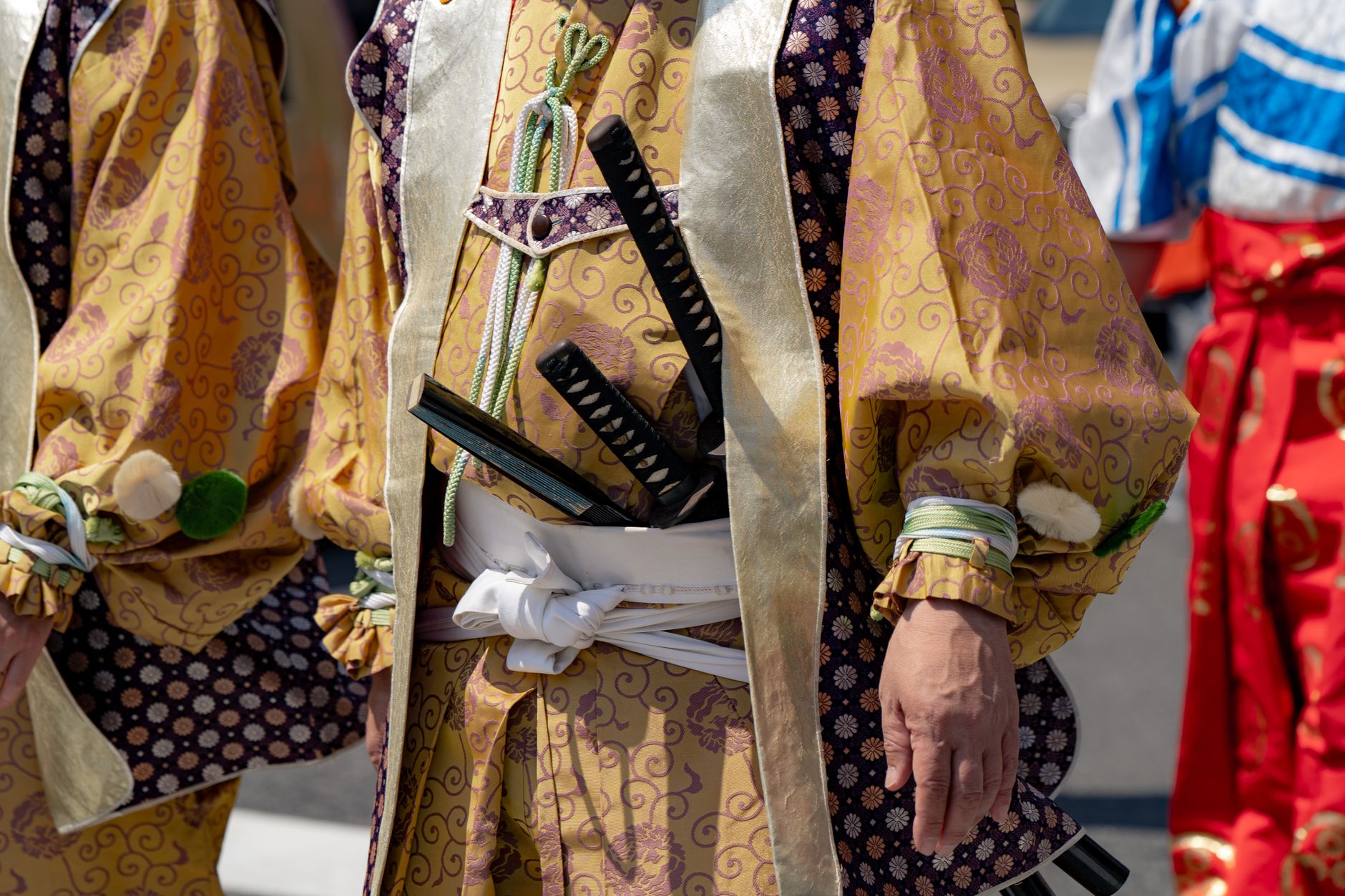
Combat has changed more than the marketing suggested. Tsushima’s stance system, which asked you to read an enemy’s weapon and switch accordingly, has been replaced by a set of distinct weapons that Atsu carries into the fight: katana, dual blades, spear, odachi, and kusarigama among them. Each is better against certain enemy types, and you are encouraged to swap in the middle of a fight instead of before it.
This works because it turns weapon choice into a quick decision instead of a menu chore. A spear gives you reach against a charging swordsman, and a heavy odachi breaks through a guard that a katana would only scratch. The system rewards attention, and it makes large encounters feel like a puzzle you are solving at speed.
Duels return, and they are still the game at its sharpest. The standoff, where you wait for a single opening, is staged with the same tension that made Tsushima’s one-on-one fights memorable.

The World of Ezo
Ezo is colder, emptier, and less manicured than Tsushima. Snowfields, volcanic slopes, and wide stretches of grassland give the map a rougher texture, and Mount Yōtei looms over it like a landmark you cannot lose. The art direction still favors painterly, wind-driven scenes, but there is a harder edge to it. Photo mode and the Kurosawa-inspired black-and-white filter are back, joined by a grittier option modeled on the films of Takashi Miike.
The wind that guides you is still here, and it still feels better than a minimap. The game also lets Atsu pause for quiet moments, like playing the shamisen at a campfire or sketching a landscape, that give the quest-heavy pace room to breathe.
Pros
- A protagonist with a sharper point of view. Atsu is angrier, quieter, and less tied to institutions than Jin, which gives the story a distinct pulse instead of a retread.
- Weapon variety that changes how you fight. Swapping between katana, spear, odachi, and the rest mid-fight is fast and readable, and the matchups push you to use the whole kit.
- Duels that still feel dangerous. The standoff mechanic keeps its tension, and the best boss fights make you study the opponent instead of mashing buttons.
- A wolf companion that earns its place. It adds to combat and exploration without becoming a gimmick, and it gives Atsu a relationship that is not about revenge.
- Visual identity. The art direction is confident, the weather is dramatic, and the filter options give players real control over the mood.
- Freedom in the hunt. Chasing the Yōtei Six in a non-linear order makes the structure feel more like a manhunt and less like a checklist.
Cons
- Familiar open-world habits. If you spent dozens of hours clearing Tsushima’s map, much of the activity loop here will feel recognizable, from camps to shrines to collectibles.
- Uneven villains. A few of the Yōtei Six are memorable, but others lean on a name and a mask more than on any real character work.
- Stealth that stays simple. Sneaking works fine but rarely asks much of you, and enemy behavior can be predictable once you learn the patterns.
- Pacing sags in the middle. The freedom to choose your path means the emotional momentum can stall when you pick up side content between major beats.
- Weapon depth takes time to appear. The full kit arrives gradually, so the early hours can feel less varied than the later ones.
How It Compares to Tsushima
Sucker Punch could have made a safer game by giving Jin a new coat and a new island. Instead, the studio built a sequel that argues with its predecessor. Tsushima was about the tragedy of defending a culture while betraying its rules. Yōtei is about what happens when nobody expects you to defend anything at all.
That difference is felt in small choices. Atsu is more willing to fight dirty, more suspicious of authority, and less interested in being admired. The game does not pretend she is a hero. It lets you decide how far her cause justifies her methods.
The tradeoff is that the structure does not take as many risks as the protagonist does. Anyone hoping for a radical reinvention of the open-world formula will find a refined version of the same system, polished and better balanced but not rebuilt.
Verdict
Ghost of Yōtei steps out of Tsushima’s shadow where it counts: in character, tone, and combat feel. Atsu is not Jin with a new name, and the weapon system gives fights a rhythm that the first game’s stances never quite reached. The visuals and the duels alone justify the trip to Ezo.
It does not step out of the shadow completely. The open-world scaffolding is familiar, a few villains are thin, and the stealth is only serviceable. Those flaws are real, but they sit around the edges of a game whose core is strong.
Recommendation: Buy it if you own a PS5 and enjoyed Tsushima, and give it serious attention even if you bounced off the first game’s formula, since the combat changes are substantial. If you want a bold rethink of what an open-world action game can be, you will find a sharper one here, not a new one.
The harder question is where Sucker Punch goes from here. Atsu’s story ends in a place that leaves little room for a straightforward follow-up, and a studio that has now written two stories about the cost of vengeance may need to find a different kind of fight.