AMD vs NVIDIA at 1440p Ray Tracing: The Fight That Actually Matters
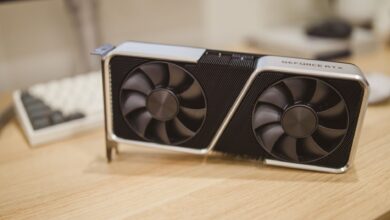
Ray tracing at 1440p is the sweet spot that most mid-range GPU buyers actually care about – high enough resolution to stress hardware, low enough to stay playable. The Radeon RX 9070 and GeForce RTX 5070 are priced close enough to force a real comparison, and ray tracing is where their architectural philosophies diverge most sharply.
Architecture and Ray Tracing Hardware: Where the Gap Starts
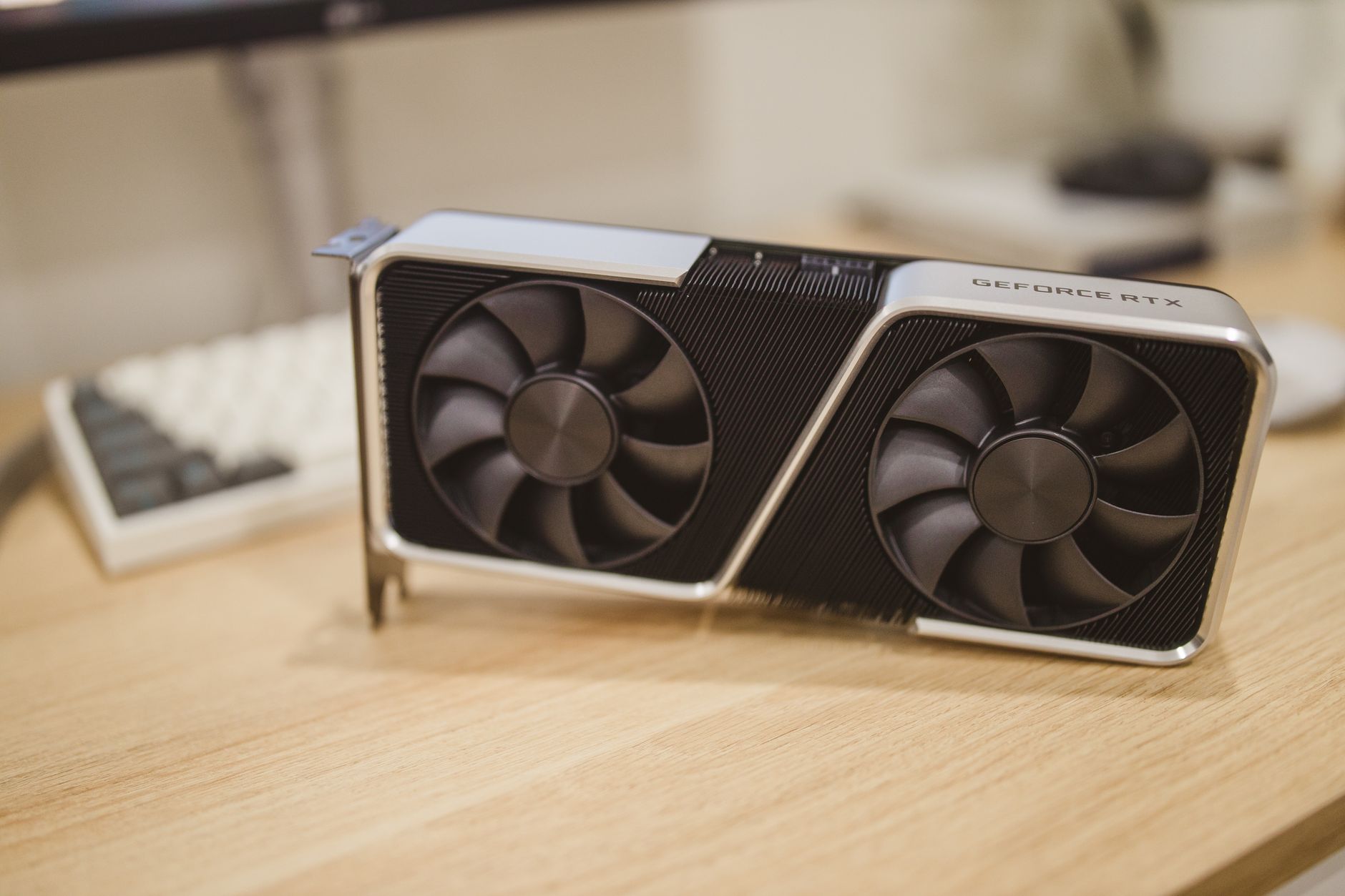
NVIDIA’s RTX 5070 is built on the Blackwell architecture, which brings dedicated fourth-generation RT cores into every streaming multiprocessor. These hardware units handle bounding volume hierarchy traversal and ray-box and ray-triangle intersection tests at the silicon level, offloading that work entirely from shader cores. The result is that ray tracing workloads do not cannibalize general compute throughput to the same degree they once did on older NVIDIA hardware.
AMD’s RX 9070 runs on the RDNA 4 architecture, which represents a serious generational step up in ray tracing capability compared to RDNA 3. AMD doubled the ray accelerators per compute unit relative to its predecessor and made significant improvements to the BVH traversal pipeline. On paper, RDNA 4 is the first AMD architecture that can be discussed in the same breath as NVIDIA when ray tracing comes up – that was not a credible claim with RDNA 3.
The RTX 5070 also carries DLSS 4 with Multi Frame Generation, which matters enormously for ray tracing performance because it allows the GPU to generate additional frames from a single rendered base frame. At 1440p with heavy ray tracing enabled, a title that runs at 55 native fps can be pushed past 100 fps with Multi Frame Generation active. AMD’s FSR 4 has improved upscaling quality meaningfully, but FSR does not have a frame generation equivalent that competes with Multi Frame Generation in terms of game support or output quality at this stage.
That software advantage is not a small footnote. In ray-traced workloads at 1440p, where native framerates drop hardest, the ability to multiply frames cheaply changes what “playable” means. It gives NVIDIA a structural advantage that pure rasterization comparisons do not capture. At 1080p ray tracing the gap between these two cards is narrower, but 1440p adds enough resolution pressure to make the RTX 5070’s RT hardware and software stack work harder in its favor.
In-Game Ray Tracing Performance at 1440p
Testing across titles that use ray tracing in meaningfully different ways reveals a consistent pattern. In games like Cyberpunk 2077 with path tracing enabled, the RTX 5070 holds a substantial lead in native rendering – roughly in the 30 to 40 percent range depending on settings – because path tracing on AMD hardware at RDNA 4 still lags behind what Blackwell manages with its dedicated hardware pipeline. With DLSS Quality mode active versus FSR 4 Quality mode active, the RTX 5070 extends that lead further in absolute framerate terms while maintaining comparable image quality.
In titles using more selective ray tracing implementations – reflections and ambient occlusion rather than full global illumination – the RX 9070 closes the gap considerably. Games like Alan Wake 2 and Spider-Man: Miles Morales with ray tracing enabled at 1440p show the RX 9070 performing within 15 to 20 percent of the RTX 5070 at native resolution. That is a much more competitive picture, and once FSR 4 upscaling is applied, the RX 9070 can often match or come close to the RTX 5070’s upscaled output in those lighter workloads.
Metro Exodus Enhanced Edition, which uses full path tracing and is one of the most demanding RT benchmarks available, paints an unforgiving picture for the RX 9070. At 1440p with path tracing on and no upscaling, framerates on AMD hardware drop into territory that makes the experience difficult regardless of how good the visuals look. The RTX 5070, with DLSS Quality mode engaged, keeps the experience firmly playable. This is the category of game where the RTX 5070 is simply the better card and the margin is not close.
Shader compilation stutter is worth flagging as a real-world factor on AMD hardware. In several ray-traced titles at 1440p, the RX 9070 produces noticeable hitching during initial traversal of new areas, particularly in open-world games. NVIDIA has largely addressed this on the software side, and RTX 5070 users report smoother initial session performance in those same titles. Frame time consistency under ray tracing loads generally favors the RTX 5070, even in games where the average framerate gap is modest.
Power consumption under ray tracing loads is one area where the RX 9070 makes a genuinely strong case. The card draws noticeably less wattage than the RTX 5070 while ray tracing, which matters for users with tighter PSU headroom or heat-sensitive builds. Performance per watt under RT workloads is competitive on the RX 9070 in light-to-moderate ray tracing scenarios, even if the absolute framerate ceiling belongs to NVIDIA.
Price, Value, and the Real Decision
The RTX 5070 carries a higher MSRP than the RX 9070, and in practice that gap widens when market availability is factored in – RTX 5070 cards have sold above MSRP frequently since launch. If a buyer can acquire both cards at or near their listed prices, the RX 9070 represents strong value for 1440p ray tracing in games that use moderate RT implementations. The performance deficit only becomes significant in the most demanding path-traced titles, and those games represent a small fraction of what most players actually run.
The calculus shifts if a buyer’s library leans heavily into path-traced games, or if they plan to use ray tracing at settings that genuinely stress the hardware. In that scenario, the RTX 5070’s combination of faster RT hardware and Multi Frame Generation support makes it worth the premium – the RX 9070 simply cannot replicate what DLSS 4 Multi Frame Generation does to a 50 fps path-traced render at 1440p. Whether that use case describes enough buyers to justify the price difference is a question worth sitting with before opening a browser tab to checkout.