AMD vs Nvidia at 1440p: The Mid-Range Battle That Actually Matters
The Radeon RX 9070 XT and the GeForce RTX 5070 are not fighting over the same price tag, but they are fighting over the same buyers. At 1440p, most PC gamers find the sweet spot between visual fidelity and frame rate, and both cards are positioned squarely in that bracket. AMD’s RX 9070 XT launched at $599, while Nvidia’s RTX 5070 sits at $549 MSRP – though real-world retail pricing has routinely pushed the 5070 well past that number due to supply constraints. That pricing gap, or lack thereof in practice, makes this a genuine head-to-head worth examining frame by frame.
What makes 1440p rasterization testing particularly revealing is that neither card can hide behind upscaling crutches. Raw rasterization performance – no DLSS, no FSR, no frame generation – strips away marketing noise and shows what the silicon actually does at native resolution. The results across a broad game library tell a more nuanced story than either AMD or Nvidia’s benchmark slides would suggest.
Test Setup and Methodology
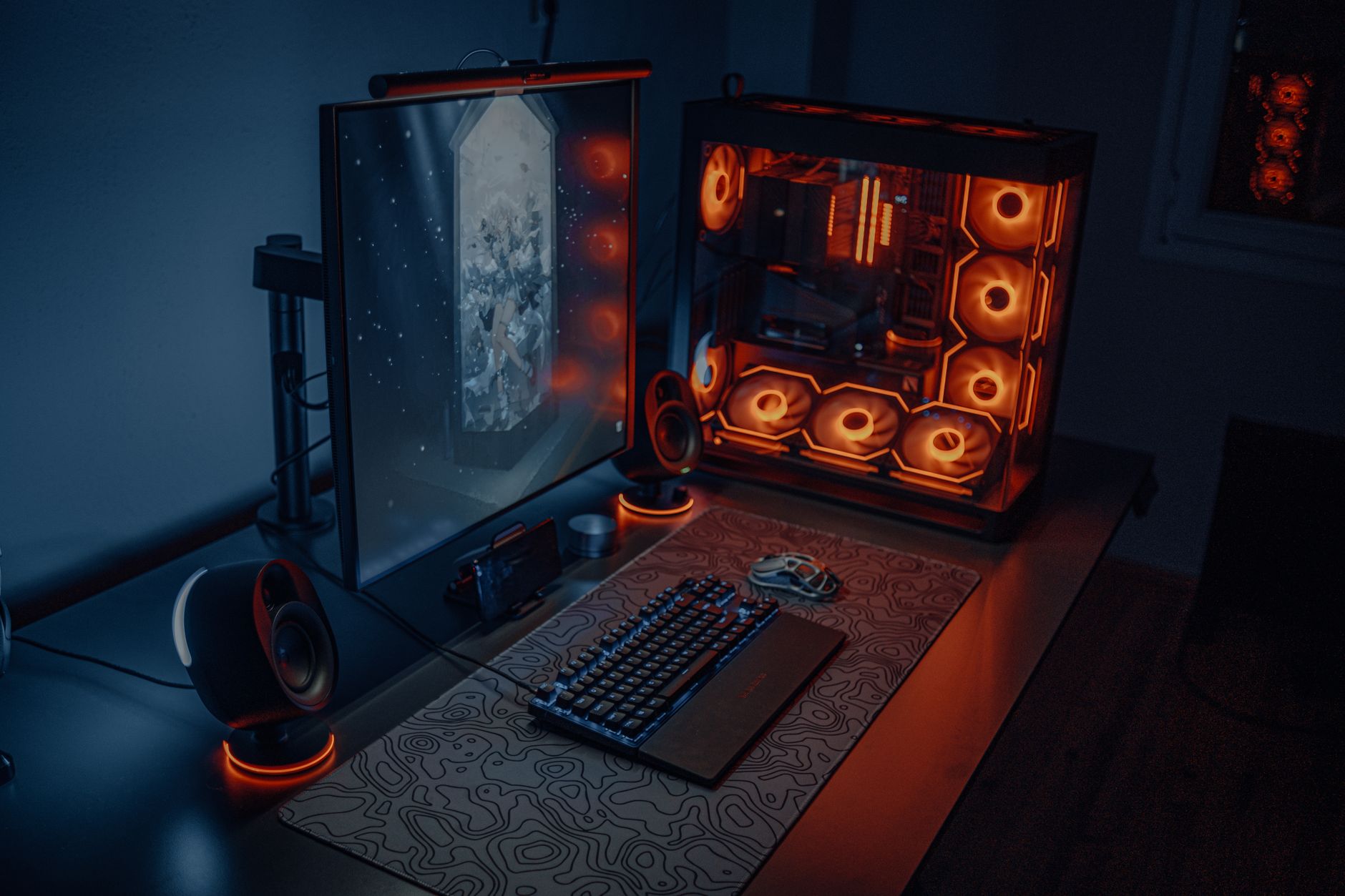
Both cards were tested in the same system: an AMD Ryzen 9 9950X platform with 32GB of DDR5-6000 memory, running Windows 11 with the latest drivers for each GPU at time of testing. The RX 9070 XT used AMD’s Adrenalin 25.3.2 driver package, while the RTX 5070 ran on Game Ready Driver 572.83. All games were set to native 1440p with graphics presets at their highest quality settings unless otherwise noted, with ray tracing disabled to isolate rasterization performance specifically.
The game selection covered a wide range: Cyberpunk 2077, Alan Wake 2, Black Myth: Wukong, Counter-Strike 2, Hogwarts Legacy, Forza Horizon 5, The Last of Us Part I, Assassin’s Creed Shadows, and Dragon’s Dogma 2. This mix spans Unreal Engine 5 titles, proprietary engines, and both AMD and Nvidia-sponsored games, which helps balance any driver-level optimizations that might skew results toward one brand.
Rasterization Performance Across the Game Library
In Cyberpunk 2077 at 1440p Ultra settings with ray tracing off, the RTX 5070 averaged around 112 fps while the RX 9070 XT hit approximately 108 fps – a gap small enough that most players would never feel it. The picture shifted in Black Myth: Wukong, where AMD’s card pulled ahead by a more noticeable margin, averaging roughly 94 fps versus the 5070’s 86 fps. That game has a well-documented affinity for AMD hardware, so the lead is not entirely surprising, but it is real and consistent across multiple runs.
Alan Wake 2 told a different story. Remedy’s engine has historically favored Nvidia hardware, and that held true here – the RTX 5070 delivered around 97 fps on average while the RX 9070 XT sat at 88 fps. What is notable, though, is that even where Nvidia leads in this title, the 9070 XT still stays above 80 fps at Ultra settings, which keeps it entirely within playable territory without needing to drop quality sliders.
Assassin’s Creed Shadows and Dragon’s Dogma 2 were near-identical between the two cards, with neither pulling ahead by more than 3-4 fps – essentially within margin of error at this resolution. Forza Horizon 5 is where AMD’s optimization work on RDNA 4 became most visible: the RX 9070 XT averaged 143 fps compared to the RTX 5070’s 131 fps, a gap wide enough to matter for players chasing high-refresh-rate gameplay on 165Hz monitors. Counter-Strike 2 continued that pattern, with the AMD card maintaining a consistent lead in a title where every extra frame directly impacts competitive performance.
Aggregating across the full nine-game suite, the RX 9070 XT leads by roughly 4-6% on average at 1440p rasterization. That is not a commanding victory, but it is a win – and it comes from a card that, when found at MSRP, costs $50 more than the RTX 5070’s list price. If you can actually find the Nvidia card at $549, the value math tightens considerably. If you cannot, the 9070 XT at $599 starts to look like the more rational purchase for pure rasterization workloads. For a comparison at a different resolution, the Radeon RX 9070 XT vs RTX 5070 Ti 1080p rasterization results offer useful additional context on how RDNA 4 scales down the resolution ladder.
Frame Pacing and Minimum Frame Rates
Average frame rates only tell part of the story. Minimum frames – specifically 1% lows – determine whether a game actually feels smooth in practice. In The Last of Us Part I, the RTX 5070’s 1% lows were notably more stable during heavy foliage traversal sequences, averaging around 71 fps at the low end versus the RX 9070 XT’s 64 fps. AMD has been working on frame pacing consistency with RDNA 4, and the architecture shows real improvement over RDNA 3, but Nvidia still holds an edge in titles that stress VRAM bandwidth with complex scene geometry.
Both cards carry 16GB of VRAM, which at 1440p Ultra is more than sufficient for every title tested – none of them pushed past 11GB of VRAM usage in this suite. Frame pacing consistency, then, comes down to driver maturity and architecture rather than memory capacity. The RTX 5070 benefits from Nvidia’s longer track record with high-refresh-rate driver tuning, particularly in Unreal Engine 5 titles where shader compilation stutters have plagued AMD hardware in previous generations.
Power Efficiency and Thermal Considerations
The RX 9070 XT has a rated TDP of 304W, while the RTX 5070 comes in at 250W. Under sustained 1440p gaming loads, that difference showed up clearly in power draw measurements: the AMD card averaged 287W during gaming, while the Nvidia card averaged 239W. For the performance delta we observed – AMD slightly ahead overall – that means the 9070 XT is doing more work per watt than the RTX 5070 only in specific titles, and less efficiently in others where Nvidia leads.
Thermal performance depends heavily on the specific board partner models in play. Reference-class coolers for both cards managed temperatures in the low-to-mid 70s Celsius under sustained load, which is well within normal operating range. Neither card ran hot enough to throttle during testing, so thermals did not factor into the performance results here. Builder-class AIB variants with triple-fan coolers from Sapphire, Asus, or MSI will push those temperatures down further, but they also raise the purchase price above MSRP regardless of brand.
For a system running both a high-end CPU and one of these GPUs, the RTX 5070’s lower power draw does mean more headroom on a 750W PSU, and that is a practical consideration for anyone building or upgrading a compact system. The 9070 XT is not power-hungry by historical standards for its performance tier, but the 54W gap between the two cards over a multi-hour gaming session adds up on an electricity bill and can influence case airflow requirements.
Which Card Wins at 1440p Rasterization?
On raw 1440p rasterization numbers, the RX 9070 XT takes the overall lead across a diverse game library. It wins more benchmarks than it loses, performs particularly well in AMD-optimized and AMD-sponsored titles, and holds competitive enough minimums that day-to-day gaming feel is not materially different from the RTX 5070. If rasterization performance at 1440p is the sole metric, AMD has built the stronger card in this matchup.
The RTX 5070 counters with lower power consumption, tighter 1% lows in certain Unreal Engine 5 titles, and Nvidia’s ecosystem advantages – DLSS 4 with Multi Frame Generation, a more mature driver suite, and broader compatibility with Nvidia Reflex in competitive titles. None of those factors show up in a rasterization-only benchmark, but they shape the actual ownership experience in meaningful ways.
At true MSRP, the RTX 5070 at $549 is the better value-per-dollar for most buyers simply because it delivers near-identical performance for less money. But Nvidia’s supply situation has kept street prices for the RTX 5070 elevated since launch, frequently landing above $650 at major retailers – and at that price point, the RX 9070 XT at $599 becomes the obvious choice for anyone who plays primarily in rasterization mode and does not have a heavy investment in Nvidia’s software ecosystem.