The 8GB Question at 1080p
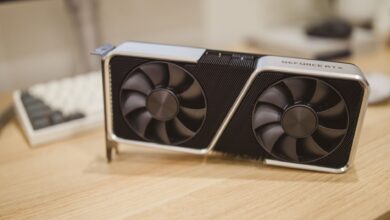
Nvidia’s RTX 5060 Ti launched in two flavors – 8GB and 16GB – and the price gap between them has already sparked one of the more heated debates in PC gaming hardware circles this year. The 8GB version sits at a noticeably lower price point, which makes it attractive to budget-conscious 1080p gamers who figure they don’t need the headroom. But VRAM shortfalls don’t announce themselves politely. They tend to show up mid-session as stutters, frame time spikes, and texture pop-in that no driver update will fix.
Testing both cards at 1080p reveals a more complicated picture than a simple spec comparison would suggest. Modern games are pushing VRAM demands higher than most players expect, and the 1080p resolution label no longer guarantees low memory usage – especially when texture quality settings, ray tracing, and shader caching enter the equation. The question isn’t just how fast these cards run. It’s how often the 8GB variant hits a wall that the 16GB version doesn’t.
Test Setup and Methodology
Both cards were tested on an identical system – Intel Core i9-13900K, 32GB DDR5, and Windows 11 with the latest available Nvidia drivers. Game settings were pushed to their respective “Ultra” or “High” presets at 1080p native resolution, without DLSS upscaling active, to isolate raw VRAM behavior. Frame times were recorded alongside average framerates to catch the stutter patterns that average numbers can hide.
The game selection targeted known VRAM-heavy titles: Cyberpunk 2077, Alan Wake 2, Star Wars Outlaws, The Last of Us Part I, and Hogwarts Legacy. These are not edge cases – they represent the kind of games a player buying a current-generation mid-range card in 2025 is likely to actually play. Ray tracing was tested separately in a secondary pass to examine how enabling it shifts memory allocation on the 8GB card specifically.
One methodological note worth flagging: VRAM usage alone doesn’t tell the full story. A card can report 7.8GB of VRAM in use and still run smoothly if the data fits cleanly into that allocation. The real damage appears when games begin offloading textures to system RAM, which causes the latency spikes that show up in frame time graphs rather than average FPS numbers. That distinction shaped how results were interpreted throughout testing.
Rasterization Results: Closer Than Expected
At pure rasterization with ray tracing off, the 8GB RTX 5060 Ti performs well across most of the test suite. In Hogwarts Legacy on Ultra settings, VRAM usage sits around 6.8GB, leaving enough headroom that both cards post nearly identical average framerates. Cyberpunk 2077 on Ultra (no path tracing) lands similarly – the 8GB card holds its own with frame times that are competitive with its 16GB sibling. For a 1080p-focused player who runs rasterization only, the 8GB card is a defensible buy.
That said, The Last of Us Part I with textures pushed to High already brushes against the 8GB ceiling, and Star Wars Outlaws exceeds it in certain open-world sections – causing visible frame time stutters even at 1080p. These aren’t catastrophic failures, but they are consistent and repeatable, which means they’re not flukes. Dropping texture settings to Medium resolves them on the 8GB card, but that’s a concession a 16GB buyer never has to make.
Ray Tracing Changes the Calculus
Enable ray tracing and the gap between 8GB and 16GB widens fast. Cyberpunk 2077 with ray tracing set to Medium – not Ultra, not path tracing, just Medium – pushes VRAM usage past 8GB on the RTX 5060 Ti 8GB, triggering the kind of frame time spikes that make gameplay feel noticeably worse even when the average FPS number looks acceptable. The 16GB card absorbs those settings without issue and maintains smoother frame pacing throughout.
Alan Wake 2 is the most punishing example in the test suite. With ray tracing enabled and textures at High, the 8GB card regularly exceeded its VRAM capacity by enough that performance became genuinely uncomfortable – long stutter events, inconsistent frame delivery, and moments where the game clearly paused to reorganize texture data. The 16GB version ran the same scene without incident. This isn’t a marginal difference. It’s a scenario where the 8GB card effectively can’t run a current AAA title at its intended visual quality at 1080p.
Path tracing, available in Cyberpunk 2077, is effectively off the table for the 8GB model regardless of resolution. The memory demand is simply too high. On the 16GB card, path tracing at 1080p requires DLSS to be playable, but it does work – the card has enough VRAM to load the necessary data without thrashing. The 8GB version can’t get there even with quality-mode DLSS active.
What the data points to, consistently, is a specific threshold problem. The 8GB RTX 5060 Ti is genuinely capable hardware for 1080p rasterization in 2025. It runs most games well when you keep ray tracing off and accept some texture quality tradeoffs in the heaviest titles. The 16GB version removes those constraints entirely and, if you’re playing games like Alan Wake 2 with full visual fidelity enabled, performs in a categorically different way – not just slightly better, but free from the memory pressure events that define the 8GB experience. Given that the games shipping now are already stressing 8GB at 1080p with ray tracing on, the question for any buyer isn’t whether 8GB is enough today – it’s how long “today” lasts before the next wave of titles makes the question moot.