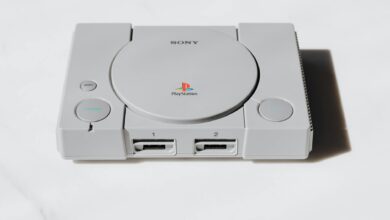
For most of the last decade, a new mainline Final Fantasy meant a PlayStation logo on the box and a long wait for everyone else. Final Fantasy VII Remake launched in 2020 on PS4 alone. Final Fantasy XVI arrived in 2023 as a PS5 title backed by Sony’s marketing muscle. Fans on PC and Xbox were told to be patient, and often that patience stretched past a year.
That arrangement is breaking down. Square Enix has been telling investors and players that it wants its biggest franchises on more hardware, sooner, and the release calendar is starting to show it. The change affects more than where you can buy the games. It changes how they are budgeted, marketed and timed.
From Timed Exclusives to Shrinking Windows
The old model was simple. A platform holder pays for exclusivity, in cash, marketing support or both, and the publisher gets a guaranteed launch spotlight and a hedge against a huge development bill. Final Fantasy VII Remake followed that path. The game stayed on PlayStation, got an upgraded PS5 edition in Intergrade form, and only reached PC through the Epic Games Store in late 2021, with a Steam release following in 2022.
Final Fantasy XVI stretched the pattern further. It launched on PS5 in June 2023, and the PC version did not arrive until September 2024, well over a year later. During that stretch the game became a sort of case study in how much audience a publisher leaves untouched while an exclusivity window is open.
Then came Final Fantasy VII Rebirth. It debuted on PS5 in February 2024 and reached PC in January 2025, a gap of just under a year. The window was visibly shorter than the one XVI had, and it set a new baseline for what Square Enix considered an acceptable wait.
What Day-One Multiplatform Looks Like
Final Fantasy XIV had already shown the company could operate outside the PlayStation bubble, and the MMO’s arrival on Xbox Series X|S in 2024 extended that reach. But the more telling release is Final Fantasy Tactics: The Ivalice Chronicles, which launched in 2025 on PS5, PS4, Xbox Series X|S, Nintendo Switch, Switch 2 and PC all at once. No staggered rollout, no exclusivity badge.
Not every Final Fantasy project will get that treatment. A remaster of a beloved strategy RPG is a very different proposition from a cinematic blockbuster with a ballooning budget. Still, the template exists now, and it would have seemed unlikely a few years ago.
Why the Economics Push Square Enix Outward
Start with the cost of making these games. A modern Final Fantasy production involves large teams, extensive motion capture, orchestral recording and years of development. Square Enix has publicly acknowledged that it needs its major titles to sell across a broader base, and a game that sits on one console for a year leaves money on the table. Every month a finished PC build sits unreleased is a month of lost sales and lost marketing momentum.
The platform deal that once offset that risk also carries a cost. Exclusivity pays upfront, but it caps the audience. When a game is aimed at the widest possible crowd, the trade starts to look worse, particularly as PC storefronts keep drawing larger audiences. The same pull shows up in Steam’s year-end concurrent user records, which keep pointing to a PC player base that publishers are increasingly reluctant to ignore.
There is a creative side too. Final Fantasy has always been a series that changes its identity every entry, from the real-time combat of XVI to the hybrid action-and-command system of the Remake trilogy. Releasing across platforms forces teams to think about performance targets, input schemes and hardware ranges from early in production rather than as a late-stage port. That discipline can make a game more stable at launch, though the rocky reception of some PC ports across the industry shows it does not guarantee it.

The real tension is what Final Fantasy loses by being everywhere. Sony’s partnership gave XVI and the Remake games a prominent place in PlayStation showcases and campaigns, the kind of visibility that is hard to buy independently. A multiplatform release spreads attention across several storefronts and several fanbases, and no single platform holder has a reason to push it as a centerpiece. Square Enix is betting that a larger addressable audience outweighs a louder launch. If the next numbered entry arrives on every system at once, will it still feel like an event, or just another big release in a crowded week?