Two Handhelds, One Winner
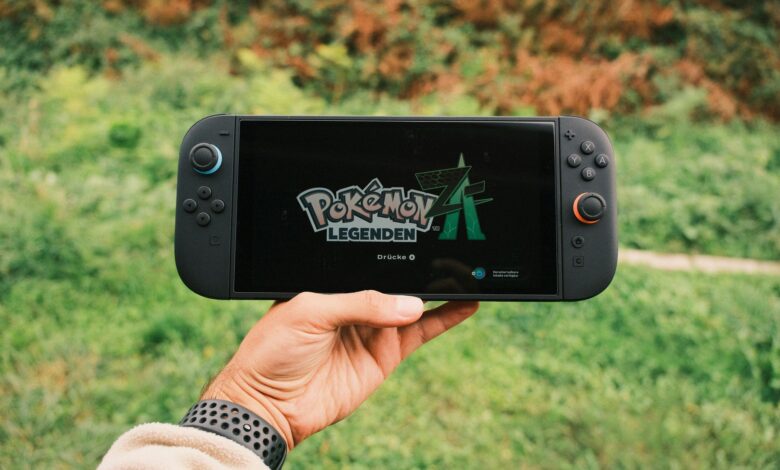
The handheld PC gaming market has grown crowded fast, with devices ranging from budget-tier underpowered slabs to surprisingly capable machines that can run modern AAA titles. Zotac’s Zone sits firmly in the premium tier, powered by AMD’s Ryzen AI 9 HX 370 with RDNA 3.5 graphics, a 7-inch 1080p 120Hz display, and a starting price that puts it squarely above Valve’s Steam Deck OLED. The question is whether the hardware gap justifies the cost difference when both devices share the same living room couch.
Valve’s Steam Deck OLED, by contrast, runs on a custom AMD APU with RDNA 2 graphics and a 7.4-inch OLED panel at 1280×800 resolution. It has been the benchmark for handheld PC gaming since its release, with a deeply integrated software layer through SteamOS that most competing devices still struggle to match. The Zone runs Windows 11, which carries its own baggage in the handheld context – touchscreen navigation, sleep/resume reliability, and driver quirks are all real-world concerns that benchmarks don’t capture.
Raw performance is only part of the story here.

Gaming Performance Across GPU-Demanding Titles
In GPU-heavy titles like Cyberpunk 2077 and Elden Ring, the Zotac Zone pulls noticeably ahead. Running Cyberpunk 2077 at 1080p medium settings with FSR 3 upscaling enabled, the Zone averaged around 45-50 fps at a 25W TDP setting, while the Steam Deck OLED running the same title through SteamOS at its native 800p with FSR quality mode hovered in the 35-40 fps range. The Zone’s higher TDP ceiling and newer GPU architecture give it a real advantage the moment games push hard on rasterization and shader workloads.
God of War Ragnarok told a similar story. At medium-high settings on the Zone at 1080p, frame rates stayed in the mid-40s – playable, though the device ran warm and fan noise became noticeable above 20W. The Steam Deck OLED, dropping to its native 800p with settings tuned for 40fps lock, delivered a smoother-feeling experience despite technically lower raw performance. Valve’s frame limiter and SteamOS’s battery governor make the Deck feel more polished in daily use, even when the Zone is objectively faster on paper. The Zone’s Windows environment requires manual tuning through its own overlay, and not every user will want to dig that deep.
Baldur’s Gate 3 and other CPU-influenced titles are where the Zone’s Ryzen AI 9 HX 370 starts to separate itself more clearly. Load times, AI processing, and open-world streaming all benefit from the newer architecture. The Steam Deck’s CPU, based on a Zen 2 design, shows its age in these scenarios – background processing takes longer, and in CPU-heavy combat scenarios with many actors on screen, frame pacing on the Deck can become inconsistent. The Zone maintains tighter frame timing across those same sequences.
Battery Life, Thermals, and Everyday Usability
Battery life is where the Zone’s numbers start to sting. Running demanding titles at 25W TDP, expect roughly 90 minutes to two hours on a charge. The Steam Deck OLED, with its more power-efficient panel and lower TDP ceiling, regularly delivers two and a half to three hours in comparable gaming sessions. For couch gaming near an outlet, this distinction matters less. For travel, it’s significant.
Thermals on the Zone are manageable but audible. The dual-fan setup keeps the device from throttling under sustained load, but the fan curve ramps up aggressively under heavy workloads. In a quiet room, the Zone’s cooling system is noticeably louder than the Steam Deck OLED during GPU-intensive sequences. The Zone’s body also runs warmer at the vents, though grip areas stay comfortable. Neither device becomes uncomfortable to hold, but the Deck’s thermal profile feels more composed over long sessions.
On the software side, SteamOS remains more refined for handheld use than Windows 11. Quick Resume on the Steam Deck works reliably – suspend, walk away, come back, and the game is exactly where you left it. The Zone’s Windows sleep behavior is inconsistent depending on the title and background processes, a problem common to every Windows handheld on the market, not unique to Zotac. Zotac’s own overlay for TDP and fan control is functional, but it adds a layer of management that Deck users never have to think about.
Which Device Actually Wins the Comparison
If raw performance at 1080p is your priority and you are willing to spend time configuring Windows, the Zotac Zone delivers more headroom – particularly in newer, GPU-demanding releases and CPU-heavy simulation titles. If you want a device that works well out of the box with minimal friction, reliable battery, and a genuinely excellent OLED display optimized for its own resolution, the Steam Deck OLED is still the easier recommendation for most players. The Zone is a faster machine. Whether faster is worth the trade-offs in battery, noise, and software complexity depends entirely on what kind of handheld user you are.
At the time of writing, the Zotac Zone carries a retail price roughly $200-$250 above the 512GB Steam Deck OLED – and the performance ceiling it offers, while real, is most relevant in titles that the Steam Deck struggles with anyway, not the deep Steam back catalog that most handheld players spend the majority of their time in.