The Two SSDs Fighting for Your PCIe 5.0 Build in 2026
Two drives have defined the high-end NVMe conversation heading into 2026: the Crucial T705 and the Samsung 990 Pro. One runs on PCIe 5.0 and chases raw benchmark dominance. The other operates on PCIe 4.0 and bets on efficiency, compatibility, and Samsung’s reputation for long-term reliability. Choosing between them is not about picking a winner on a spec sheet – it is about understanding which drive actually makes sense for your rig, your games, and your budget.
The T705 launched with PCIe 5.0 support and sequential read speeds that pushed past 14,000 MB/s, making it the kind of drive that gets benchmarkers excited. The 990 Pro, meanwhile, settled comfortably into the PCIe 4.0 ceiling with reads around 7,450 MB/s – roughly half on paper, but that gap collapses fast in real gaming scenarios. This comparison breaks down what each drive actually delivers, category by category, so you can stop agonizing over specs and make the call.
1. Sequential Read and Write Performance
The Crucial T705 is one of the fastest consumer SSDs ever tested on sequential throughput. Rated at up to 14,500 MB/s read and 12,700 MB/s write on a PCIe 5.0 system, it handles large file transfers – think game installs, video project files, OS migrations – at speeds that would have seemed absurd three years ago. If you are moving 100GB game directories regularly or working across creative and gaming workloads on the same machine, these numbers translate into real time savings.
The Samsung 990 Pro lands at 7,450 MB/s read and 6,900 MB/s write, which remains very fast by any practical measure. For gaming specifically, sequential throughput above roughly 5,000 MB/s produces diminishing returns because most game engines – including Unreal Engine 5 and id’s id Tech 7 – are not designed to saturate even PCIe 4.0 bandwidth continuously. The T705 wins this round decisively on paper, but the real-world gap in loading Baldur’s Gate 3 or Cyberpunk 2077 from an NVMe drive is measured in fractions of a second.
2. Random Read/Write (4K IOPS)
Random 4K performance is where gaming workloads actually live. When a game streams open-world assets, loads NPC behavior trees, or pulls audio files mid-session, it is hammering the drive with thousands of small, random requests – not giant sequential blocks. The T705 posts around 1,500K read IOPS and 1,800K write IOPS. The 990 Pro comes in at 1,400K read IOPS and 1,550K write IOPS.
That gap is closer than the sequential numbers suggest. In practice, both drives feel nearly identical when loading into Elden Ring’s open areas or swapping between missions in GTA V. Where the T705 edges ahead is in sustained random write scenarios – extended recording sessions, background Windows updates during play, or shader compilation stutter reduction in DirectStorage-enabled titles. For the majority of gaming use cases, the 990 Pro’s random performance is not a limiting factor.
The 990 Pro also benefits from Samsung’s mature MLC-adjacent TLC NAND and well-tuned firmware. It maintains consistent IOPS under thermal pressure better than earlier PCIe 5.0 drives did at launch, including some early T705 units that throttled without adequate airflow around the heatsink.
3. Thermal Management and Heatsink Requirements
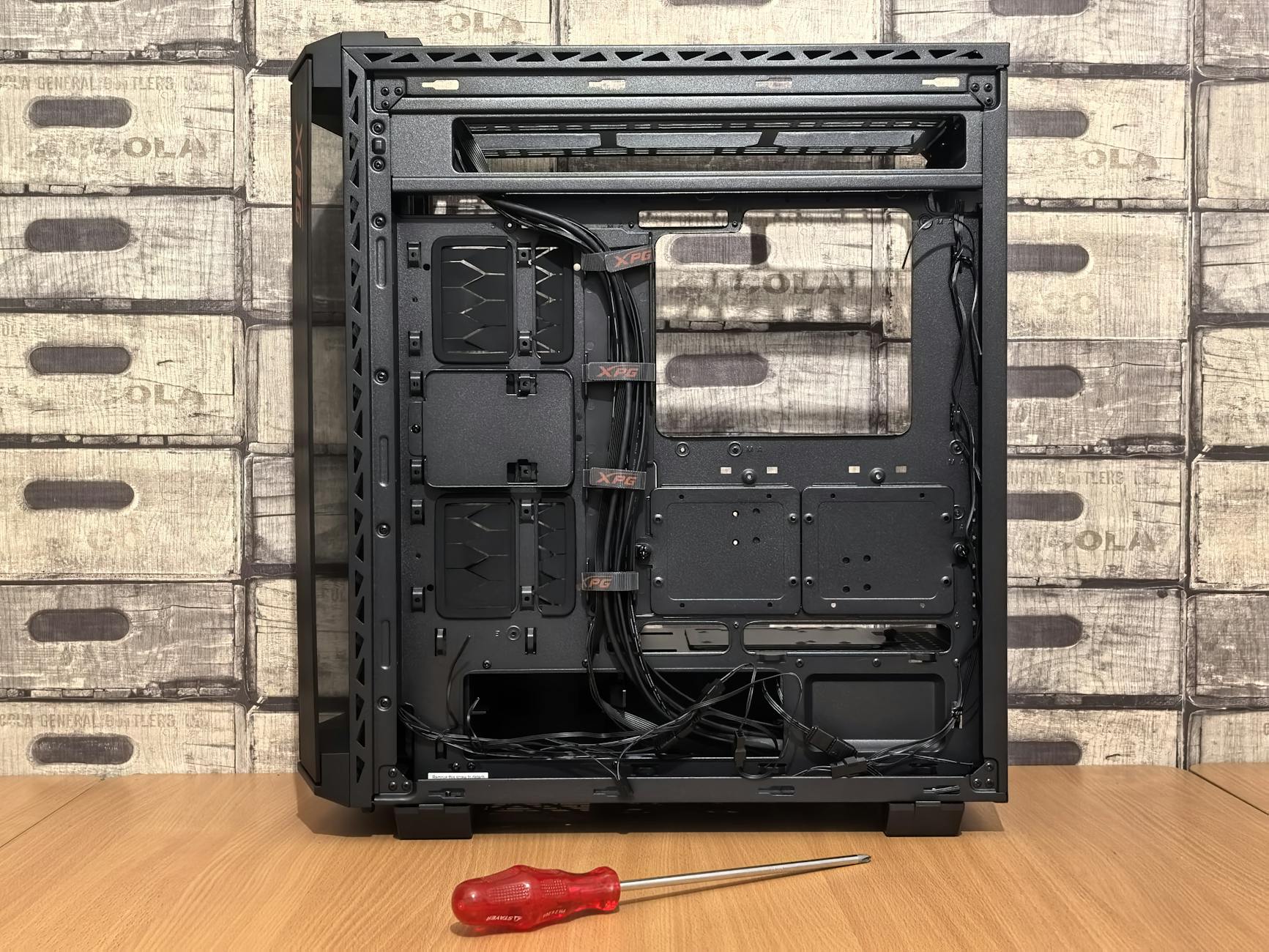
PCIe 5.0 drives run hot. The T705 without a heatsink will throttle under sustained load on most motherboards – this is not speculation, it is a documented behavior that Crucial itself acknowledges by offering a heatsink SKU. If you are building with a case that has tight airflow around the M.2 slot, or if your motherboard’s built-in M.2 heatsink is minimal, the T705 needs attention. With a proper heatsink and reasonable case airflow, it stays within operating range and maintains full performance.
The 990 Pro generates significantly less heat. It does not demand a heatsink to perform, though using one is still good practice. This makes the 990 Pro easier to drop into compact builds, small form factor cases, or systems where the M.2 slot sits under a GPU with restricted airflow. For anyone building a clean ITX rig for a living room PC setup, thermal simplicity matters more than peak throughput.
4. DirectStorage and Next-Gen Game Compatibility
Microsoft’s DirectStorage API, which allows games to stream compressed assets directly to the GPU without CPU bottlenecking, theoretically benefits from faster NVMe drives. Games built with aggressive DirectStorage implementation – still a short list in 2026 but growing – can leverage the T705’s PCIe 5.0 bandwidth more fully than the 990 Pro can match.
In practice, most titles on PC have not been architected to exploit the full ceiling of PCIe 5.0 storage. Forspoken was an early DirectStorage showcase and barely moved the needle between PCIe 4.0 and 5.0 drives in loading tests. That gap will likely widen as more studios ship games with native DirectStorage support baked in from day one rather than bolted on post-launch. The T705 is the more future-facing choice if you plan to keep the drive for four or five years. The 990 Pro remains fully capable through any game available today.
5. Endurance and Warranty
Long-term durability matters if you are gaming heavily, running a dedicated streaming or capture setup, or using the SSD as your primary drive for both OS and games. The Crucial T705 in its 2TB configuration carries a 1,200 TBW (terabytes written) rating with a five-year warranty. The Samsung 990 Pro 2TB is rated at 1,200 TBW as well, also with a five-year warranty. On endurance, they are matched.
Samsung’s track record on firmware stability and RMA support carries real weight here. Samsung drives have a long history of consistent firmware updates and a support infrastructure that most other manufacturers cannot match in volume or responsiveness. Crucial, backed by Micron’s NAND manufacturing, is not a weak option – but Samsung’s support pipeline is simply better established for consumer drives at scale.
6. Price-to-Performance Value
The T705 commands a significant price premium over the 990 Pro. At 2TB, the T705 typically runs 30 to 50 percent more expensive depending on the retailer and whether you are buying the heatsink SKU. That premium buys you PCIe 5.0 headroom, higher sequential throughput, and bragging rights in benchmark utilities – but for a gaming-first build, most of that cost goes toward performance that games currently cannot use.
The 990 Pro at 2TB sits in a range where it competes with other strong PCIe 4.0 drives while offering Samsung’s build quality and software ecosystem. If you are also building around a midrange GPU – something like the cards covered in the Intel Arc B580 vs RX 7600 XT comparison – the savings from choosing the 990 Pro over the T705 can go straight into a GPU upgrade that will produce far more visible gaming improvement.
The T705 makes clear financial sense for content creators, developers, or enthusiasts who move large files constantly and already have a PCIe 5.0 compatible motherboard. For pure gaming, the math rarely works out in its favor.
7. Which Drive Should You Actually Buy?
Choose the Crucial T705 if you are running a PCIe 5.0 capable platform – Intel 13th Gen or later with an appropriate Z-series board, or AMD X670E and above – and you want a drive that will not become a bottleneck as DirectStorage adoption grows. It is also the right call if your workload mixes gaming with video editing, large-scale file management, or anything that regularly pushes sequential throughput. The extra heat output is manageable with basic planning.
Choose the Samsung 990 Pro if you want excellent, consistent performance across any PCIe 4.0 or 5.0 platform without worrying about thermals, if you are building in a compact case, or if you are prioritizing value and putting the savings toward other components. It loads every current game at speeds that feel instant, posts IOPS numbers that hold up under real workloads, and comes from a manufacturer with a support infrastructure most competitors have not matched.
The honest answer is that the 990 Pro is the smarter buy for most gamers in 2026. The T705 is faster – genuinely, measurably faster – but the applications that can actually exhaust a PCIe 4.0 drive during gaming remain rare enough that most players will never encounter them. The T705’s advantage becomes real and tangible in 2027 or 2028, when game storage pipelines finally catch up to the hardware. Whether you want to pay today for performance you will use tomorrow is the actual question this comparison comes down to.