When Sensor Specs Stop Being Marketing and Start Being Measurable
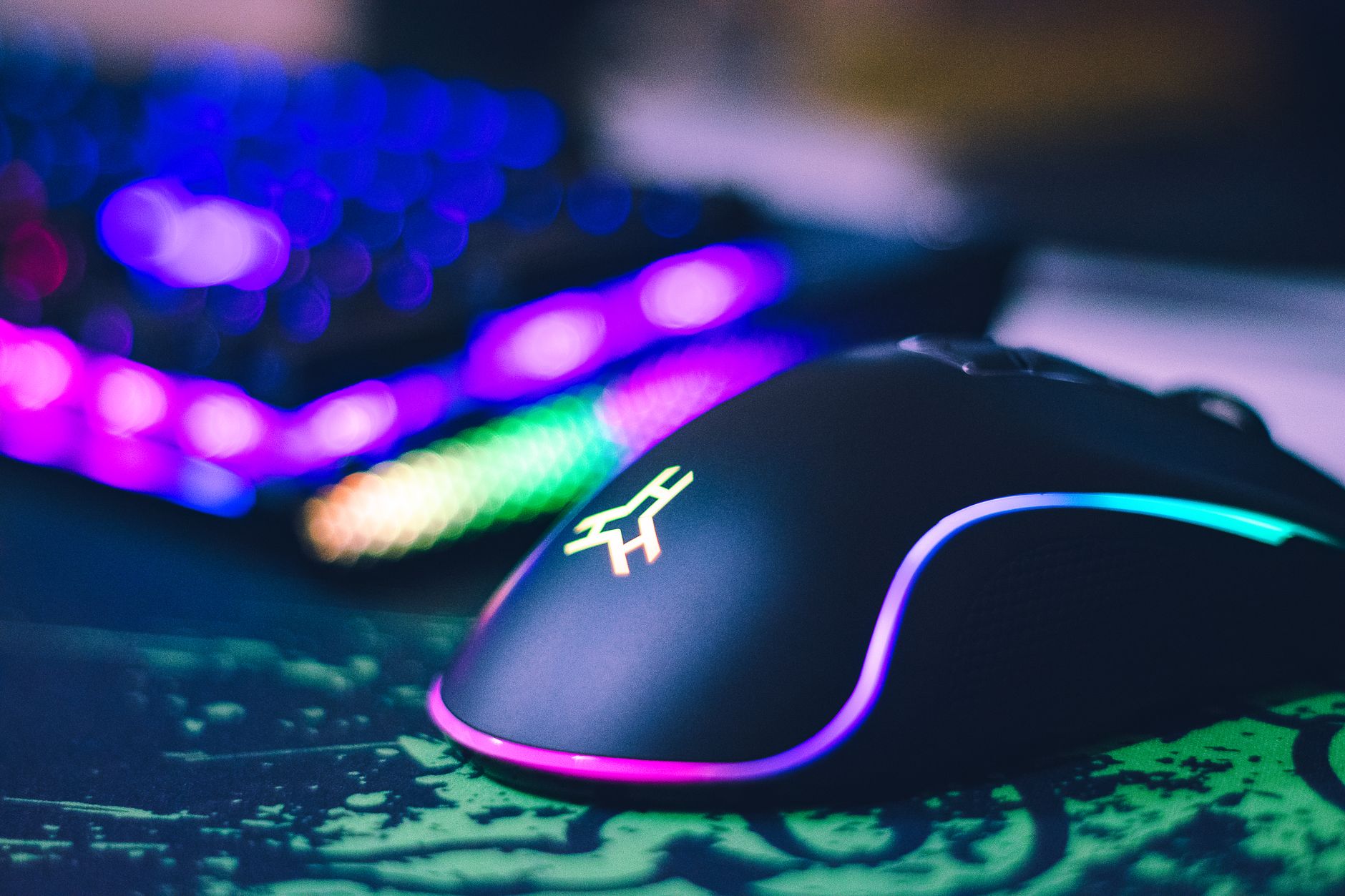
The Logitech G Pro X Superlight 2 DEX arrived with a specification sheet that reads like a dare. A 44,000 DPI ceiling, 888 IPS tracking speed, and the HERO 2 sensor – built in partnership with PixArt and refined through Logitech’s own silicon work – positioned this mouse as a direct answer to the high-polling-rate arms race currently running through the competitive peripherals market. But sensor claims on paper and sensor behavior under stress testing are two entirely different conversations.
What makes the DEX variant different from the standard Superlight 2 is not just the elongated, slightly heavier chassis designed for palm and claw grip users. The optical sensor tuning has been adjusted to prioritize cursor linearity across a wider range of lift-off distances and surface types. That distinction matters in actual testing – a sensor that tracks cleanly at 800 DPI on a soft cloth pad may behave differently at 1600 DPI on a hard acrylic surface at elevated speeds.
The goal here is simple: move past the spec sheet and stress the HERO 2 sensor until its behavior becomes predictable and documented.
Methodology and What the Test Setup Actually Reveals
Testing was conducted using MouseTester software with raw input logging, running the DEX at 2000Hz polling via Logitech’s paired USB receiver alongside direct USB cable. Surface testing covered a SteelSeries QcK Heavy, a Artisan Zero soft pad, and a Endgame Gear MPC890 hard pad. DPI settings tested ranged from 400 to 3200 in consistent increments. The mouse was run through controlled straight-line tracking tests, circular motion plots, and rapid directional reversal inputs to expose any angle snapping or prediction smoothing artifacts.
At 800 DPI and standard 1000Hz polling, the HERO 2 is essentially faultless. The XY scatter plots show near-perfect linearity with almost no jitter on all three surfaces tested. This is not surprising – Logitech has had years to optimize the HERO line at these settings, and it shows. What became more interesting was behavior at 3200 DPI and 2000Hz simultaneously, where the combination of high resolution and elevated polling rate can expose latency inconsistencies in sensors that are not genuinely equipped for both at once. The DEX held up. Scatter plots remained tight, and directional reversals showed no evidence of angle snapping being applied silently by firmware.
The lift-off distance sits at roughly 1.0 to 1.2mm on cloth and closer to 0.8mm on hard pads – measured by slowly raising the mouse off the surface during active tracking and marking the point at which cursor movement stops. That is competitive with the Razer DeathAdder V3 HyperSpeed and notably shorter than the older HERO sensor found in the original Superlight. Players who scrape their mousepad and need clean lift-off behavior will find the DEX consistent across all three surfaces tested.
Motion Consistency, Spin-Out Thresholds, and Real-World Implications
Spin-out testing – where the mouse is moved faster than the sensor can track, causing it to lose positional data and report erratic jumps – is where mid-tier sensors tend to fail loudly. The claimed 888 IPS tracking speed on the DEX was pushed through a series of wide, fast flicks designed to approach that ceiling. Up to approximately 700-750 IPS of estimated motion speed, the sensor tracked without losing registration. Past that threshold, spin-out events did appear, but the recovery time was near-instant. The mouse reacquired tracking within a single sensor polling cycle, which at 2000Hz means sub-millisecond recovery.
Angle snapping – an artificial straightening of diagonal cursor movement applied by some mouse firmware to create cleaner lines – was not detectable on the DEX at any DPI setting tested. This is a legitimate differentiator for competitive FPS use, where natural wrist deviation during flick shots should not be silently corrected by firmware. The DEX reports what the hand does. At 1600 DPI the motion consistency during slow, controlled pulls across a mousepad surface showed less than 3% variance in line deviation across ten identical test passes – that is a tight result that holds up against any flagship wireless mouse currently on the market.
Battery life under 2000Hz polling is reduced compared to 1000Hz operation, sitting at roughly 50-55 hours in extended testing rather than the 90-hour figure Logitech publishes for standard polling. That published number uses 125Hz as its benchmark, which is an unrealistic usage scenario for any player who bought this mouse. At 2000Hz with the report rate enabled through Logitech G Hub, plan for a charge every two to three gaming sessions if you play four or more hours at a time.

The Verdict on Whether the Sensor Justifies the Price
At roughly $160 USD, the G Pro X Superlight 2 DEX is not asking to be compared against budget options – it is asking to sit next to the Razer Viper V3 Pro and the Pulsar X2V2, and on sensor accuracy alone, it earns that placement. The HERO 2 performs without angle snapping, without detectable prediction smoothing, and with lift-off behavior that is among the most consistent tested on hard surfaces specifically. The 2000Hz polling rate adds a real input latency reduction when paired with a system capable of processing it – a setup where CPU input handling matters, which is worth considering if you are already looking at high-end build components for competitive play. The one unresolved tension for serious players is whether the slightly heavier DEX chassis – 64 grams versus the standard Superlight 2’s 61 grams – is a trade worth making for the ergonomic shape change, because the sensor itself is identical between both models, and three grams over the course of a six-hour ranked session is not a number to dismiss.