RTX 5070 Ti vs RTX 4090: The Upgrade Math Is Complicated
Nvidia’s RTX 5070 Ti arrived with a bold promise: near-flagship performance at a price point that doesn’t require selling a kidney. On paper, it’s the card that 4K gaming enthusiasts have been waiting for – a step down from the RTX 5090 in price but not, Nvidia insists, by much in performance. That claim deserves serious scrutiny, especially for the large number of PC gamers still running an RTX 4090, a card that cost up to $1,599 at launch and remains one of the most powerful GPUs ever released. Whether the 5070 Ti is a smart buy depends entirely on who’s asking.
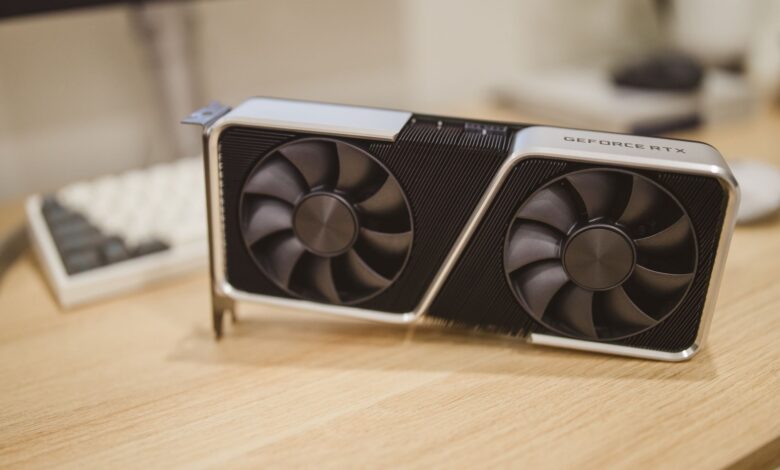
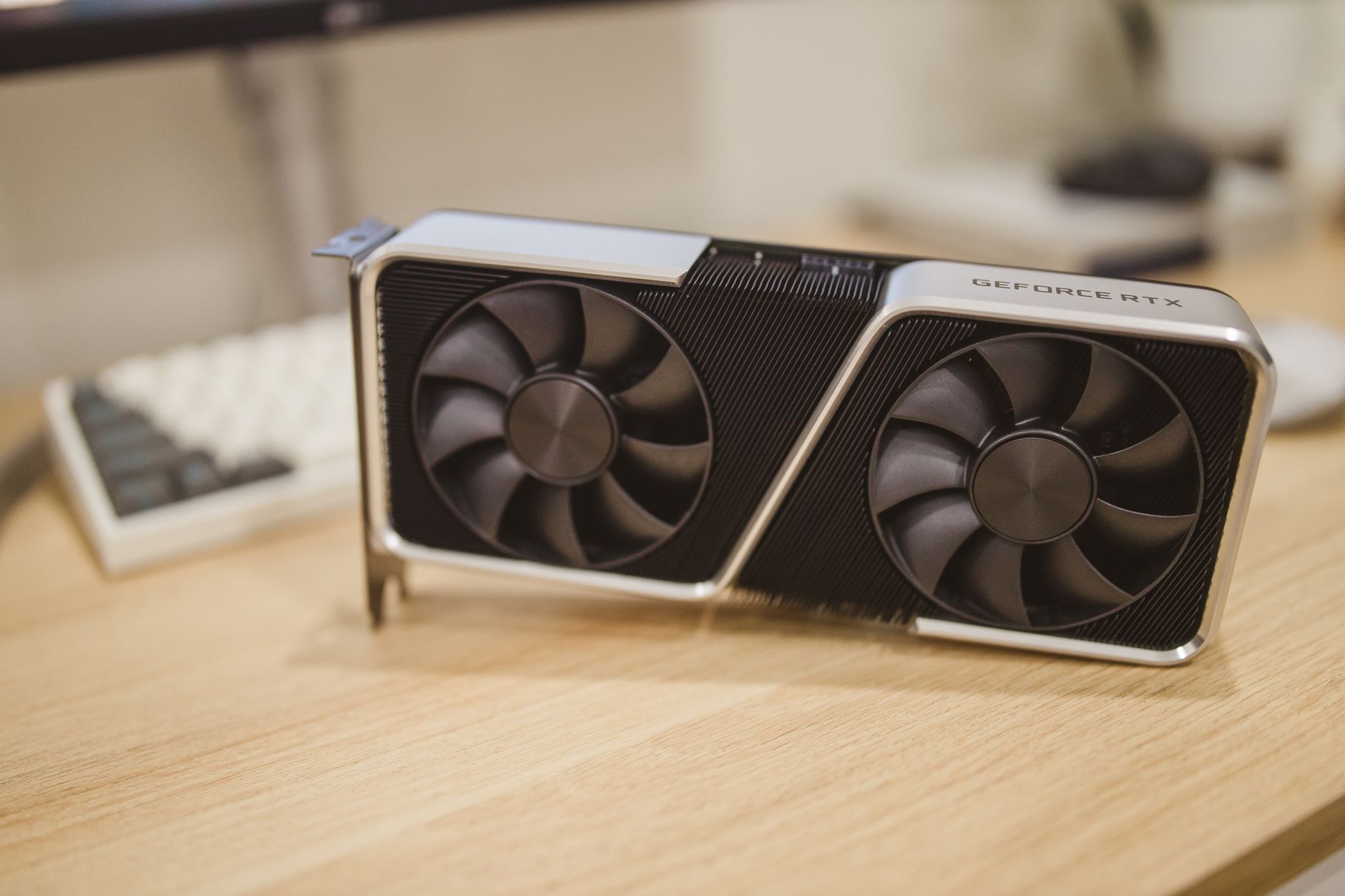
The 5070 Ti is built on Nvidia’s Blackwell architecture, featuring 8,960 CUDA cores, 16GB of GDDR7 memory on a 256-bit bus, and a 300W TDP. The RTX 4090, by contrast, runs Ada Lovelace silicon with 16,384 CUDA cores, 24GB of GDDR6X on a 384-bit bus, and a 450W TDP. Raw spec comparisons don’t capture the full picture – Blackwell’s architectural improvements and DLSS 4 with Multi Frame Generation change the performance conversation significantly – but those numbers do set some important expectations before you ever boot a game.
Performance Overview
In rasterized performance without upscaling, the RTX 4090 still leads. At native 4K, titles like Cyberpunk 2077 and Microsoft Flight Simulator show the 4090 pulling ahead by roughly 15 to 20 percent. The gap is real, and for purists who refuse to touch DLSS or any form of upscaling, that alone makes the 4090 the stronger card in 2025.
The story changes the moment you enable DLSS 4. The 5070 Ti’s Multi Frame Generation – which can generate up to three additional frames per rendered frame – produces frame rates that the 4090 cannot match using DLSS 3 Frame Generation. In Cyberpunk 2077 at 4K Ultra with path tracing enabled, the 5070 Ti with MFG active can push well past 100fps, territory where the 4090 with DLSS 3 struggles to stay consistently. Whether those generated frames feel identical to natively rendered ones is a matter of ongoing debate among enthusiasts, but the raw numbers look very good for the newer card. Latency-sensitive players using Nvidia Reflex report the experience remains playable even with MFG enabled, though it’s worth testing in your own specific setup.
Memory bandwidth is where the 4090 retains a structural advantage. Its 384-bit bus feeds 24GB of VRAM at 1,008 GB/s, compared to the 5070 Ti’s 896 GB/s on a narrower bus. For workloads that saturate VRAM – think 4K texture packs, heavy modding, or professional creative tasks running alongside games – the 4090’s extra 8GB and wider memory interface remain meaningful. The 5070 Ti’s 16GB ceiling has already started to feel tight in a handful of demanding titles with highest-quality settings enabled.
Power and Thermals
The 5070 Ti draws 300W under full load. The 4090 pulls 450W. That 150W difference translates directly into lower electricity costs over time, less heat pumped into your case, and more headroom in mid-range power supplies. A system running a 5070 Ti can reasonably operate on a quality 750W PSU; an RTX 4090 system generally demands 850W or more with no room for error. For small form factor builds or anyone cooling a tight case, this matters a great deal.
Third-party cooling solutions also benefit from the lower TDP. If you want a deeper look at how aftermarket designs handle the 5070 Ti’s thermal output specifically, the Gigabyte RTX 5070 Ti Gaming OC thermals breakdown against the Founders Edition covers real-world temperature data across sustained loads.
Pros and Cons
RTX 5070 Ti – Pros
- DLSS 4 with Multi Frame Generation: The only card in this comparison that supports MFG, and it makes a substantial difference in supported titles at 4K.
- Lower power draw: 300W versus 450W is a meaningful gap, especially for anyone managing system thermals or electricity costs.
- Lower price: Launching at $749 MSRP versus the 4090’s original $1,599, the 5070 Ti offers strong value on a relative basis – assuming you can find one at MSRP.
- Blackwell architecture improvements: Beyond raw CUDA cores, improvements to the SM design and cache hierarchy improve real-world efficiency in ways that don’t show up cleanly in spec sheets.
- Future driver support priority: Nvidia’s newer architecture will receive optimization priority going forward, particularly for new AI-driven rendering features.
RTX 5070 Ti – Cons
- 16GB VRAM ceiling: Increasingly visible in texture-heavy 4K titles, and a genuine concern for creative workloads or heavy modding.
- Native rasterization deficit: Without upscaling, the 4090 remains faster in most traditional workloads.
- Stock and pricing volatility: Retail availability at MSRP has been inconsistent since launch, with scalpers regularly pushing street prices significantly higher.
- MFG quality debate: Generated frames improve numbers but introduce subtle artifacting in fast motion that some players notice immediately.
RTX 4090 – Pros
- 24GB GDDR6X: Still unmatched in this tier for VRAM capacity, and critical for certain creative and AI workloads.
- Strongest native rasterization performance available below the RTX 5090: The raw compute advantage holds up across benchmarks.
- Proven stability: Two years of driver maturity mean few surprises in compatibility or performance consistency.
RTX 4090 – Cons
- 450W TDP: Demands premium cooling, a high-capacity PSU, and contributes significantly to system heat output.
- No Multi Frame Generation support: Locked to DLSS 3 Frame Generation, which generates one additional frame rather than three.
- Price on the used market: Used 4090s still command $800 to $1,000 or more in most markets, which undercuts their value against a new 5070 Ti at MSRP.
- Architecture is aging: Ada Lovelace will receive fewer forward-looking feature updates as Blackwell matures.
Who Should Actually Upgrade
If you own a 4090 and your primary use case is gaming at 4K with a high-refresh display, there is no urgent case to upgrade. The 5070 Ti closes the gap significantly in DLSS 4 titles, and will likely surpass the 4090 in more games as MFG support becomes widespread, but right now you are not leaving performance on the table in a way that affects day-to-day gaming quality. Selling a 4090 in the current used market to fund a 5070 Ti purchase at or above MSRP is a sideways move at best in native performance terms.
For someone building a new high-end gaming PC in 2025, the 5070 Ti is the more sensible starting point. Better efficiency, DLSS 4 support, lower entry cost, and strong 4K performance across current titles make it the practical choice if 24GB VRAM isn’t a specific requirement. The 4090 isn’t dead – far from it – but buying a used one now at $900 when a new 5070 Ti exists at $749 MSRP requires a specific justification that most gamers won’t have.
The one group with a genuinely strong reason to stay on the 4090: creators and hybrid users who use GPU VRAM heavily for video editing, 3D rendering, or running local AI models alongside gaming. For those workflows, 24GB versus 16GB is a practical ceiling difference, not a spec sheet footnote.
Verdict
The RTX 5070 Ti does not beat the RTX 4090 across the board. It wins on efficiency, price-to-performance, and DLSS 4 frame output, while losing on raw native rasterization and VRAM headroom. Calling it a direct upgrade over the 4090 is technically accurate only in specific scenarios – and those scenarios are growing as DLSS 4 adoption expands, but they aren’t universal yet.
For new buyers: the 5070 Ti is the right call. For existing 4090 owners: wait, unless DLSS 4 MFG titles dominate your library and you’ve already run into the 4090’s 450W TDP causing real problems in your build. The harder question is what happens six months from now if a broader range of titles starts shipping with MFG support by default – at that point, the 4090’s native performance advantage becomes increasingly irrelevant while its VRAM advantage remains the only structural reason to prefer it.
At $749 MSRP, the 5070 Ti is the better GPU for 2025 gaming. The problem is that “at MSRP” qualifier, which has proven to be the most unreliable four words in PC hardware retail this year.
Frequently Asked Questions
Is the RTX 5070 Ti faster than the RTX 4090?
Not consistently in native rasterization, where the 4090 still leads by 15-20 percent. With DLSS 4 Multi Frame Generation enabled, the 5070 Ti produces higher frame rates in supported titles.
Should RTX 4090 owners upgrade to the RTX 5070 Ti?
Generally no, unless DLSS 4 titles dominate your library or your 4090’s 450W power draw is a real problem. The upgrade is more justified for new system builds.