The Mid-Range Ray Tracing War Gets Real
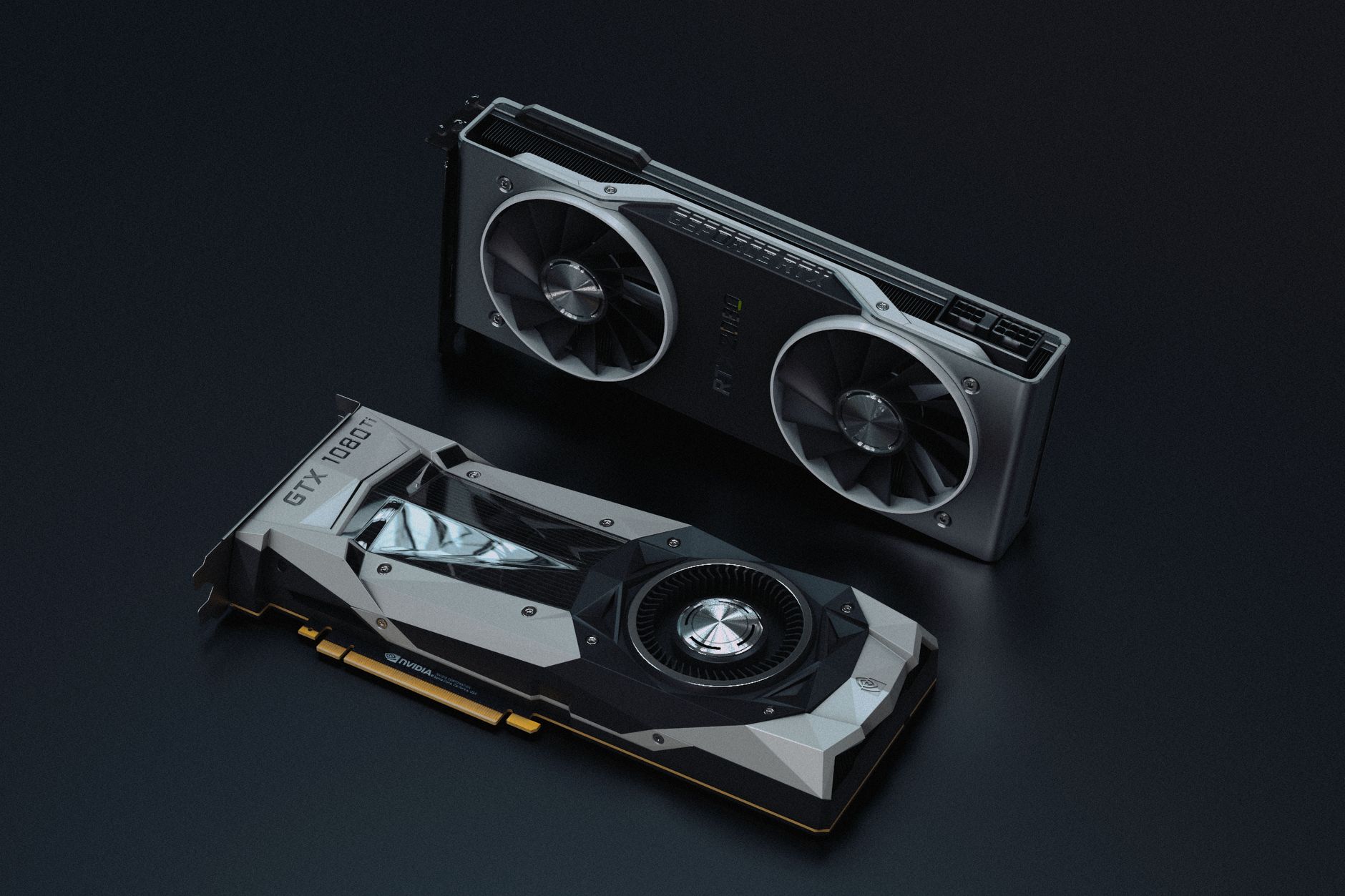
AMD’s Radeon RX 9060 XT and NVIDIA’s RTX 5060 Ti are both targeting the same gamer: someone who wants solid 1080p performance without spending flagship money. On paper, the specs tell a familiar story – AMD leading on raw compute and VRAM, NVIDIA countering with its ray tracing architecture and DLSS 4. But 1080p ray tracing is where the gap between those two philosophies stops being theoretical and starts showing up in actual frame rates.
Testing both cards across a range of titles with ray tracing enabled at 1080p reveals a more complicated picture than either company’s marketing suggests. The RX 9060 XT, built on RDNA 4, carries AMD’s most improved ray tracing hardware to date. The RTX 5060 Ti runs on Blackwell, which benefits from NVIDIA’s generational lead in RT-specific silicon. Neither card is cheap, and neither answer is simple.

Hardware at a Glance
The RX 9060 XT ships with 16GB of GDDR6 on the base configuration, which is a meaningful advantage at a price tier where VRAM has historically been a pain point. AMD’s RDNA 4 architecture doubles the ray accelerators per compute unit compared to RDNA 3, addressing one of the biggest criticisms leveled at AMD’s mid-range ray tracing capability for the past two generations. Clock speeds are aggressive, and the card runs warm under sustained RT workloads but stays within manageable thermal limits on most dual-fan cooler designs.
The RTX 5060 Ti, meanwhile, is available in both 8GB and 16GB variants – and if you are shopping this card for ray tracing at 1080p, the 16GB version is the one that makes sense. (For a deeper look at how VRAM capacity changes the equation at higher resolutions, the RTX 5060 Ti 8GB vs 16GB VRAM comparison at 4K breaks that down in detail.) Blackwell’s fourth-generation RT cores are a genuine architectural step forward, and NVIDIA’s Shader Execution Reordering carries over to this tier, reducing the stall penalty that makes ray tracing expensive on conventional GPU designs.
1080p Ray Tracing: Game by Game
In Cyberpunk 2077 with Path Tracing disabled but full ray tracing presets active – reflections, shadows, and ambient occlusion – the RTX 5060 Ti holds a consistent lead, averaging roughly 15 to 20 percent higher frame rates before upscaling is applied. The difference is most visible in Night City’s rain-soaked streets, where the RT shadow workload is relentless. The RX 9060 XT is not slow here; it holds playable averages, but the RTX 5060 Ti simply handles the shadow casting pipeline with less stuttering in dense scenes.
Alan Wake 2 tells a similar story but narrows the gap. AMD’s RDNA 4 RT improvements show their best work in scenes dominated by indirect lighting rather than complex multi-bounce reflections. Indoor environments and forest sequences with heavy ambient occlusion see the RX 9060 XT within 10 percent of the RTX 5060 Ti – a much tighter race than the previous generation would have produced. This is the game where AMD’s architectural investment in ray tracing looks most justified.
Metro Exodus Enhanced Edition remains a punishing RT benchmark, and here the RTX 5060 Ti extends its lead again. The game’s full global illumination implementation is among the most demanding in existence, and NVIDIA’s RT silicon advantage compounds when every lighting calculation is ray-traced. The RX 9060 XT drops below 60fps in specific outdoor sequences without upscaling assistance, while the RTX 5060 Ti maintains smoother averages throughout the campaign’s most demanding chapters.
Spider-Man: Miles Morales and Ratchet and Clank: Rift Apart – both ported from PlayStation 5 with full RT support – flip the narrative somewhat. These titles are well-optimized across a range of hardware, and the RX 9060 XT closes the gap considerably. In Spider-Man specifically, the frame rates are close enough that the choice between cards becomes more about upscaling preference than raw RT muscle. AMD’s FSR 4 versus NVIDIA’s DLSS 4 with Multi Frame Generation is, at this point, a separate and equally important conversation.
Upscaling Changes the Math
Ray tracing performance comparisons at 1080p without upscaling are useful for establishing a baseline, but most players will use FSR or DLSS to recover frame rate headroom. This is where the two cards diverge in a different direction. DLSS 4 with Frame Generation available on the RTX 5060 Ti can push already-playable frame rates into territory that makes ray tracing feel genuinely comfortable in heavy titles – even Path Tracing in Cyberpunk 2077 becomes usable with the feature active, something that would be unthinkable on this tier two generations ago.
FSR 4 on the RX 9060 XT is a meaningful improvement over FSR 3, with noticeably better temporal stability and reduced ghosting on fine geometry like foliage and hair. AMD’s Fluid Motion Frames also brings frame generation to the table for RX 9000-series cards. The honest assessment is that DLSS 4 still produces cleaner output at equivalent quality settings, particularly at 1080p where the upscaling algorithm has less source resolution to work with. FSR 4 is no longer embarrassing in comparison, but the gap remains.
Thermals, Power, and Noise
Both cards run warmer under sustained ray tracing loads than rasterization workloads, which is expected given how hard the RT hardware is being pushed. The RX 9060 XT draws more power under RT loads than NVIDIA’s equivalent, continuing a trend where AMD’s architecture trades efficiency for raw compute. In a well-ventilated case this is a non-issue, but in compact mid-tower builds with restricted airflow, the additional heat output is worth factoring into the buying decision.
The RTX 5060 Ti runs cooler and quieter under the same workloads, which in part reflects the efficiency of Blackwell’s RT hardware – it achieves similar or better results while taxing the GPU less overall. Noise levels on partner cards from both companies vary considerably by cooler design, but the baseline thermal envelope of the RTX 5060 Ti gives manufacturers more room to work with. For living room PC builds or anyone running a smaller chassis, that efficiency delta is tangible.
Who Should Buy Which Card
The RTX 5060 Ti is the stronger ray tracing card at 1080p. That conclusion holds across the majority of titles tested, and the combination of DLSS 4 and a more efficient RT architecture means it handles demanding workloads with less compromise. If ray tracing quality is the deciding factor in your purchase, NVIDIA wins this comparison without much ambiguity.
The RX 9060 XT makes a compelling case on value and VRAM. AMD’s card costs less in most markets, ships with 16GB as standard across configurations, and the ray tracing gap compared to previous AMD generations is genuinely smaller – RDNA 4’s RT improvements are real, not marketing copy. For players who prioritize rasterization performance and use ray tracing selectively rather than as a baseline setting, the RX 9060 XT is a legitimate option that no longer requires you to completely abandon RT features.
What this comparison ultimately surfaces is that AMD has closed the ceiling on what RDNA can do with ray tracing, but NVIDIA still controls the floor. The RX 9060 XT no longer collapses under heavy RT workloads the way RDNA 3 mid-range cards did, but in the titles where NVIDIA’s fourth-generation RT cores flex their advantage – Metro Exodus Enhanced, Cyberpunk 2077 at max RT settings – the frame rate charts still tilt the same direction.
Frequently Asked Questions
Is the RX 9060 XT good for ray tracing at 1080p?
Yes, RDNA 4 makes the RX 9060 XT noticeably better at ray tracing than previous AMD mid-range cards, though the RTX 5060 Ti still leads in most demanding RT titles.
Does the RTX 5060 Ti outperform the RX 9060 XT in ray tracing?
In the majority of tested titles, yes. The RTX 5060 Ti holds a 10-20 percent lead in heavy ray tracing workloads, with DLSS 4 further extending its practical advantage.