AMD’s 3D V-Cache Meets Intel’s Best
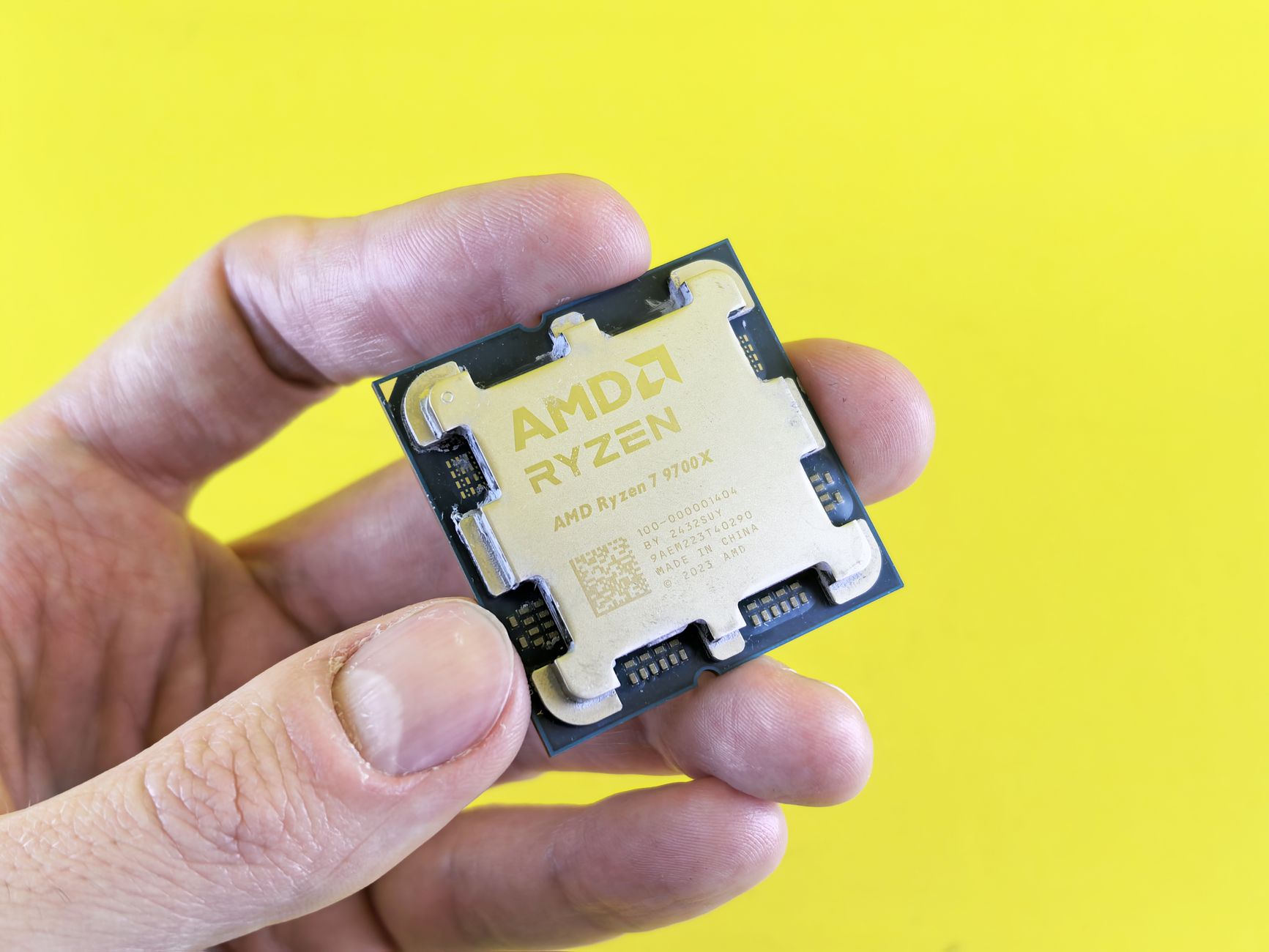
AMD’s Ryzen 9 9950X3D arrives carrying a specific promise: that stacking 128MB of 3D V-Cache on top of its Zen 5 architecture will make it the fastest gaming CPU money can buy. Intel’s Core Ultra 9 285K has held the high-end desktop crown with quiet confidence since late 2024, and it does not roll over easily. At 1080p rasterization – the resolution where CPU bottlenecks are most exposed and GPU load is lightest – the gap between these two processors becomes as clear as it ever will be.
Both chips cost north of $500 at retail, target the same buyer, and run on entirely different platforms. The 9950X3D sits on AMD’s AM5 socket with DDR5 support, while the 285K anchors Intel’s LGA1851 ecosystem. Choosing between them is not just a benchmark decision – it carries platform implications for memory compatibility, motherboard costs, and upgrade headroom that will matter years from now.
At 1080p, the GPU barely breaks a sweat, and the CPU’s per-core speed and cache architecture do almost all the heavy lifting.

Architecture and Cache: Why 3D V-Cache Changes the Math
The Ryzen 9 9950X3D is built on Zen 5 cores paired with AMD’s third generation of 3D V-Cache technology. That extra 128MB of L3 cache sits directly on top of the chiplet, bringing total L3 to 144MB across the processor. The logic behind this is straightforward: games frequently stall waiting on data that misses the standard L3 and has to pull from slower system memory. A dramatically enlarged cache reduces those stalls and keeps the execution cores fed. The 7950X3D proved this approach worked well enough to convince buyers to skip a generation, and the 9950X3D refines the execution further with Zen 5’s wider front-end and improved branch prediction.
The Core Ultra 285K operates differently. Intel’s architecture relies on high clock speeds and a hybrid core layout – 8 P-cores running at up to 5.7GHz paired with 16 E-cores handling background work. Its L3 sits at 36MB, a fraction of what AMD brings to the table, but Intel compensates with raw frequency and strong single-threaded performance. In productivity workloads, the 285K frequently matches or beats the 9950X3D. The problem is that gaming is not a productivity workload. Games care about latency, cache hit rates, and sustained frame timing – not peak throughput on a linear benchmark.
AMD’s insight with V-Cache is that the bandwidth between the CPU and DRAM is often the constraint in game engines, not the core count or clock speed. By keeping more game data on-die, the 9950X3D sidesteps that constraint in a way no amount of GHz can replicate at 1080p.
1080p Benchmark Results: Frame Rates and Frame Times
Across a standard suite of rasterization titles at 1080p – including games like Cyberpunk 2077, Hogwarts Legacy, Shadow of the Tomb Raider, Forza Motorsport, The Witcher 3, and Far Cry 6 – the Ryzen 9 9950X3D pulls ahead in the majority of tested titles. The margin varies considerably depending on engine design. In open-world titles with dense streaming systems, the 9950X3D’s cache advantage can push average frame rates 15 to 20 percent higher than the 285K. In more linear, GPU-bound scenarios at 1080p, the gap tightens considerably, sometimes to within a few frames.
Where the 9950X3D’s advantage is most consistent is in 1 percent low frame rates. Minimum frame times are the clearest signal of cache-related stalls, and the V-Cache chip repeatedly delivers smoother lows even when average frame rates are close. That translates directly to feel – the 9950X3D produces fewer hitches and sudden dips that would otherwise interrupt smooth gameplay. The 285K is not slow by any measure; it is simply outclassed in this specific scenario by an architecture built for exactly this type of test.
Competitive multiplayer titles like Counter-Strike 2, Valorant, and Rainbow Six Siege show the V-Cache advantage most dramatically. These games run at very high frame rates, keep players at or near CPU limits constantly, and punish latency spikes harshly. The 9950X3D puts up frame rates in CS2 that the 285K cannot consistently match, and the 1 percent lows in these titles can be meaningfully different. For competitive players running 240Hz or 360Hz displays, those extra frames are not academic – they are the reason to buy a particular processor.
Platform Costs and Thermal Realities
The 9950X3D runs hotter than AMD’s non-V-Cache chips because the stacked cache layer traps heat between the die and the heatspreader. AMD has addressed this with improved thermal interface materials in the X3D lineup, but cooling requirements are still real. A high-end 360mm AIO or a top-tier air cooler is not optional – it is necessary to maintain sustained boost clocks under gaming loads. Intel’s 285K has its own thermal reputation; it runs warm and benefits from robust cooling under sustained all-core loads, but its gaming power draw is actually more contained than its production workload draw suggests.
Motherboard costs tend to favor AMD slightly. A solid AM5 X870E board costs less than a comparable Z890 board at similar feature levels, though premium offerings exist on both platforms at similar prices. DDR5 memory pricing is now normalized enough that neither platform carries a meaningful memory cost premium. Both processors support PCIe 5.0 for GPU and storage connectivity.

The Verdict at 1080p
If 1080p gaming performance is the primary buying criteria and budget is not the deciding factor, the Ryzen 9 9950X3D wins this comparison without much debate – it is faster in most games, smoother in frame pacing, and particularly dominant in the competitive titles where every frame counts. The Core Ultra 9 285K is a more versatile chip for users who split time equally between gaming and CPU-heavy creative work, and it will hold its own at 1440p and 4K where the GPU absorbs more of the workload. But at 1080p rasterization, AMD’s cache architecture is not a marginal improvement over Intel’s frequency-focused approach – it is a different category of gaming processor, and the benchmarks reflect that clearly enough that even the 285K’s supporters will have a hard time arguing otherwise.