Blackwell Meets Ada Lovelace: The Generational Gap Gets Real
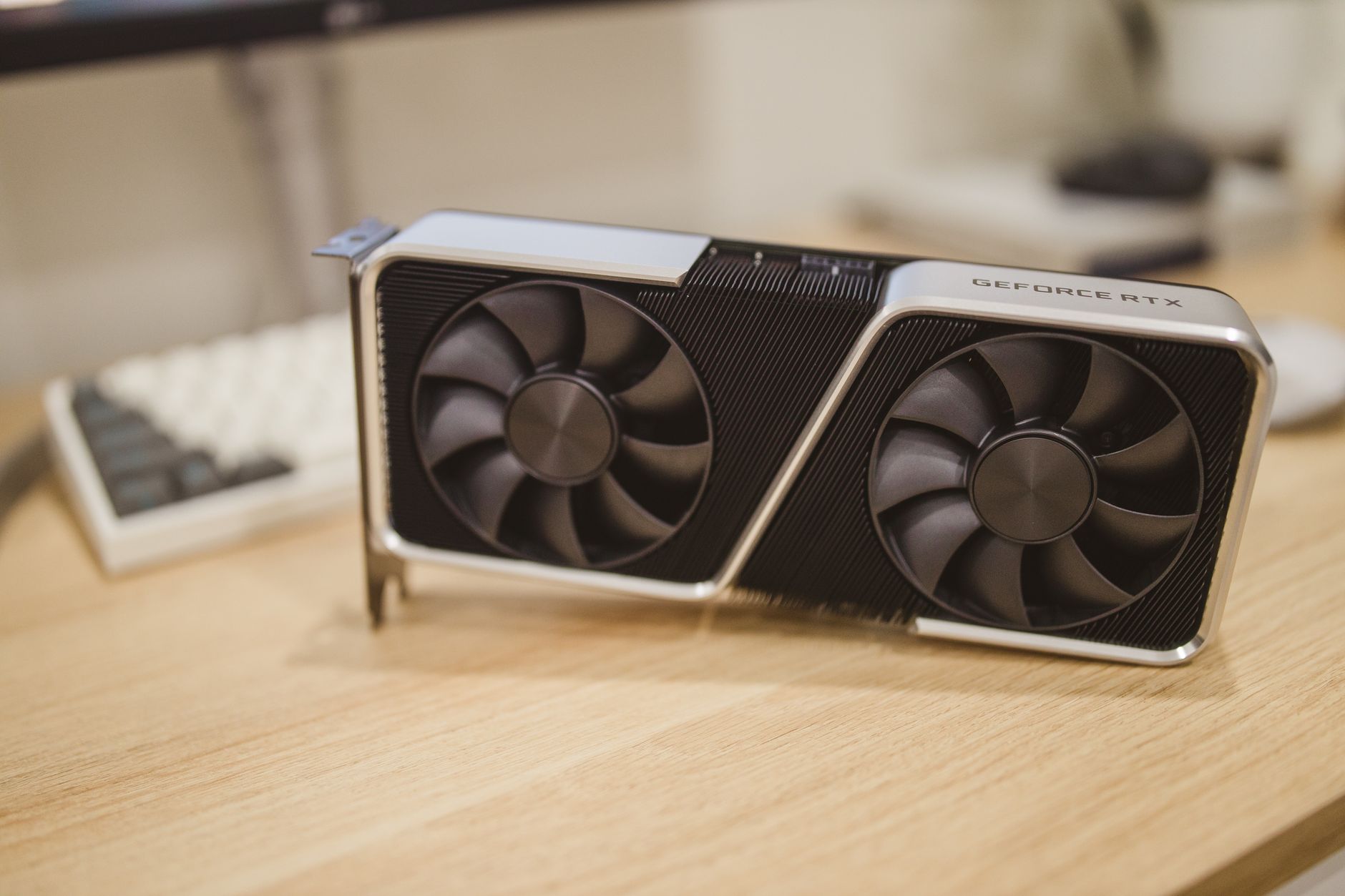
Nvidia’s RTX 5070 Ti launched at $749 MSRP, slotting into territory that the RTX 4080 Super occupied just one generation ago at $999. On paper, that price drop alone makes the 5070 Ti look like a no-brainer. But pricing comparisons only tell part of the story – what actually matters is how much faster the Blackwell architecture runs against Ada Lovelace in real workloads, and whether the generational gains justify upgrading if you already own a 4080 Super.
The RTX 5070 Ti packs 8960 CUDA cores against the 4080 Super’s 10240, which sounds like a step backward at first glance. Nvidia closed that gap through architectural efficiency improvements, a wider 256-bit memory bus carrying 16GB of GDDR7 at 896 GB/s bandwidth, compared to the 4080 Super’s 208.0 GB/s GDDR6X. Clock speeds on the 5070 Ti also push higher, with a boost clock hitting 2.45 GHz. The spec sheet sets up an interesting fight – fewer cores, dramatically faster memory, and a new generation of shader processing behind it all.
Rasterization Performance: 1440p and 4K Benchmarks
At 1440p, the performance gap between these two cards is consistent but not massive in pure rasterization. In Cyberpunk 2077 with ray tracing disabled, the RTX 5070 Ti runs roughly 12 to 15 percent faster than the 4080 Super on average. That lands the 5070 Ti comfortably above 120 fps in most demanding titles at 1440p Ultra, while the 4080 Super trails slightly but still sits in playable, high-refresh territory. For anyone gaming at 1440p on a 165Hz or 240Hz monitor, both cards are more than capable – the real question is whether that margin is worth a new purchase.
At 4K, the gap widens slightly because the 5070 Ti’s memory bandwidth advantage becomes more relevant. Games that are heavily bandwidth-limited – open-world titles with dense geometry and high-resolution textures – show the 5070 Ti pulling ahead by closer to 18 to 20 percent in specific scenes. Alan Wake 2 at 4K Ultra with path tracing disabled gives the 5070 Ti a clear edge, consistently staying above 60 fps native while the 4080 Super dips into the high 50s in the most demanding outdoor sequences. That gap does not always show up on average frame rate charts, which is why looking at 1% lows matters here.
The 1% low performance tells a more interesting story. The RTX 5070 Ti’s GDDR7 bandwidth keeps frame pacing tighter during asset streaming and open-world traversal. The 4080 Super, while still an excellent card, shows occasional stutters in memory-intensive scenarios that the 5070 Ti largely avoids. In Black Myth: Wukong at 4K with high-quality settings, the 5070 Ti’s 1% lows are meaningfully higher – that difference registers as a smoother feel even when average frame rates look similar on paper.
Titles that are less demanding – competitive shooters like Valorant or Counter-Strike 2, older games, and anything below Ultra settings – see the two cards converge almost entirely. At that point, neither card is the bottleneck. If your game library skews toward competitive titles at 1440p, the performance difference between these two GPUs is largely irrelevant.
Ray Tracing and DLSS 4 vs DLSS 3.5
Ray tracing is where Blackwell’s architectural improvements show the largest gains. The 5070 Ti’s fourth-generation RT cores handle ray tracing workloads with noticeably less performance penalty than the 4080 Super. In Cyberpunk 2077 with full ray tracing enabled at 4K, the 5070 Ti runs roughly 25 percent faster than the 4080 Super before upscaling is applied. That gap reflects the raw RT throughput difference between generations, and it matters significantly if ray tracing is part of your normal settings configuration.
DLSS 4 with Multi Frame Generation is the wildcard that changes the math entirely. The RTX 5070 Ti supports Multi Frame Generation, which can generate up to three additional frames per rendered frame, dramatically multiplying output frame rates. The 4080 Super is limited to DLSS 3.5 with standard Frame Generation – one generated frame per rendered frame. In Cyberpunk 2077 at 4K with path tracing and DLSS 4 MFG enabled, the 5070 Ti can produce over 120 fps where the 4080 Super with DLSS 3.5 FG lands around 70 to 80 fps. That is a substantial visible difference, though it comes with the caveat that generated frames carry input latency penalties that competitive players will notice. Nvidia Reflex helps manage that, but it does not fully eliminate it.
Thermal, Power, and the Upgrade Calculation
The RTX 5070 Ti has a 300W TDP compared to the 4080 Super’s 320W. That is a modest efficiency improvement given the performance gains, and it reflects Nvidia’s work on Blackwell’s per-watt output. In practice, both cards run warm under sustained load – expect temperatures in the 75 to 83 degree range depending on case airflow and cooling solution. Partner cards with triple-fan coolers from ASUS, MSI, and Gigabyte keep both cards under control, but neither GPU is cool-running by any stretch.
Power consumption during peak gaming workloads puts both cards in a similar range at the wall. A system with either GPU and a modern high-end CPU will draw between 450W and 550W during demanding scenes. The efficiency advantage of the 5070 Ti is real on paper, but it does not translate into a meaningful difference in electricity costs or PSU requirements. A quality 850W power supply handles either card comfortably.
For RTX 4080 Super owners specifically, the upgrade case is soft unless you have a strong need for DLSS 4 Multi Frame Generation or are targeting path tracing performance at 4K. The rasterization gains are real but not dramatic enough to justify the cost of a new card plus selling your existing one. Where the 5070 Ti makes a strong argument is against anyone upgrading from RTX 3000-series cards or older, or building a new system entirely. At $749 versus the 4080 Super’s original $999 launch price, the value proposition is strong – and if you can find a comparison of the RTX 5070 and AMD’s competing options relevant to your budget, the mid-tier landscape is worth mapping before committing.
The Verdict on Generational Gain
The RTX 5070 Ti delivers a genuine generational improvement over the RTX 4080 Super – somewhere between 12 and 25 percent depending on the workload, with ray tracing and bandwidth-heavy scenarios showing the largest margins. It is not the kind of generational leap that makes last-gen hardware feel obsolete overnight, but for a product that costs $250 less at launch than its predecessor, the value math works differently than in previous cycles. The real gain for new buyers is not just the rasterization uplift – it is the GDDR7 bandwidth ceiling and the future headroom that DLSS 4 Multi Frame Generation provides for upcoming titles designed with that feature in mind.
What actually determines whether the 5070 Ti earns its place depends entirely on what you are currently running. If your starting point is an RTX 4080 Super, the upgrade is a luxury, not a necessity. If you are on a 3080 or older, the combined generational leap across two architectures is substantial enough to feel like a different class of card. The 4080 Super still performs excellently at 4K in 2025 – it simply does not have Multi Frame Generation, and as more games ship with DLSS 4 support, that omission may sting more over time than the raw frame rate numbers suggest today.