The Mid-Range GPU War Heats Up
AMD’s Radeon RX 9060 XT and Nvidia’s RTX 5060 Ti are both targeting the same buyer – someone who games at 1080p, wants strong rasterization performance, and does not want to spend flagship money. But being in the same price bracket does not mean they perform the same way.

Specs, Architecture, and What Actually Matters at 1080p
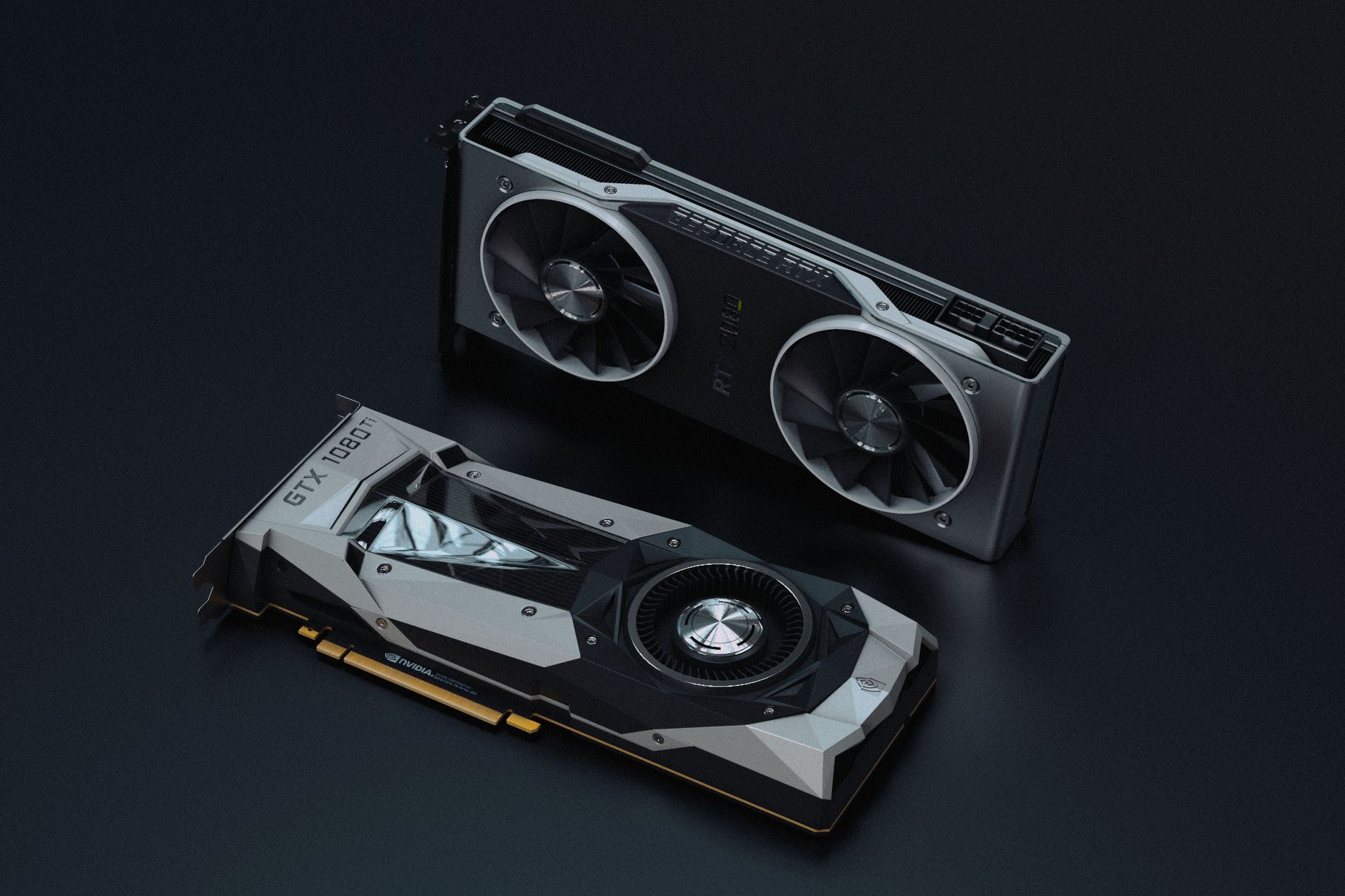
The RTX 5060 Ti launches with either 8GB or 16GB of GDDR7 memory depending on the variant, built on Nvidia’s Blackwell architecture. The RX 9060 XT runs on AMD’s RDNA 4 architecture with 16GB of GDDR6 on the higher-tier variant. On paper, the memory difference between the 8GB 5060 Ti and the 16GB 9060 XT is significant, but at 1080p with standard texture settings, most titles do not push past 8GB of VRAM – so that spec gap matters more in theory than in practice for pure 1080p rasterization testing.
Clock speeds favor Nvidia in raw numbers, with the 5060 Ti boosting aggressively under sustained load. AMD counters with higher compute unit counts and improved efficiency from RDNA 4, which delivers noticeably better performance-per-watt compared to RDNA 3. Neither card is a power hog by modern standards, but the 9060 XT tends to run at lower wattage during typical gaming workloads, which matters if you’re running a smaller form factor build or a modestly specced power supply.
Rasterization is the focus here – no ray tracing, no upscaling tricks, no DLSS 4 or FSR 4 boosting numbers. This is straight rendering, the way games have always run, and the metric that still determines how well a card handles the vast majority of titles in any given library. At 1080p, both cards are well above the performance threshold needed for 60fps in even demanding titles, so the real question becomes how they handle high refresh rate gaming at maximum settings.
Both cards support their respective upscaling technologies – Nvidia’s DLSS 4 with Multi Frame Generation and AMD’s FSR 4 – but those are separate conversations. The 9060 XT does not support Nvidia’s frame generation pipeline, and the 5060 Ti does not benefit from AMD’s FSR 4 quality improvements to the same degree. For buyers who care about native performance without AI assistance, this rasterization comparison is the honest baseline.
Game-by-Game Performance at 1080p Maximum Settings
In Cyberpunk 2077 at 1080p Ultra settings with ray tracing disabled, the RTX 5060 Ti holds a measurable lead over the RX 9060 XT. The margin sits in the range of roughly 8 to 12 percent depending on the scene, with the Nvidia card sustaining higher minimum framerates in the most GPU-intensive sections of Night City. This is consistent with Blackwell’s strong shader throughput, which CD Projekt Red’s engine responds to well.
Baldur’s Gate 3 tells a different story. The game is not particularly GPU-bound at 1080p for either card, and both push well above 120fps at Ultra settings. Here the 9060 XT’s performance gap versus the 5060 Ti narrows to near-irrelevant territory. The same pattern holds for Hades II, Deep Rock Galactic, and other titles that are more CPU or storage dependent than GPU dependent.
Where things get interesting is in newer, more demanding titles like Alan Wake 2 and Avatar: Frontiers of Pandora. Both games hammer GPUs with dense geometry and complex lighting, and at 1080p Ultra without ray tracing, the RTX 5060 Ti consistently leads – but not by enough to declare a runaway victory. AMD’s RDNA 4 closes the gap that RDNA 3 could not, and the 9060 XT delivers performance that would have required a significantly more expensive AMD card just one generation ago.
Counter-Strike 2 and competitive multiplayer titles at 1080p are where AMD users will feel least disadvantaged. At high framerates above 200fps, the 5060 Ti pulls ahead in raw output, but both cards exceed what most 144Hz and 165Hz monitors can display at max settings. Dropping to medium-competitive settings equalizes things further, and the choice of card becomes less relevant than the choice of monitor.
One area where AMD holds its own more consistently is in open-world traversal scenarios – games like Hogwarts Legacy and Forza Horizon 5, where memory bandwidth and texture streaming play a bigger role than raw shader performance. The 9060 XT’s 16GB variant in particular shows no signs of VRAM pressure even at 1080p Ultra, while buyers considering the 8GB RTX 5060 Ti should understand that certain heavily modded games or future titles could create texture pop-in issues as VRAM demands creep upward. It is not a problem today in most cases, but it is a risk worth factoring into a purchasing decision that should last three or four years.
Price and the Real Purchasing Decision
The RTX 5060 Ti carries a higher MSRP than the RX 9060 XT at equivalent memory configurations, though street pricing fluctuates with availability. If AMD can keep the 9060 XT reliably stocked at or near its launch price, the value proposition is strong. You accept roughly a 5 to 12 percent performance deficit in rasterization-heavy titles in exchange for a lower price, better VRAM on the 16GB model, and lower power draw. For a 1080p gaming build, that is a reasonable trade depending on what titles you play.
Nvidia’s advantage is real but not decisive at this tier. The 5060 Ti benefits from the broader Nvidia ecosystem – better driver consistency in some titles, DLSS 4 support for users who do want AI upscaling, and stronger performance in Nvidia-optimized games. But if rasterization at 1080p is the primary metric, the gap does not justify a significant price premium on its own. The 8GB version of the 5060 Ti, specifically, puts Nvidia in an uncomfortable position – asking a premium price for a card with less VRAM than its direct AMD competitor at a lower price point is a hard sell, and it is one Nvidia will need to address if AMD keeps the 9060 XT supply steady through the second half of the year.