
Two Cards, One Target: The 1440p Mid-to-High GPU Battle
AMD’s Radeon RX 9070 XT and NVIDIA’s RTX 5070 Ti are not quite the same product, but they are fighting for the same buyer. The 9070 XT launched at $599, while the RTX 5070 Ti debuted at $749 – a $150 gap that sounds manageable until you start factoring in real-world street prices, which for NVIDIA’s card have consistently floated well above MSRP since launch. At 1440p with rasterization as the primary workload, that price difference has to be justified by actual frame rate performance. So the question is whether NVIDIA’s card delivers proportionally better results, or whether AMD has closed the gap tight enough to make the premium genuinely hard to defend.
This comparison focuses strictly on rasterized performance at 2560×1440, no ray tracing multipliers, no upscaling assists from DLSS or FSR, no frame generation padding the numbers. Raw rasterization at 1440p is still the most honest measure of a GPU’s baseline capability, and it is where AMD has historically competed most effectively against NVIDIA’s higher-tier silicon. The architecture gap between RDNA 4 and Blackwell is real, but it plays out differently depending on the game engine, the API, and the draw call complexity of the title being benchmarked.

Architecture Differences That Actually Matter at 1440p
AMD’s RDNA 4 architecture inside the 9070 XT brought a substantial generational leap over RDNA 3, with a reworked compute unit design and significantly improved instruction throughput. The card ships with 64 compute units, 4096 stream processors, and 16GB of GDDR6 on a 256-bit bus. NVIDIA’s RTX 5070 Ti runs Blackwell with 8960 CUDA cores, 16GB of GDDR7 on a 256-bit bus, and a memory bandwidth advantage that becomes more apparent at higher resolutions. On paper, the RTX 5070 Ti has more raw compute and faster memory. In practice, the gap at 1440p is narrower than those specs suggest.
RDNA 4’s improvements to the shader compiler and async compute handling mean the 9070 XT performs better in DX12 and Vulkan titles than raw spec comparisons would predict. NVIDIA still holds an edge in OpenGL workloads and in titles heavily optimized for CUDA-adjacent rendering paths, but those cases are increasingly niche in 2025. The bandwidth difference matters more at 4K – for reference, you can check out how the RX 9070 XT handles minimum frame rates at 4K, where memory pressure hits harder. At 1440p, both cards are operating comfortably within their VRAM and bandwidth headroom across most modern titles.
Driver optimization also plays a role that benchmark snapshots can obscure. AMD’s Adrenalin drivers have been in a notably strong state since the 9070 series launched, and several games that showed AMD underperforming at launch received driver updates within weeks. NVIDIA’s drivers are more mature and stable across a broader range of titles, but the gap in driver quality between the two companies has shrunk considerably over the past two years.
Benchmark Results Across the Game Library
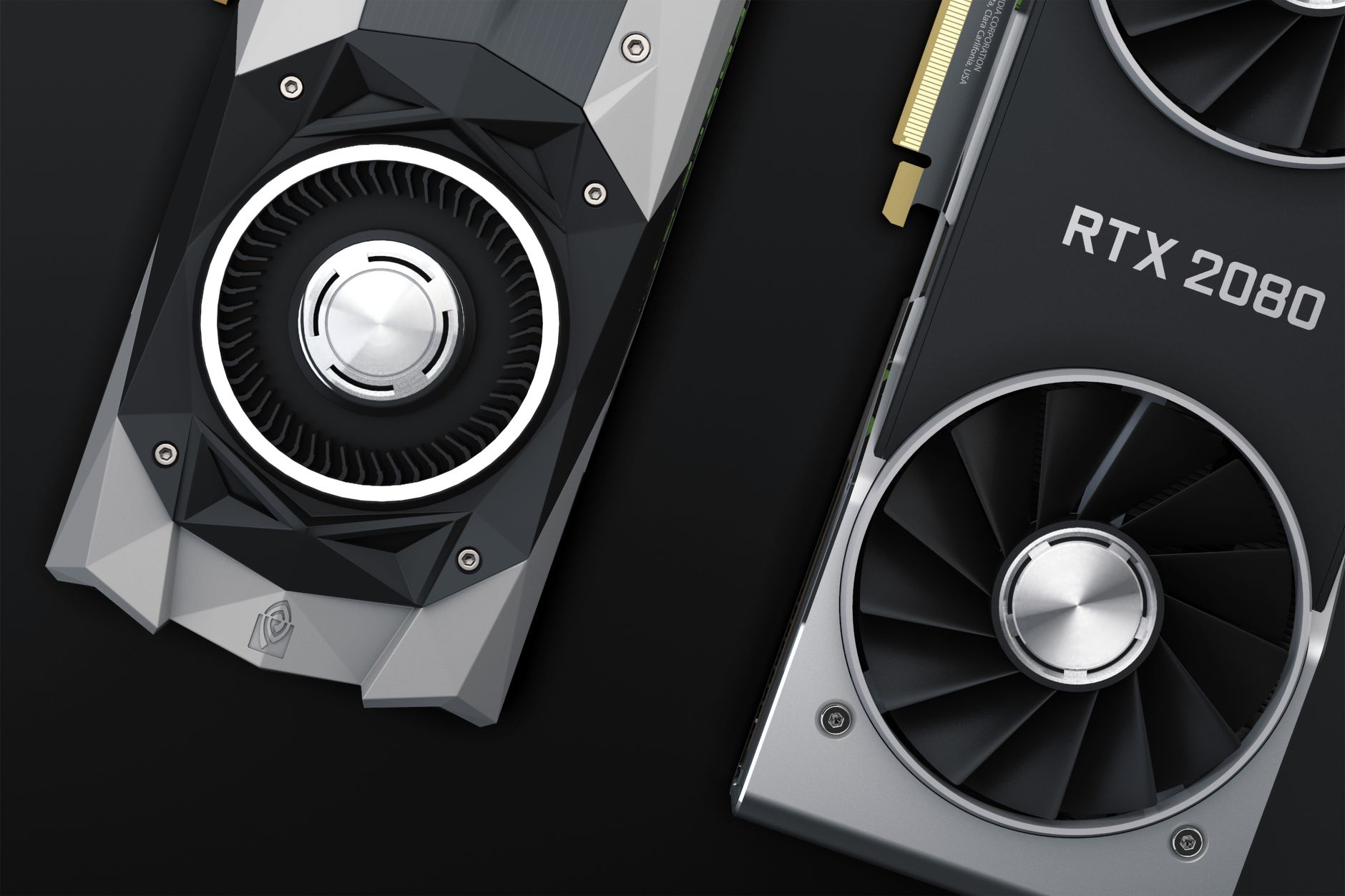
Across a broad range of titles tested at 1440p maximum or near-maximum settings, the RTX 5070 Ti leads the RX 9070 XT by roughly 15 to 20 percent on average. In CPU-limited scenarios or in games with simpler geometry workloads, that gap compresses to single digits. In the most demanding open-world titles with high draw call counts and complex geometry streaming – games like Cyberpunk 2077 with path tracing disabled, Assassin’s Creed Shadows, and Microsoft Flight Simulator 2024 – the RTX 5070 Ti pulls ahead more consistently, sometimes reaching a 22 to 25 percent lead.
Where AMD closes the gap most effectively is in competitive and esports-adjacent titles, and in games built primarily around Vulkan. In Counter-Strike 2 at 1440p, the difference between the two cards shrinks to a point where it is nearly irrelevant for any monitor running below 240Hz refresh. In Baldur’s Gate 3 and other RPGs with moderate GPU workloads, the 9070 XT matches or occasionally beats the RTX 5070 Ti in average frame rate, a result that speaks directly to AMD’s shader throughput improvements in RDNA 4. These are not edge cases – they represent a meaningful portion of the 1440p gaming library.
Minimum frame rates tell a slightly different story. The RTX 5070 Ti shows better 1 percent low consistency in several heavy titles, which points to GDDR7’s bandwidth advantage and NVIDIA’s stronger geometry processing pipeline. For players running 165Hz or 240Hz displays who prioritize smoothness over raw average FPS, that consistency advantage is real and worth considering. For players on 144Hz panels with VRR support, the 9070 XT’s occasional dips are smoothed out in most scenarios, and the practical difference in perceived smoothness drops significantly.
Power consumption is another factor that does not show up in frame rate charts but absolutely shows up in long gaming sessions. The RX 9070 XT draws around 260 to 280 watts under full load, while the RTX 5070 Ti regularly pulls 300 watts or more. Neither card is particularly efficient by modern standards, but AMD’s lead in performance-per-watt at 1440p is measurable and relevant for anyone gaming in a warm room or running a system with a tighter PSU. At equivalent frame rates, the 9070 XT consistently requires less power – and in the games where both cards deliver similar output, that efficiency gap makes AMD’s card look considerably more attractive on a value-per-watt basis.
Who Should Actually Buy Which Card
The RTX 5070 Ti is a faster card at 1440p rasterization. That is not in dispute. The question is whether a consistent 15 to 20 percent performance lead justifies a price premium that, at street prices rather than MSRP, often stretches to 30 to 40 percent more expensive than the 9070 XT. For a player building a new system around a 1440p 165Hz monitor, the RX 9070 XT delivers high frame rates in almost every modern title without requiring the buyer to stretch their budget to justify the purchase.
NVIDIA’s card makes more sense in specific scenarios: buyers who plan to push the same card to 4K later, players who rely heavily on DLSS Super Resolution as their primary upscaling solution, or anyone whose game library skews toward titles with known NVIDIA optimization advantages. The RTX 5070 Ti also carries more headroom if 1440p 240Hz is the target, since the 9070 XT can struggle to consistently hit that threshold in the most demanding open-world titles. Those are legitimate reasons to spend more.
But for the most common 1440p use case – a 144Hz or 165Hz panel, a mixed game library, and a buyer who does not want to overspend on GPU headroom they will not regularly use – the RX 9070 XT represents the more rational purchase at its actual selling price. AMD has not beaten NVIDIA’s top-tier Blackwell card at this resolution. It just made the performance gap small enough that paying significantly more for the RTX 5070 Ti requires a specific justification beyond simply wanting the faster number on a spec sheet.
The 9070 XT’s biggest remaining vulnerability at 1440p is consistency under extreme draw call pressure. In the handful of titles where the RTX 5070 Ti’s architecture advantages are most pronounced, the AMD card’s minimums can dip enough to notice on high-refresh displays without VRR. That is a real limitation, not a marketing talking point, and buyers who primarily play those specific titles should weight it accordingly.