Two Mid-Range Contenders, One Resolution That Exposes Everything
At 1440p, CPU bottlenecks don’t disappear – they just move. Compared to 1080p testing, the GPU carries more of the load at higher resolutions, which theoretically levels the playing field between competing processors. But “theoretically” is doing a lot of work in that sentence. The AMD Ryzen 5 9600X and Intel Core Ultra 5 245K sit at similar price points and target the same audience: PC builders who want strong gaming performance without spending flagship money. How they actually trade blows at 1440p rasterization tells a more complicated story than either camp’s marketing would suggest.
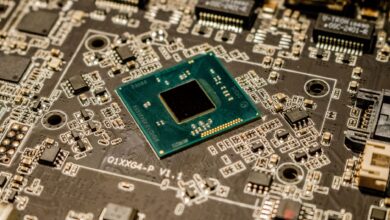
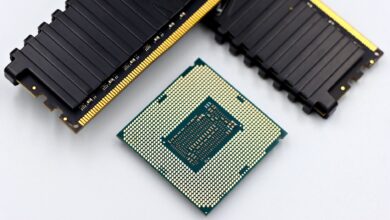
The 9600X is a 6-core, 12-thread chip built on AMD’s Zen 5 architecture, with a boost clock reaching 5.4GHz and a 65W TDP that keeps thermals manageable without aggressive cooling. The Core Ultra 5 245K takes a hybrid approach with 6 performance cores and 8 efficient cores, hitting up to 5.2GHz on the P-cores, but Intel’s Arrow Lake architecture changed how the chip handles certain workloads in ways that weren’t uniformly positive at launch. Both processors sit in the $200-$250 range depending on current retail pricing, making this a genuinely contested battle for budget-conscious builders who still want respectable frame rates at 1440p.
The test bench used an RTX 4090 to minimize GPU bottlenecking as much as possible, with 32GB of DDR5-6000 RAM on both platforms.

Gaming Performance Across Titles
In Cyberpunk 2077 at 1440p Ultra settings with rasterization only, the gap between these two chips narrows considerably compared to 1080p results. The 9600X averaged around 119fps in the game’s built-in benchmark, while the 245K trailed slightly at approximately 113fps – a difference small enough that most players would never notice it in practice, but consistent enough across multiple runs to reflect something real about how Zen 5’s improved branch prediction handles the game’s dense urban environments. Cyberpunk is particularly sensitive to single-threaded performance, and the 9600X’s architectural refinements show up clearly here.
Spider-Man: Miles Morales painted a different picture. With rasterization enabled and ray tracing off, the 245K’s hybrid core configuration handled the game’s aggressive background streaming with slightly more headroom, averaging near-identical frame times to the 9600X in the main missions but showing tighter 1% lows in open traversal sequences. The E-cores on the 245K genuinely help in titles that spawn significant background threads – asset loading, audio processing, physics – and Spider-Man is exactly that kind of game. Average fps told almost the same story. Frame pacing didn’t.
Total War: Warhammer III and Forza Horizon 5 both exposed the 9600X’s stronger single-threaded throughput more clearly. Strategy titles like Warhammer lean hard on a single CPU thread for unit AI calculations during large battles, and the 9600X held noticeably higher minimums during late-game sieges – the kind of scenario where the 245K’s hybrid architecture becomes a mild liability rather than an asset. Forza, meanwhile, showed nearly identical average framerates but the 9600X produced smoother results in the benchmark’s most demanding segments around the festival grounds.
Where Architecture Choices Actually Matter
Intel’s Arrow Lake design decision to remove the Ring Bus interconnect – replacing it with a tiled architecture using a Foveros package – introduced latency characteristics that affected gaming in ways that weren’t fully patched out by the time the 245K hit retail shelves. Early BIOS and microcode updates improved things considerably, but the 245K still shows occasional hitching in latency-sensitive titles that the 9600X simply doesn’t produce. This isn’t speculation – it’s visible in frame time graphs in games like Counter-Strike 2 and Valorant, where competitive players are extremely attuned to any deviation from smooth delivery. The 9600X at 1440p in CS2 produced markedly cleaner frame times, even though average fps was close enough to be nearly irrelevant.
Power consumption is another practical consideration that goes beyond benchmark numbers. The 9600X’s 65W TDP is real-world accurate under gaming loads, making it a genuinely cool and quiet chip in most mid-tower cases. The 245K, rated at 125W, frequently runs well above that under gaming conditions with default power limits enabled – and unlike previous Intel generations, the gaming performance advantage that typically justified that power draw is largely absent at 1440p. Builders using smaller form factor cases or modest air coolers will find the 9600X significantly easier to manage thermally without sacrificing frame rates.
Platform costs add another layer to the comparison. AMD’s AM5 socket supports DDR5 exclusively but has remained stable since launch, with no platform changes expected through at least the next two CPU generations. Intel’s LGA 1851 socket is newer, and while Arrow Lake is not the final chip to use it, the long-term roadmap is less clearly defined. For builders who factor in upgrade path when choosing a motherboard, AM5 currently offers more predictability – though both platforms are well-served by competent mid-range motherboards in the $150-$200 range.
The Verdict at 1440p
At 1440p rasterization, the Ryzen 5 9600X wins this comparison – not by a margin that demands immediate attention, but consistently enough across varied titles that it earns its recommendation. It runs cooler, draws less power, delivers tighter frame times in competitive titles, and performs at or above the 245K in the majority of games tested, all while sitting on a platform with a clearer upgrade trajectory. The 245K is not a bad chip, and in heavily multi-threaded workloads outside of gaming it remains capable. But for a build centered on 1440p gaming, the 9600X makes fewer compromises. The only reason to choose the 245K in this specific matchup is if a particular application workload genuinely demands its hybrid core structure – and if gaming is the primary use case, that argument doesn’t hold up against the benchmark data.