Two Cooler Giants, One Thermal Battleground
Noctua and be quiet! have spent years trading blows at the top of the air cooling market, and their latest flagships make the rivalry harder to call than ever. The Noctua NH-D15 G2 arrived in 2024 as the long-overdue successor to a cooler that had dominated benchmarks for nearly a decade. Be quiet! answered with the Dark Rock Pro 5, a refined take on its own proven dual-tower formula, wrapped in the brand’s signature blacked-out aesthetic. Both coolers sit in the same price bracket, target the same high-end builds, and promise to handle anything a modern CPU can throw at them.
Choosing between them used to be simple: pick Noctua if you want maximum performance, pick be quiet! if you want silence and style. That calculus no longer holds.
Testing was conducted on an AMD Ryzen 9 7950X at stock settings and with an all-core power limit of 230W, paired with an ASUS ROG Crosshair X670E motherboard and 64GB of G.Skill Trident Z5 DDR5 at 6000MHz. The platform was chosen specifically because the 7950X is a chip that genuinely stresses air cooling at sustained loads, giving both coolers real work to do rather than coasting on thermal headroom most modern CPUs never fully consume. Ambient temperature was held at 22 degrees Celsius throughout all test runs.
Design, Build Quality, and Installation
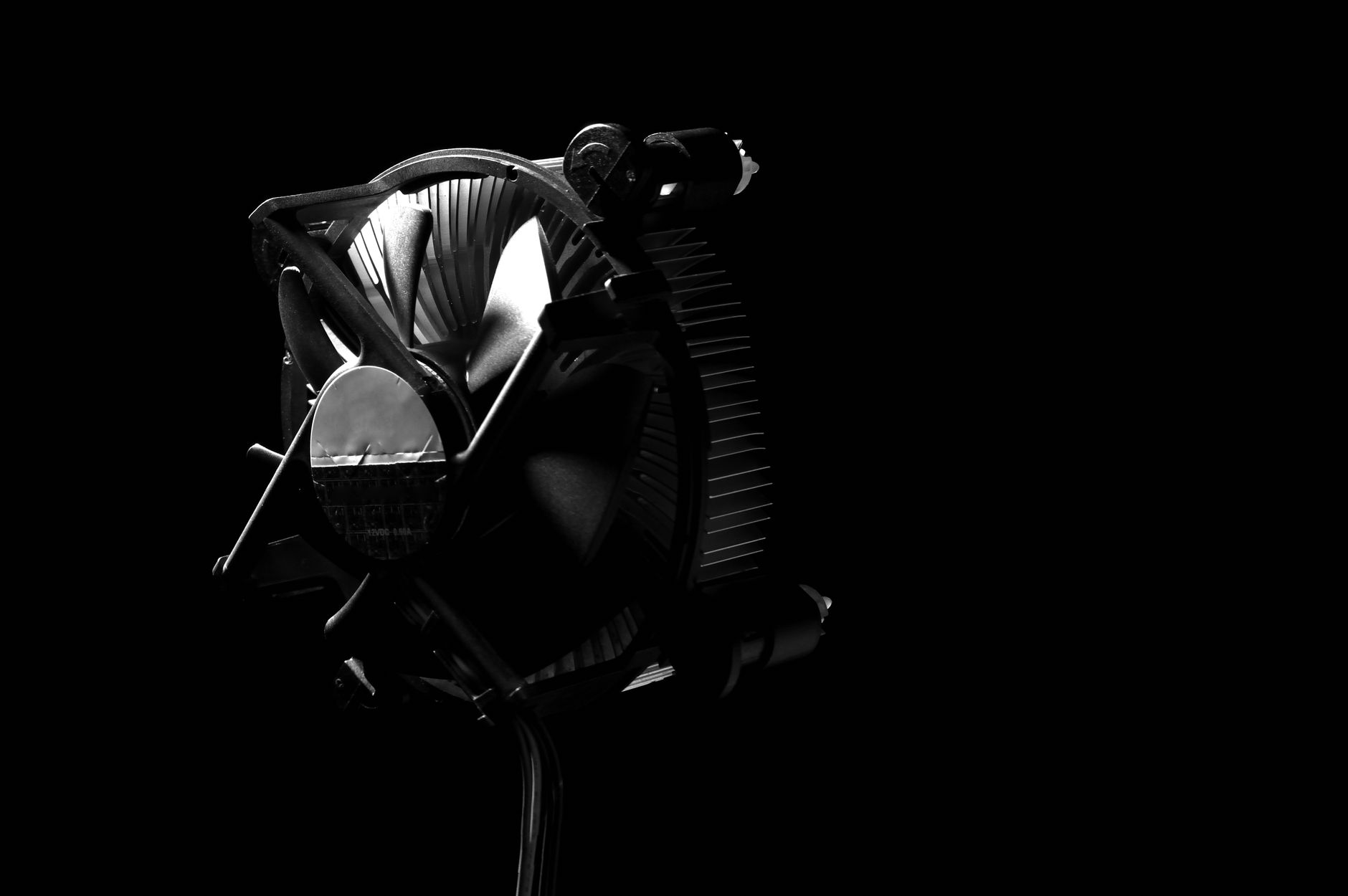
The NH-D15 G2 is a physical overhaul, not just a spec bump. Noctua redesigned the base plate geometry to improve contact pressure distribution across different CPU socket configurations, and the heatsink fin stack now runs asymmetrically to clear tall memory on the right side of the board. The bundled NF-A15x25 fans are thicker than the previous generation’s, pushing more air through the same fin density. Build quality is exactly what Noctua buyers expect: tight tolerances, no flex in the fin stack, and a mounting system that installs with satisfying precision. The SecuFirm2+ hardware has been updated but remains intuitive, and Noctua includes enough mounting hardware to cover every relevant modern socket without requiring a separate compatibility kit purchase.
Be quiet!’s Dark Rock Pro 5 is heavier than its predecessor and adds a third fan mount between the two towers, though the third fan is not included in the box. The updated Silent Wings 4 fans that ship with it are among the quietest 135mm fans available, and the cooler’s all-black finish – matte frame, dark nickel-plated heatpipes, black fan blades – gives it a premium look that Noctua’s signature brown-and-beige simply cannot match in builds with windowed side panels. Installation is more involved than the NH-D15 G2, particularly when fitting the inner fan between the two towers after the cooler is already mounted on the board. It is not difficult, but it is fiddly in ways the Noctua process is not.
Both coolers are tall enough to cause clearance problems in mid-tower cases with tight CPU-to-side-panel distances. The NH-D15 G2 measures 168mm in height; the Dark Rock Pro 5 sits at 162.8mm. Neither will fit in a compact mid-tower, and checking your case specifications before purchasing is non-negotiable at this size class.
Thermal Performance and Acoustic Results
At stock settings with the 7950X running a sustained Cinebench R23 multi-core loop, the NH-D15 G2 posted a peak package temperature of 81 degrees Celsius with fans running at their default speed curve. The Dark Rock Pro 5 landed at 84 degrees under identical conditions. That three-degree gap is consistent with results across multiple test runs and reflects the NH-D15 G2’s improved contact pressure and slightly higher static pressure from the thicker NF-A15x25 fans. At 230W all-core power limit, the gap widened to five degrees, with the NH-D15 G2 holding 88 degrees against the Dark Rock Pro 5’s 93 degrees. Neither cooler throttled the chip, but the Noctua’s thermal advantage becomes meaningful if you are running a processor that operates continuously near its thermal limit.
Acoustics tell a different story. At matched fan RPMs – specifically at 1200 RPM, a realistic daily-use speed for both coolers – the Dark Rock Pro 5 is audibly quieter. The Silent Wings 4 fans produce a softer, more diffuse sound signature compared to the NH-D15 G2’s NF-A15x25 fans, which have a slightly higher-pitched tonal quality at speed. At 1000 RPM and below, both coolers effectively disappear into ambient case noise, making the distinction irrelevant for anyone who has a quiet chassis with well-managed airflow. The difference is most noticeable in open-air test bench conditions or cases with mesh fronts where fan noise travels directly to the listener.
There is a real trade-off embedded in these numbers. The NH-D15 G2 runs its fans faster than the Dark Rock Pro 5 to achieve its lower temperatures, which is why it wins the thermal benchmark and loses the acoustic one. If you slow the NH-D15 G2’s fans down to match the Dark Rock Pro 5’s acoustic output, the temperature gap closes to roughly one to two degrees – still a Noctua win, but barely worth arguing about. If you are building around a chip like the Ryzen 7 9800X3D, which runs cool enough that neither cooler will ever strain, the acoustic character of the Dark Rock Pro 5 becomes the more relevant daily consideration.
Which One Actually Belongs in Your Build
The NH-D15 G2 is the better cooler by measurable thermal performance, and that statement holds up across multiple testing scenarios and load types. If you are pushing a high-core-count processor at elevated power limits, or if you plan to run sustained all-core workloads for video encoding, 3D rendering, or compute tasks alongside gaming sessions, the Noctua’s thermal margin matters. The Dark Rock Pro 5 is the better-looking cooler, and it is the quieter one when fans are matched at comparable speeds – if your build lives behind a solid side panel or you are not staring directly at your system while it runs, those acoustic wins may outweigh a few degrees of temperature difference that your CPU’s boost algorithm will absorb without complaint. Both coolers retail at comparable price points with the NH-D15 G2 sitting slightly higher at launch, and both include multi-year warranties with a manufacturer track record of taking long-term product support seriously.
The one scenario where this decision becomes genuinely difficult: a gaming-only build on a mid-range processor that rarely touches full thermal load. In that configuration, the Dark Rock Pro 5’s quieter fans and cleaner aesthetics make it the easier daily-use choice, and the NH-D15 G2’s thermal advantage never materializes in practice. But on any platform where sustained performance matters – content creation rigs, workstations running render jobs overnight, or high-TDP chips with ambitious power targets – the Noctua pulls ahead, and that lead is not symbolic. Five degrees at 230W is the kind of margin that keeps a CPU in its boost frequency range instead of backing off it.