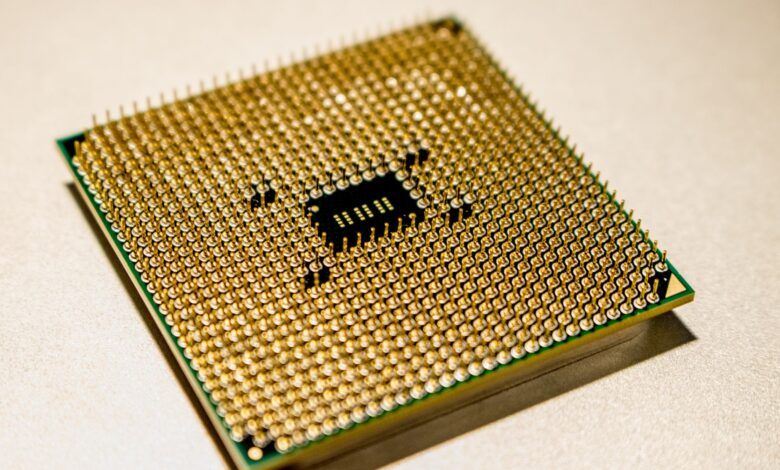
AMD’s 3D V-Cache Returns With Its Biggest Chip Yet
AMD’s 3D V-Cache technology has dominated gaming CPU discussions since the Ryzen 7 5800X3D landed in 2022. Each successive generation – the 7800X3D, 7900X3D, 7950X3D – has reinforced the same argument: stacking extra L3 cache directly on top of the compute die delivers real, measurable gains in titles that are starved for fast memory bandwidth. Now AMD is applying that same principle to its highest-end Zen 5 chip, and the result is the Ryzen 9 9950X3D, a 16-core monster sitting at the very top of the AM5 stack.
Intel’s Core Ultra 9 285K is the obvious opponent here. Launched in late 2024 as part of the Arrow Lake desktop lineup, the 285K brought a tile-based architecture and promised meaningful efficiency gains, but its gaming performance landed with a thud at launch. Driver updates and microcode patches have improved the situation since then, but Arrow Lake has never fully closed the gap against AMD’s X3D parts in pure gaming workloads.
The 9950X3D changes the calculus by combining Zen 5’s stronger IPC with a reported 128MB of stacked cache on top of its 16-core die.
What the Benchmarks Actually Show
Early testing across a range of titles paints a clear picture. In CPU-limited scenarios at 1080p – the standard methodology for isolating processor performance from GPU bottlenecks – the 9950X3D trades blows with the 7800X3D and frequently comes out ahead. That matters because the 7800X3D has been the gold standard for gaming CPUs for over a year. The 9950X3D doesn’t just match it; in several titles it pulls ahead by a noticeable margin, suggesting that Zen 5’s architectural improvements compound the cache advantage rather than just riding it.
Against the Core Ultra 9 285K specifically, the 9950X3D leads across most tested titles. Games like Cyberpunk 2077, Microsoft Flight Simulator, and Counter-Strike 2 all show the AMD chip delivering higher average framerates and, more importantly, better 1% lows. The 1% low figure is where the 285K has consistently struggled, and that problem persists here. Intel’s hybrid architecture, which splits performance and efficiency cores across tiles, introduces scheduling complexity that occasionally shows up as stutter in frame time graphs – an issue that is largely absent on the 9950X3D’s uniform 16-core layout.
The 9950X3D’s multi-threaded workload performance is also worth noting. Previous X3D chips made a compromise: the cache stacking process generated extra heat and limited clockspeeds, which hurt performance in productivity tasks. AMD has refined this with the 9950X3D, reportedly achieving higher boost clocks than earlier 3D V-Cache parts. This means the chip is no longer purely a gaming specialist – it competes seriously in video rendering, 3D work, and software compilation while still leading in gaming.

Where Intel Still Has Ground to Stand On
The 285K doesn’t surrender without argument. In workloads that scale well with Intel’s efficiency cores – large batch file operations, certain productivity apps, specific encoding pipelines – the 285K can match or beat the 9950X3D. Power consumption during these workloads is also more predictable on Intel’s platform; the 285K tends to stay within its rated TDP more consistently, while AMD’s high-core-count chips can spike hard under mixed workloads. For content creators who game, but don’t game exclusively, the 285K remains a reasonable choice, particularly if they are already on an LGA 1851 platform and don’t want to switch.
Platform costs are another real factor. AM5 motherboards have come down significantly in price since launch, and DDR5 is now broadly affordable. Still, anyone building from scratch needs to weigh full system cost. The 9950X3D will command a premium price at launch, and pairing it with a high-end X870E board and fast DDR5 memory pushes total platform costs well past where a mid-range build would sit. The 285K’s platform, while not cheap, offers a wider range of motherboard price points.
There is also the question of GPU pairing. Running either of these chips with a mid-range graphics card largely neutralizes the gaming advantage the 9950X3D holds over the 285K, because the GPU becomes the bottleneck long before the CPU matters. The real gains only show up when paired with top-tier hardware – something like the current high-end RTX or Radeon stack. For 1440p and 4K gaming specifically, the gap between these two processors narrows further, though the 9950X3D’s better 1% lows do still show through in frame time consistency. Anyone benchmarking GPU performance at those resolutions should check out the Radeon RX 9070 vs RTX 5070 1440p gaming benchmarks to get a sense of where GPU ceilings sit right now.
The Verdict Takes Shape
AMD has done the harder thing here: it built a chip that is genuinely strong in both gaming and productivity, without the compromises that defined earlier X3D launches – and it did so while Intel’s flagship is still trying to recover from an Arrow Lake debut that underwhelmed at every tier. The 9950X3D is not a budget buy or a niche overclocker’s toy; it is a direct assault on the premium desktop CPU market, and the early numbers suggest AMD has the stronger hand going into the second half of 2025. Whether Intel responds with a meaningful Arrow Lake refresh or waits for its next generation is the question hanging over this entire segment right now.