Two Mid-Range Heavyweights Finally Go Head to Head
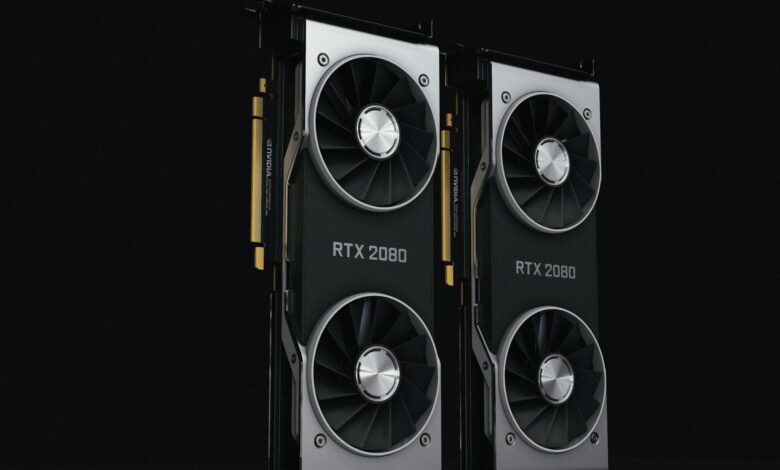
NVIDIA’s GeForce RTX 5060 Ti has landed, and the launch benchmarks tell a complicated story – one where AMD’s RX 9070 refuses to step aside quietly. Both cards target the 1080p and 1440p sweet spot that accounts for the majority of PC gaming, and the performance gap between them is narrow enough to make the buying decision genuinely difficult.
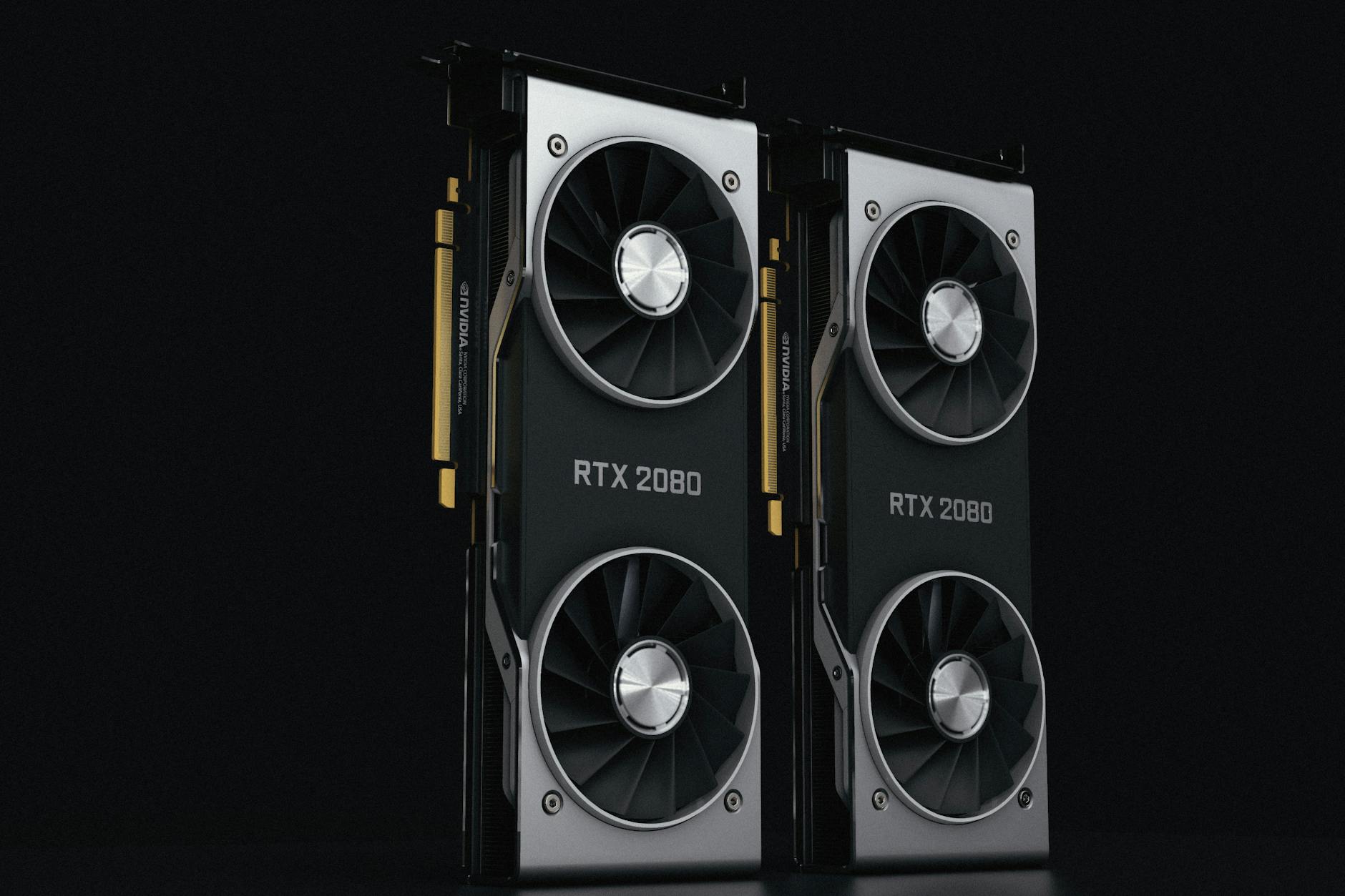
RTX 5060 Ti: What the Launch Numbers Actually Show
The RTX 5060 Ti ships in two VRAM configurations – 8GB and 16GB – at a starting MSRP of $379 and $429 respectively. NVIDIA’s Blackwell architecture brings meaningful efficiency improvements over Ada Lovelace, and the raw rasterization performance at 1440p medium-to-high settings is strong. In titles like Cyberpunk 2077, Alan Wake 2, and Black Myth: Wukong, the 16GB variant consistently delivers frame rates above 60fps at 1440p Ultra settings, with the 8GB card trailing by a measurable but not disastrous margin in most scenarios.
Where DLSS 4 with Multi Frame Generation genuinely changes the conversation is in supported titles. NVIDIA’s upscaling technology has reached a level of maturity where the image quality penalty is nearly invisible to most players at standard viewing distances, and the frame rate multiplication it provides is aggressive. In Alan Wake 2 with path tracing enabled, Multi Frame Generation pushes the 5060 Ti into territory that would have required an RTX 4080 a year ago. That is not a small thing.
The 8GB VRAM version is the one that deserves scrutiny. Modern titles are increasingly pushing past 8GB VRAM at 1440p with textures cranked up – Hogwarts Legacy and Star Wars Outlaws both show visible performance degradation on the 8GB card when texture quality is maxed. The 16GB model sidesteps this almost entirely. At a $50 price difference, the 16GB version is the one worth buying if you plan to keep this card for three or more years, particularly if you game on a 1440p 240Hz monitor where you need consistent frame delivery under load.
On the efficiency side, the RTX 5060 Ti has a listed TDP of 180W, which is genuinely lower than what the RX 9070 draws under sustained load. For small form factor builds or systems where thermal headroom is limited, that power delta matters. The card runs cool and quiet under most cooler configurations from AIB partners, and boost clocks are stable across extended gaming sessions.
RX 9070: AMD’s Answer Holds Up
AMD’s RX 9070 launched earlier this year at $549 MSRP but has since settled at street prices ranging from $479 to $519 depending on the model and retailer. That price correction makes this comparison far more competitive than it looked at launch. The RDNA 4 architecture delivers strong rasterization performance, and AMD’s decision to equip every RX 9070 with 16GB of GDDR6 removes the VRAM anxiety that shadows the base RTX 5060 Ti entirely.
In pure rasterization workloads at 1440p, the RX 9070 and the RTX 5060 Ti 16GB trade blows almost benchmark by benchmark. The RX 9070 pulls ahead in Forza Horizon 5, Starfield, and several DX12 titles where AMD’s driver stack has been heavily optimized. NVIDIA counters in Call of Duty: Warzone, Escape from Tarkov, and titles that have historically run better on GeForce hardware. At 1080p, the gap between both cards narrows to the point of irrelevance for most players – neither card struggles to push high frame rates in virtually any current title at that resolution.
Ray tracing is where AMD still gives up ground. The RX 9070’s ray tracing performance is better than its RDNA 3 predecessors – noticeably so – but NVIDIA’s RT acceleration hardware remains ahead in demanding scenarios. In Cyberpunk 2077 with full ray tracing enabled at 1440p, the RTX 5060 Ti 16GB is roughly 20-25% faster before any upscaling is applied. With DLSS 4 versus FSR 4, that gap widens further because Multi Frame Generation is still more aggressive and stable than AMD’s equivalent frame generation implementation at this tier.
FSR 4 deserves credit for how far it has come. At 1440p Performance mode, FSR 4 output is noticeably cleaner than FSR 3 and competitive with DLSS Quality in many scenarios. AMD has closed the upscaling quality gap more than most expected heading into this GPU generation, and that shift benefits RX 9070 owners in supported titles. The catch is that FSR 4 adoption in new releases still lags behind DLSS integration, which means some games will simply not have it at launch.
Power consumption on the RX 9070 runs between 220W and 240W under sustained gaming load depending on the specific AIB cooler and power limit settings. That is a meaningful difference versus the RTX 5060 Ti’s 180W TDP, translating to higher electricity costs over time and a stricter demand on PSU headroom. For a system already running a mid-range CPU and multiple drives, that 40-60W difference can push total system draw close to the limit of a 650W power supply.
Which Card Makes Sense Right Now
At equivalent street pricing, the RTX 5060 Ti 16GB and RX 9070 are close enough that platform preference, software ecosystem, and specific game libraries should drive the decision more than raw benchmark averages. If you use NVIDIA-exclusive features like DLSS 4, RTX IO, or Broadcast, the 5060 Ti has a clear software advantage. If ray tracing is not a priority and you want 16GB VRAM without paying extra for it, the RX 9070 delivers excellent value, especially if street prices continue to drift below $500.
The version of this competition that is actually bad for consumers is the RTX 5060 Ti 8GB at $379. That card forces a compromise on VRAM that the RX 9070 never makes you accept, and at a $100 to $140 price difference against a fully-configured competitor with double the memory, NVIDIA is betting heavily on brand loyalty and DLSS adoption rates to carry it. Whether that bet pays off will show in sales numbers over the next quarter – but if you are buying today, the 8GB model is the hardest to recommend in a GPU market where the competition ships 16GB as the baseline.