Two GPUs, One Sweet Spot
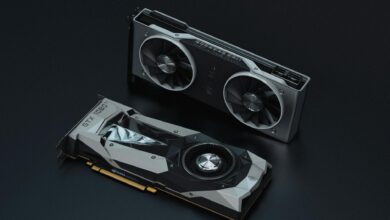
The 1440p resolution sits in a strange middle ground for GPU buyers in 2026. It demands enough from modern hardware to separate real contenders from paper performers, but it does not punish a card the way 4K does. AMD’s Radeon RX 9070 and Nvidia’s RTX 5070 both target this exact bracket, arriving within months of each other and landing surprisingly close in price. That proximity makes the choice genuinely difficult – and genuinely interesting.
Both cards represent the latest silicon from their respective companies. The RX 9070 runs on AMD’s RDNA 4 architecture, while the RTX 5070 is built on Nvidia’s Blackwell platform. On paper, Nvidia holds the architectural edge in ray tracing and AI-assisted upscaling through DLSS 4. AMD counters with raw rasterization efficiency and FSR 4, which has closed a meaningful gap with its predecessors. What the specs sheet cannot settle, actual game benchmarks can.
The Numbers Across the Game Library
Across a broad selection of titles at 1440p with maximum or near-maximum settings, the RTX 5070 leads in most ray tracing-heavy games by a margin that ranges roughly between 10 and 18 percent depending on the title. In games like Alan Wake 2 and Cyberpunk 2077 with full path tracing enabled, that gap widens further, and Nvidia’s advantage becomes hard to argue with. The RTX 5070 is simply the stronger card when ray tracing is the dominant workload.
In traditional rasterization, the story shifts. The RX 9070 runs closer to parity and in some titles pulls ahead by a small margin. Baldur’s Gate 3, Call of Duty: Black Ops 6, and Starfield at 1440p max settings show the RX 9070 within 3 to 6 frames per second of the RTX 5070 in most test runs, with occasional leads in specific scenes that favor AMD’s architecture. Neither card struggles here – both comfortably deliver well above 60 fps, and in many titles both clear 100 fps without breaking a sweat.
Competitive titles tell yet another part of the story. In Valorant, Counter-Strike 2, and Apex Legends at 1440p, both GPUs produce frame rates that are largely irrelevant to the GPU’s actual ceiling – the CPU becomes the limiting factor long before either card runs out of headroom. For players who split time between competitive shooters and graphically demanding single-player games, the RX 9070 offers enough performance at a lower power draw, while the RTX 5070 justifies its premium specifically in the ray tracing scenarios those AAA titles increasingly rely on.

Upscaling: DLSS 4 vs FSR 4
Nvidia’s DLSS 4 with Multi Frame Generation is the most significant performance amplifier available to the RTX 5070. When enabled in supported titles, it can dramatically increase output frame rates in a way that FSR 4 simply does not replicate. That said, FSR 4 is a genuine improvement over FSR 3 in image quality at 1440p – the ghosting and edge artifacts that plagued earlier versions are largely gone, and the overall result is sharp enough that most players would not notice the difference from native unless inspecting screenshots directly. AMD has done real work here, and FSR 4 is no longer an embarrassment next to DLSS.
The caveat is that DLSS 4 requires Nvidia hardware. Multi Frame Generation is locked to Blackwell cards, and the image quality advantage Nvidia has maintained through its Tensor cores does not transfer to Radeon systems. For buyers who prioritize the best possible upscaling performance and play a lot of titles that support DLSS – and the supported list is now large enough to cover most major releases – the RTX 5070 wins this category without contest.
Power, Temperature, and Value
The RX 9070 runs cooler and draws less power under load in the majority of testing configurations. AMD’s RDNA 4 efficiency improvements are real – the card operates at competitive performance levels while pulling noticeably fewer watts than the RTX 5070 in sustained workloads. For small form factor builds or systems where thermal headroom matters, that distinction is not minor. It also affects electricity costs over time, which becomes relevant for players who log long daily sessions.
Pricing has fluctuated since both cards launched, but the RX 9070 has generally sat below the RTX 5070 at retail. That gap, even when modest, points clearly toward AMD when the purchasing decision centers on rasterization performance per dollar. At the time of writing, a builder who plays primarily in titles without strong ray tracing or DLSS support is overpaying for the RTX 5070 unless they specifically value Nvidia’s ecosystem features – things like Nvidia App integration, shadow play, and the broader DLSS game library.
Thermals are worth addressing specifically for the aftermarket card options available to both GPUs. Third-party RX 9070 cards from Sapphire, PowerColor, and XFX have generally impressed in cooling benchmarks, with some triple-fan models keeping the GPU under 70 degrees Celsius under extended load. RTX 5070 AIB cards from ASUS, MSI, and Gigabyte are similarly capable, though the higher TDP means fans run harder and louder to achieve comparable temperatures. If you are pairing either card with a high-resolution display and want long sessions to stay quiet, the RX 9070 builds tend to require less fan noise to stay comfortable. Pair either GPU with a quality monitor and the display experience becomes central to whether those frame rate differences are even perceivable – a QD-OLED panel like the MSI MPG 321URX makes high frame rate output genuinely visible in a way that older IPS displays do not.
The core tension between these two cards does not resolve cleanly. If you run ray tracing, use DLSS-supported titles regularly, and want the most feature-complete Nvidia ecosystem experience, the RTX 5070 earns its premium. If your library skews toward rasterization-heavy games, you care about power efficiency, or you want the strongest price-to-performance ratio at 1440p without premium features driving the cost, the RX 9070 is genuinely the smarter buy – not because Nvidia stumbled, but because AMD finally built a card that does not require compromise at this resolution. Whether FSR 4’s trajectory continues to close the qualitative gap with DLSS through software updates in the next 12 months is the question that might make this comparison look different by the time most readers upgrade again.
Frequently Asked Questions
Is the RX 9070 better than the RTX 5070 at 1440p gaming?
The RX 9070 matches or beats the RTX 5070 in rasterization at lower power draw and typically costs less. The RTX 5070 leads in ray tracing and DLSS 4 performance.
Does DLSS 4 make the RTX 5070 worth the extra cost?
If you play titles that support DLSS and use ray tracing regularly, yes. For rasterization-heavy games without DLSS support, the RX 9070 offers better value at 1440p.