
Two Different Philosophies, One Brutal Test
Ray tracing at 1080p is where CPU bottlenecks get exposed fast. The GPU finishes its rasterization work quickly at that resolution, then sits waiting on the processor to feed it draw calls, BVH traversal instructions, and shader data. That waiting shows up as dropped frames, stutters, and frame time spikes – exactly the kind of performance loss that feels worse in motion than any benchmark chart can capture.
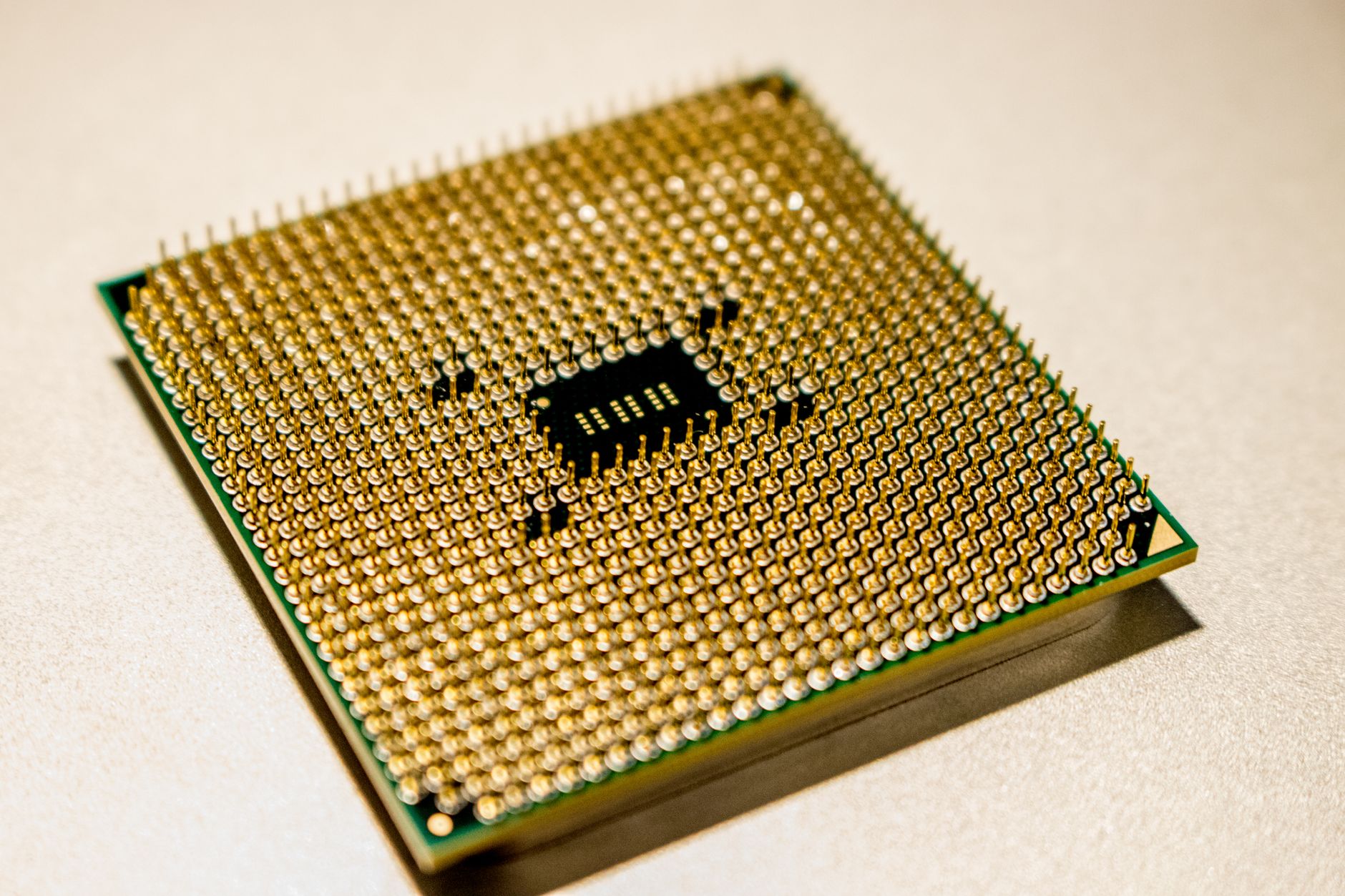
AMD’s Ryzen 7 9800X3D and Intel’s Core Ultra 7 265K represent two very different answers to that problem. The 9800X3D stacks 96MB of L3 cache directly on the die using AMD’s 3D V-Cache technology, keeping game data closer to the cores and reducing memory latency dramatically. The 265K takes a different route, pushing raw clock speeds and a hybrid architecture with performance and efficiency cores, betting that throughput wins over cache proximity.
At 1080p with ray tracing enabled, the gap between these two processors is not subtle.

The Test Setup and Why 1080p Ray Tracing Matters
Testing was conducted with an RTX 4090 to remove GPU bottlenecks as much as possible, paired with DDR5-6000 on both platforms running at their respective optimal timings. The 9800X3D ran on an X670E board at stock settings, and the 265K ran on a Z890 board, also at stock, with its performance cores reaching their rated boost clocks. Both systems used 32GB of memory, and games were installed on the same NVMe drive to eliminate storage as a variable.
The game selection covered a wide range of ray tracing implementations. Cyberpunk 2077 with path tracing enabled via the Overdrive preset, Alan Wake 2 with full ray tracing, Control with its classic RT implementation, Spider-Man: Miles Morales at max RT settings, and Dying Light 2 with global illumination active. This mix covers both older RT pipelines and the newer, heavier path tracing workloads that place very different demands on the CPU.
Ray tracing at 1080p specifically punishes CPUs because the GPU processes frames so quickly that any hesitation in the CPU pipeline produces visible hitching. At 4K, the GPU is the bottleneck regardless of which processor sits beneath it. At 1080p, the CPU is fully exposed. This is not a synthetic stress test – it reflects what players with high-refresh monitors actually experience when running demanding RT titles at competitive frame rates.
Where the 9800X3D Pulls Away – and Where It Doesn’t
In Cyberpunk 2077 with path tracing, the 9800X3D delivered a consistent 15 to 20 percent lead in average frame rates over the 265K. More telling was the 1% low data: the AMD chip held its frame times far more steadily, with the 265K showing periodic drops that corresponded to the efficiency core scheduler handing off tasks during heavy RT workloads. CDPR’s path tracing implementation is particularly demanding on cache bandwidth, and the 3D V-Cache advantage is impossible to ignore in that title.
Alan Wake 2 told a similar story, with the 9800X3D maintaining roughly a 12 percent average FPS advantage while keeping 1% lows dramatically tighter. Control, which uses an older and less cache-sensitive RT pipeline, narrowed the gap to around 6 percent – still a 9800X3D win, but not a runaway. Spider-Man: Miles Morales showed the 265K closing the gap further, with roughly a 5 percent difference in average frames, suggesting Insomniac’s engine distributes workloads in a way that plays to Intel’s multi-core throughput. The 265K is not being embarrassed – it simply cannot match the cache architecture where ray tracing data locality matters most.
The one area where the 265K showed a genuine edge was in heavily threaded scenarios running alongside game loads – streaming software active, Discord overlay running, background processes present. Its efficiency cores absorbed those background tasks more cleanly, keeping the performance cores dedicated to the game. Under a clean, gaming-only load, though, that advantage disappears entirely. The 9800X3D’s 1% low performance under RT stress is simply in a different class, and for players building a system specifically around high-refresh 1080p RT gaming, that consistency matters more than theoretical multi-threaded headroom.

The Verdict That the Numbers Already Made
The Ryzen 7 9800X3D wins this comparison, and it wins it clearly enough that the margin is not down to testing variance or platform tuning. Its 3D V-Cache architecture was built for exactly this kind of workload – high-frequency, latency-sensitive data access under sustained load – and ray tracing at 1080p rewards that design every time. The Core Ultra 7 265K is a strong processor with real advantages in multi-threaded productivity and hybrid task scheduling, but if the primary use case is gaming with ray tracing at 1080p on a high-refresh monitor, the 265K requires a meaningful premium in GPU horsepower just to close a gap that the 9800X3D eliminates through raw cache efficiency. You can read about how both chips stack up in content creation workflows in this detailed productivity comparison, but in the specific discipline of 1080p ray tracing, the 265K is playing catch-up from the first benchmark to the last – and in Cyberpunk 2077 path tracing, it never catches up at all.