AMD’s 3D V-Cache Bet Against Intel’s Raw Clock Speed
AMD’s Ryzen 9 9950X3D and Intel’s Core Ultra 9 285K represent two genuinely different philosophies about what a high-end desktop CPU should do at 4K – and testing them head-to-head in rasterization workloads exposes exactly where each chip wins, loses, and surprises.

The Hardware Setup and What Makes This Match-Up Interesting
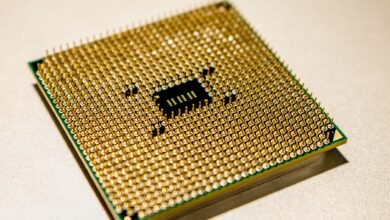
The 9950X3D arrives with 128MB of 3D V-Cache stacked on top of its Zen 5 chiplets, bringing total L3 cache to 144MB. That’s AMD’s core argument: more cache reduces VRAM-to-CPU data dependency and feeds the GPU more consistently at demanding resolutions. Intel’s answer with the 285K is a 24-core (8P + 16E) design running at aggressive boost clocks up to 5.7GHz, betting that raw throughput and thread count will close the gap in modern titles.
For this test, both chips were paired with an RTX 5090 to remove GPU bottlenecks as much as possible at 4K. The goal wasn’t to simulate a balanced mid-range build – it was to push CPU-limited scenarios hard enough to see where each architecture actually breaks down. That means ultra-high-refresh 4K targets in the 100-144fps range, where the CPU is still doing meaningful work, not just idling while the GPU renders at 60fps unchallenged.
Memory configuration matters more with the 9950X3D than almost any other chip on the market. AMD’s 3D V-Cache architecture responds noticeably to memory speed, and the sweet spot for Zen 5 with V-Cache lands around DDR5-6000 in EXPO mode. The 285K was run at DDR5-6400, which is well within its comfort zone. Both configurations reflect realistic high-end builds, not cherry-picked tuning designed to favor one platform.
Thermal performance is another variable worth flagging before the numbers. The 9950X3D runs cooler than the standard 9950X because the V-Cache stack physically constrains the chip from boosting as aggressively during sustained all-core workloads. That’s a known trade-off. The 285K, by contrast, runs hot under sustained load and benefits significantly from a 360mm AIO or better. Both chips were cooled with matching 360mm AIOs for consistency.
4K Rasterization Results Across a Range of Titles
In Cyberpunk 2077 at 4K with ray tracing off, the 9950X3D holds a consistent lead in average frame rate when the RTX 5090 is pushing past 100fps. The V-Cache advantage in this engine is well-documented going back to earlier Ryzen X3D generations, and it carries forward here. The 285K is not slow – it performs well – but it trails by roughly 8 to 12 percent in CPU-limited scenarios in this title specifically.
Assassin’s Creed Mirage tells a similar story. Ubisoft’s engine has historically responded well to cache-heavy CPUs, and the 9950X3D’s 144MB of L3 gives it a structural advantage in how it handles the game’s open-world streaming calls. 1% low frame rates in particular favor the AMD chip, with the 285K showing slightly more variance during rapid camera panning across dense environments.
Switch to Starfield, and the gap narrows considerably. Bethesda’s engine leans heavily on single-threaded performance and the 285K’s P-core boost speed genuinely competes here. The two chips trade blows within a margin that most users wouldn’t notice during normal play, though the 9950X3D still edges ahead slightly in the most CPU-demanding interior areas with large NPC counts.
Call of Duty: Black Ops 6 at 4K is where the 285K fights back most directly. Competitive shooters with high target frame rates benefit from Intel’s raw clock speed, and the 285K’s ability to sustain high single-threaded performance in a consistently threaded workload keeps it within 3 to 5 percent of the 9950X3D. For players targeting 4K at 120fps-plus in a competitive title, the platform difference is essentially negligible at this GPU tier.
The pattern across the full benchmark suite shows the 9950X3D winning more often than it loses at 4K rasterization, but the margin is title-dependent. Games built on engines that stress cache efficiency – open world titles, heavily scripted RPGs, simulation-heavy games – tend to favor AMD. Titles optimized around high-frequency single-threaded calls close the gap. If you pair either chip with a GPU that bottlenecks below 100fps at 4K anyway, the difference between these two processors essentially disappears. The V-Cache advantage only materializes when you’re genuinely pushing the GPU hard enough to expose CPU headroom differences.
Power Draw, Pricing, and Platform Costs
The 9950X3D draws less power than the 285K under gaming loads, which matters if you’re building a system where acoustics or power limits are constraints. AMD’s chip typically pulls 65 to 75 watts under sustained 4K gaming versus the 285K’s 125 watts or more depending on power limits set in the BIOS. That gap is wide enough to influence cooling costs and long-term electricity consumption in a meaningful way for anyone running their system several hours daily. For 4K ray tracing workloads, the efficiency gap follows a similar pattern worth reviewing if you’re deciding between these two platforms across the full range of rendering modes.
Pricing is where the conversation shifts. The 9950X3D carries a higher MSRP than the 285K, and when you factor in AM5 versus LGA1851 platform costs at the high end, neither is cheap. Intel’s platform offers a broader range of affordable motherboard options at the Z890 level, while AMD’s AM5 high-end boards have largely settled into pricing parity with comparable Intel options. The real cost difference comes down to whether you value the AM5 platform’s longer-term upgrade path, since AMD has committed to AM5 socket support through at least 2027.